Get Full Government Meeting Transcripts, Videos, & Alerts Forever!
Get email alerts on the E Motorcycles topic
No spam. Unsubscribe anytime.
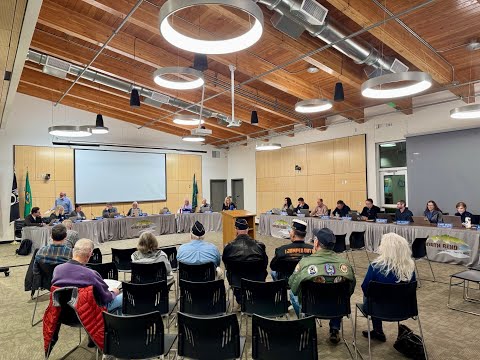
Council adopts ordinance defining and regulating electric motorcycles; requires registration, endorsements and helmets
Summary
North Bend adopted a new municipal chapter (NBMC 10.18) to define and regulate electric motorcycles after council discussion about safety and enforcement; the ordinance passed 5-2 and includes registration, helmet requirements, age/license limits and impound authority.
The North Bend City Council on Oct. 21 adopted an ordinance (AB25-114) creating NBMC chapter 10.18 to define and regulate electric motorcycles, voting 5-2 in favor of the ordinance.
City staff described the change as a response to increasing electric motorcycle (e-motorcycle) use and gaps between state definitions and local enforcement needs. The proposed chapter defines an electric motorcycle consistent with state law references (RCW 46.04.330) as a motorcycle powered by an electric motor that generally lacks fully operable pedals, may have footpegs, may have a motor with power output exceeding 750 watts, or may continue to provide power above 28 mph. The ordinance also requires e-motorcycles to be registered with the Washington State Department of Licensing, display a valid license plate, and be operated only by individuals holding a valid driver’s license with a motorcycle endorsement.
The ordinance includes a helmet requirement; staff asked that the helmet standard reference be corrected to 49 CFR 571.218 (the federal motorcycle helmet standard) for clarity. The ordinance also prohibits guardians from knowingly permitting minors to operate an e-motorcycle, requires operators to obey traffic laws, and authorizes law enforcement to impound e-motorcycles operated in violation of the chapter.
Interim police leadership told council that local enforcement has occurred under existing laws but that codifying definitions and impound procedures in municipal code gives clearer local direction for handling juvenile operators and impound processing. Officials noted similar actions in nearby jurisdictions and said staff reviewed regional language.
After discussion about enforcement mechanics and the scope of local authority, the council voted 5-2 to adopt the ordinance; opponents said enforcement and priorities should be handled at the state level and cited lack of clear evidence of a local problem of sufficient scale. Supporters said the local ordinance provides additional tools to address unsafe operation and to direct local education and enforcement.
Implementation: Staff indicated outreach and a public information campaign would follow adoption; impound and penalty procedures were included in the chapter and will be coordinated with the city’s contracted impound provider.