Council opens debate on seven parcel TIFs; schools and infrastructure funding are central concerns
Loading...
Summary
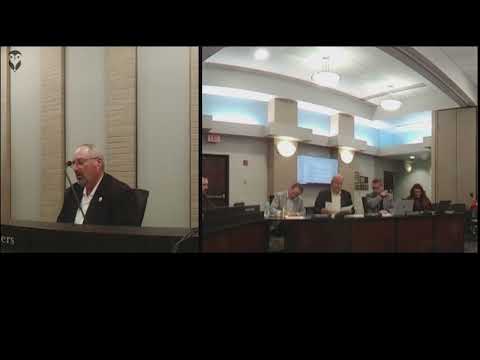
Worcester City Council opened first reading on seven parcel-based TIF ordinances Oct. 20 and paused further action after a lengthy debate about how redirecting property-tax increases would affect school revenues and whether the proposed infrastructure projects show adequate nexus to the parcels.
Worcester City Council opened first reading on seven ordinances on Oct. 20 that would declare specified parcels as parcel-based tax increment financing (TIF) areas under Ohio law (ORC 5709.4(B)). The items remained at first reading after a lengthy council discussion that centered on how TIFs would redirect property-tax increases, which infrastructure projects the city would fund and the potential effects on school district revenues.
Why it matters: The city staff proposed parcel TIFs as a way to capture incremental property-tax revenues from specific development projects and direct those revenues toward infrastructure priorities identified in the city’s 2024 comprehensive plan. Council members and staff debated whether the proposals align with the statutory purpose of TIF and whether redirecting tax flows would impair school funding or shift costs to other taxpayers.
What was proposed
The council introduced seven ordinances (2025-16 through 2025-22) declaring improvements on multiple parcel groupings to be public purposes eligible for parcel TIF treatment under ORC 5709.4(B). Staff identified target sites in the legislation and supporting materials, including the following development or parcel examples discussed in the meeting: downtown Apple Creek Bank parcels; a parcel for a Bell convenience store at the Cleveland/Smithville-Western area; a Cleveland Road car wash/laundromat parcel; apartment projects on Cleveland Road; a site identified as Texas Roadhouse; a Sargeant car wash; and a site commonly discussed as the future Chick-fil-A on Burbank (the transcript refers to this parcel repeatedly).
Staff presentation and rationale
City development staff, led in the discussion by a speaker identified as Jonathan, said the intent is to create a portfolio of TIFs that can generate recurring revenue for targeted infrastructure projects identified in the city’s comprehensive plan. Jonathan summarized the mechanism to the council: “The TIF is not a reduction of taxes... It is a redirection of tax. It redirects those tax dollars that would otherwise go to different sources and allows it to be used for infrastructure improvements.” He said the proposal would use a conservative approach (examples discussed include a 10-year capture at 75% in some cases) and that the seven parcels together could generate roughly $150,000 per year (and, as discussed in the session, approximately $1.2 million over 10 years in one estimate shared with council).
Council concerns and major points raised
- School revenues: Several councilmembers pressed staff on whether the TIFs would reduce school district receipts in the near term. A recurring concern was that the school district could see delayed or reduced property-tax revenue from the developments while the TIF is in place. Jonathan said school participation is part of the process and that some revenue-sharing components (for example, income-tax sharing related to new payroll) can affect the net impact. Councilmember Knoepic said, “I don't see where any of these are blighted areas... My concern is also the fact that it will end up in greater taxes on surrounding businesses,” and she questioned whether the projects fit the statutory purpose.
- Nexus to infrastructure: Several councilmembers asked how particular infrastructure projects (for example, a proposed roundabout or a Riffle Road extension) would be shown to benefit the parcels generating the revenue. Staff said each ordinance includes an exhibit or description identifying the comprehensive-plan project tied to the parcel and that the Tax Incentive Review Council and annual budget reviews would provide oversight and accountability.
- Scale and timelines: Council members asked about project costs cited in meeting materials. Staff cited example project cost estimates discussed in the presentation: a Riffle Road extension with project estimates in the “multi-million-dollar” range (staff discussed figures around $3 million for one extension estimate), a Winkler/Oldman/Burbank roundabout in the $3.2–$6.6 million range (the transcript contains multiple cited cost figures for specific roundabout estimates). Staff recommended a cautious 10-year window at 75% capture for these parcel TIFs rather than longer 30-year, 100% captures used in some other jurisdictions.
- Precedent and equity: Councilmembers asked whether TIFs would be applied broadly and whether the council would use parcel TIFs for many future developments. Staff described the approach as building a portfolio of targeted TIFs tied to specific comprehensive-plan infrastructure projects and said they would not automatically apply TIFs to all new commercial development; staff also noted that peers such as Findlay and other Ohio municipalities use parcel TIFs as one tool in their economic-development toolkits.
Outcome and next steps
All seven TIF-related ordinances were left at first reading. Staff and council agreed to continue the discussion: staff will provide the detailed exhibits, gallery of maps and the statutory nexus analysis required to demonstrate how each targeted infrastructure improvement benefits the parcel(s) captured in that ordinance. The tax-incentive review council and the school district were noted as stakeholders in subsequent review; councilmembers urged the school board to engage publicly if it has concerns.
Ending
The council did not vote on any of the TIF ordinances on Oct. 20; rather, the items remain at first reading while staff provides additional documentation and the council weighs school-impact and nexus questions. The debate highlighted competing priorities: the city’s desire to accelerate infrastructure identified in its comprehensive plan and the school district’s interest in near-term property-tax receipts.