Residents and council spar over proposed property-tax levy as city seeks cuts
Loading...
Summary
Residents urged sharper spending reductions and faulted recent city purchases and debt for large property-tax increases. Councilors said the preliminary levy was high but that they are actively working with a financial consultant to lower it ahead of the final levy deadline.
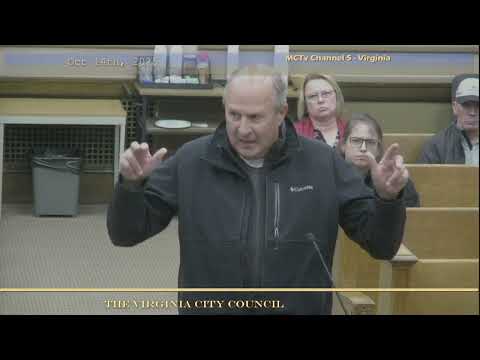
Residents pressed the Virginia City Council on Oct. 14 over a proposed 2026 property-tax levy they said would impose severe burdens on homeowners.
Greg Lehi, who organized the public appearance, and resident John Scooby told the council that a recent certified levy increase and a proposed 2026 levy would produce large year-to-year tax jumps for homeowners. Lehi said the certified 2024 property-tax levy rose by 21.46 percent and that many homeowners experienced increases of $2,000 to $4,000 in one year. He compared Virginia’s tax rate to neighboring Mountain Iron (which Lehi gave as 1.12) and said Virginia was nearly double at about 2.09. “The 2026 proposed levy increase is 22.75%. It’s unacceptable,” Lehi said.
Councilors acknowledged residents’ concerns. Mayor Cuffee and multiple councilors said the preliminary levy had been set high during earlier budget exercises, and they described continuing work to reduce it. Councilor Motley urged taxpayers to attend budget meetings and said significant changes — not just “chipping away” — are likely needed. Councilor Paulson said the council had engaged financial consultant Baker Tilly to review long-term planning and bond strategy; she said staff and the consultant will evaluate options to put money aside for future purchases rather than issuing new bonds.
City staff and councilors outlined some numbers and choices but did not set a final levy. The council said the preliminary 22.75% figure had been reduced in later drafts to roughly 14.7% but that 14.7% was still unacceptable to some members and remained under review. The council emphasized two levers for lowering the levy: personnel (including delaying or not filling vacancies) and capital-equipment purchases. City staff estimated roughly 81% of the budget is related to personnel/benefits, which limits other savings options, councilors said.
Residents and councilors also debated prior equipment and facility purchases. Lehi and other residents listed recent purchases and operating losses — citing a $28.1 million reported loss by Virginia Public Utilities from 2018–2023 and projected operating costs for the Iron Trail Motors Event Center (IPMEC) that city staff estimated at about $8 million for the first year of operation and roughly $10 million by the end of next year. Park and recreation director Brian Silber asked the council to weigh the event center’s economic benefits; he said the upcoming Pan Continental Curling Championships was conservatively estimated to generate $1.5 million in direct spending in the region over 10 days.
What happens next: Council members invited residents to budget meetings (the council holds a recurring budget meeting at 7:30 a.m. before the committee-of-the-whole) and asked residents to email questions and materials. Councilors said they will continue line-by-line budget review, review recommendations from Baker Tilly, and pursue both spending reductions and revenue strategies prior to the December levy-adoption deadline.
Quotes: “We need to have the taxpayers more present with what's happening in this city,” Councilor Motley said. “We need pressure…Your voices need to be heard.”
Ending: No final levy was adopted at the Oct. 14 meeting. The council said reductions remain under discussion and that more detailed budget sessions and financial analysis from Baker Tilly will be presented ahead of the final levy decision.