
Board approves Forest Legacy easement and Nature Conservancy donation to protect 426 acres in Adams County
Get AI-powered insights, summaries, and transcripts
Subscribe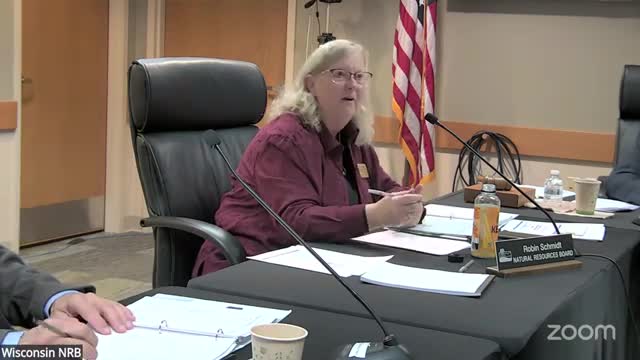
Summary
The board approved acquiring a 426.64-acre working-forest conservation easement in Adams County with federal Forest Legacy funds and a Nature Conservancy contribution; the land will remain in private ownership with a conservation easement named Sandy Ridge Forest Conservation Easement.
The Wisconsin Natural Resources Board on Oct. 22 approved acquisition of a 426.64-acre working-forest conservation easement in Adams County under the federal Forest Legacy program and accepted a monetary contribution from The Nature Conservancy toward the purchase.
Terry Bay, director of the Bureau of Facilities and Lands, and Ron Gropp, Forest Legacy program coordinator, told the board the easement would be acquired from Cane Sandy Ridge LLC for $704,000. The project will be financed with a federal Forest Legacy grant covering 75 percent of the acquisition ($528,000) and a $193,659.50 contribution from The Nature Conservancy. Bay asked the board to establish an official name for the easement—Sandy Ridge Forest Conservation Easement—under MC 22.81.1.
Why it matters: the department described the property as containing remnant pine-oak barrens, wetlands including wet prairies and riparian woodlands, and oak and pine communities that provide habitat and restoration opportunities. The easement will protect the property in perpetuity, prevent forest fragmentation and support sustainable forest management while preserving private ownership and local tax status.
Public input and local support: the department said it received resolutions of support from Adams County and the Town of Quincy. Gropp described Forest Legacy as a long-running federal program providing voluntary protection of working forests, with the federal share often at 75 percent and state or partner match required.
Board action: Doug Cox moved approval; Robin Schmidt seconded. The board approved the acquisition by voice vote and asked that a certificate of appreciation be sent to The Nature Conservancy and that the easement name be established in the department records.
Implementation notes: the department said motorized access will not be granted by the easement but a designated corridor for foot traffic will allow public access to adjacent state-owned lands. The landowner will retain private ownership and may remain enrolled in Managed Forest Law; the conservation easement, however, will protect the property in perpetuity even if MFL status changes.