Get Full Government Meeting Transcripts, Videos, & Alerts Forever!
Commission staff proposes adjusted performance framework for Opportunity Public Charter Schools; commissioners raise concerns about 75% at‑risk requirement
Summary
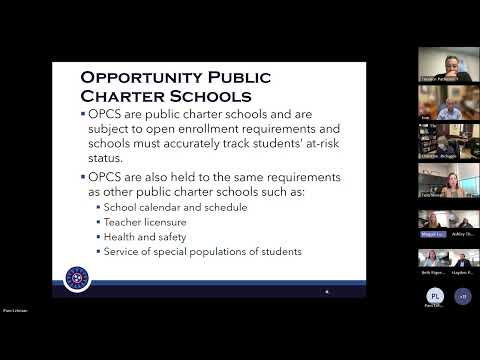
Deputy Director of Authorizing Maggie Lund presented a draft of Commission policy 3.71 on Oct. 7, proposing an adjusted performance framework for Opportunity Public Charter Schools created under state law.
Deputy Director of Authorizing Maggie Lund presented a draft of Commission policy 3.71 on Oct. 7, proposing an adjusted performance framework for Opportunity Public Charter Schools created under Tennessee law.
The proposed framework would apply the Tennessee Department of Education's adjusted letter grade for Opportunity schools, increase the weight for mission-specific goals from 10% to 20%, retain the TVOS growth composite and add a time-and-model comparative analysis that compares proficiency and performance-level movement for students who remain enrolled year to year. The draft also adds an organizational-performance line item to ensure schools track and maintain the statutory 75% at‑risk enrollment requirement.
Why it matters: Tennessee Code Annotated 49-13-133 establishes Opportunity Public Charter Schools and requires authorizers to adopt an adjusted accountability framework that measures multiple performance indicators and prepares students for post‑secondary success. The commission's framework will determine how new Opportunity schools are evaluated, monitored and, if necessary, intervened upon.
Key elements of the draft framework
Maggie Lund said Opportunity Public Charter Schools must serve at least 75% at‑risk students as that term is defined in statute: household income at or below 400% of the federal poverty level plus one of several risk criteria such as prior dropout, juvenile adjudication, chronic absenteeism, retention, pregnancy or parenting status, documented substance abuse, or history of abuse or neglect. Lund said at‑risk…
Already have an account? Log in
Subscribe to keep reading
Unlock the rest of this article — and every article on Citizen Portal.
- Unlimited articles
- AI-powered breakdowns of topics, speakers, decisions, and budgets
- Instant alerts when your location has a new meeting
- Follow topics and more locations
- 1,000 AI Insights / month, plus AI Chat