Get Full Government Meeting Transcripts, Videos, & Alerts Forever!
IU–Indianapolis lecture: Scott Pague says U.S. foreign policy faces three possible futures
Summary
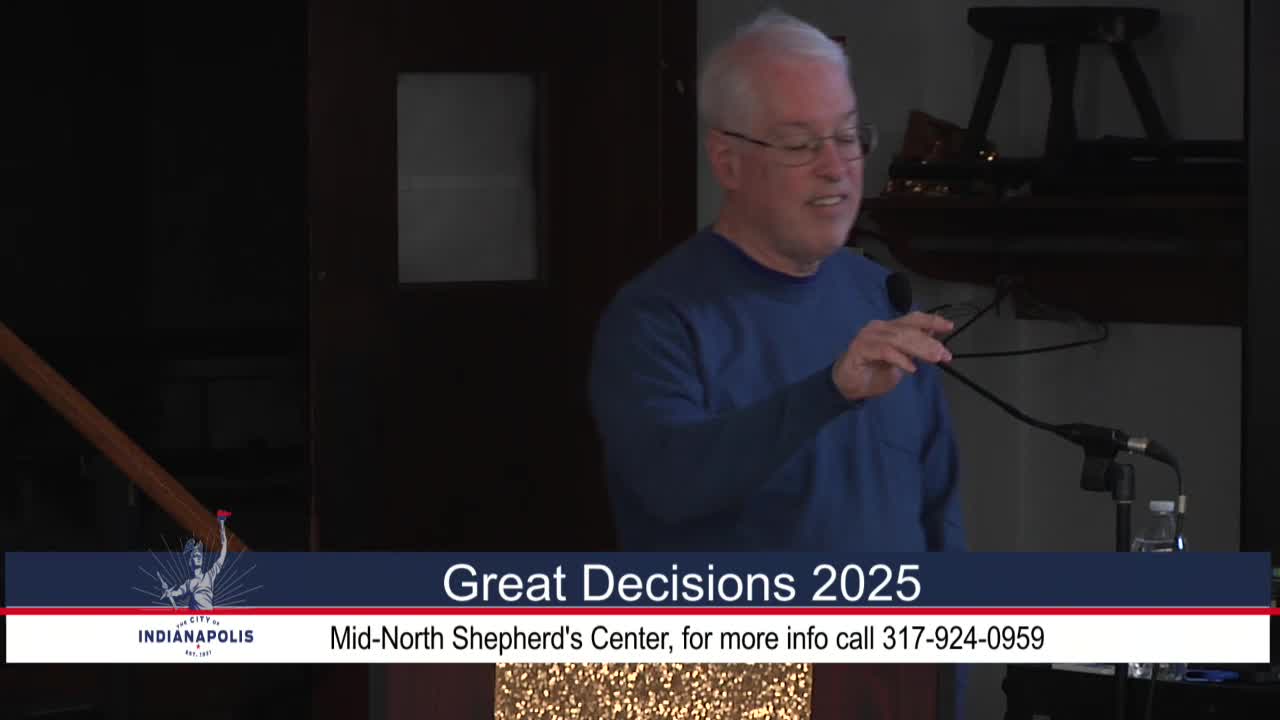
Dr. Scott Pague, acting director of the Global and International Studies program and chair of political science at Indiana University–Indianapolis, outlined three broad scenarios for U.S. foreign policy — revitalized U.S. leadership, a China-led order, or a fragmented multipolar world — and discussed the strengths and risks of each.
Dr. Scott Pague, acting director of the Global and International Studies program and chair of political science at Indiana University–Indianapolis, told a campus lecture that American foreign policy is “at a crossroads,” presenting three distinct paths the United States could follow.
Pague said the first path would be a revitalized, U.S.-led rules-based international order in which the United States maintains alliances, strengthens institutions and integrates additional partners. The second path would be a China-led international order characterized by state-centered economic ties and diminished emphasis on democracy and human rights. The third path, which Pague described using Charles Kupchan’s framework, would be a world with no single dominant power — a multipolar, regionally driven world he summarized as “no one’s world.”
Pague framed the post-1945 order through the lens of hegemonic stability theory and the institutions that flowed from it: NATO as the security framework, the Marshall Plan for European recovery, and the Bretton Woods institutions — the International…
Already have an account? Log in
Subscribe to keep reading
Unlock the rest of this article — and every article on Citizen Portal.
- Unlimited articles
- AI-powered breakdowns of topics, speakers, decisions, and budgets
- Instant alerts when your location has a new meeting
- Follow topics and more locations
- 1,000 AI Insights / month, plus AI Chat