Get Full Government Meeting Transcripts, Videos, & Alerts Forever!
Get email alerts on the Public Decency Ordinance topic
No spam. Unsubscribe anytime.
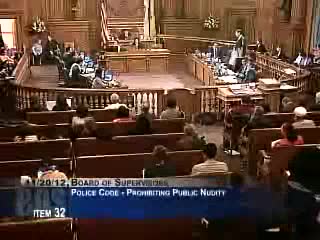
Board approves narrow public‑nudity restrictions on first reading after fraught debate
Summary
The Board passed, on first reading, a narrower ordinance extending specific public nudity restrictions to streets, sidewalks, plazas and public transit, including exemptions for festivals and parades; vote was 6–5 amid intense public comment and board debate.
The Board of Supervisors voted on first reading on Nov. 20 to amend the police code to extend city restrictions on public nudity to streets, sidewalks, street medians, parkless plazas and public transit, while preserving broad exemptions for parades, fairs and festivals. The vote on the amended ordinance was 6 ayes and 5 noes.
Sponsor Supervisor Scott Wiener described the ordinance as narrower than older park and port restrictions, saying it “acknowledges that public nudity is part of San Francisco” but that “freedom, expression, and acceptance don't mean that anything goes under any circumstance.” Wiener made several drafting choices to limit criminal exposure — the proposal allows citation as an infraction rather than requiring misdemeanor charges and includes broad exemptions for organized events, beaches and private property.
The item sparked prolonged debate and public testimony. Supporters argued the measure responded to sustained neighborhood complaints — especially in the Castro — and sought to preserve the area’s livability for residents, families and visitors. Opponents warned of civil‑liberties and enforcement consequences, and several supervisors raised procedural concerns about city resources and policing priorities. Supervisor Campos questioned whether the police would be forced to choose enforcement priorities amid constrained staffing and said he feared the measure could divert attention from violent crime.
Supervisor Wiener distributed non‑substantive and technical amendments (including an operative date of Feb. 1, 2013 or 30 days after mayoral signature). The board adopted the amendments without objection and later approved the ordinance on first reading by roll call. The clerk recorded six ayes and five noes.
Action: ordinance passed on first reading; further committee or second‑reading votes will be required before it becomes law.