Get Full Government Meeting Transcripts, Videos, & Alerts Forever!
Get email alerts on the Renewable Energy topic
No spam. Unsubscribe anytime.
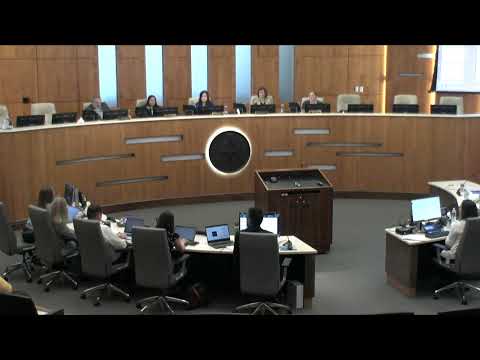
Adams County approves Hanks Crossing solar and battery project, with wildlife and decommissioning conditions
Summary
The Adams County Board of County Commissioners approved conditional use permits for the Hanks Crossing large-scale solar facility and a collector substation, with conditions including wildlife protections, a decommissioning plan and time limits.
The Adams County Board of County Commissioners on April 15 approved conditional use permits for the Hanks Crossing large-scale solar energy facility and an associated utility substation (PRC2024-4), a project that would occupy multiple parcels in eastern Adams County and connect to an existing transmission line along East 80 Eighth Avenue.
The board approved the permits after staff and the applicant described the project’s scale, mitigation measures and economic benefits. The Plenitude-led project would span multiple parcels totaling roughly 2,600–2,700 acres, with about 2,200 acres proposed for solar arrays and 355 megawatts of solar capacity paired with a 178-megawatt battery energy storage system, according to the project presentation by Jeremy Call of Logan Simpson and Patrick Brecken, director of development for Plenitude.
County planning staff told commissioners the requests are for a conditional use permit to allow a large-scale solar facility and a separate conditional use permit for a collector substation in the Agriculture-3 zone. Cody Spade, planner with the county’s community and economic development department, recommended approval with 16 findings of fact, six conditions and a note. The permits include a decommissioning plan requirement, setbacks from previously plugged oil and gas wells, compliance with water-well permits, and construction-season nest surveys and buffer requirements specified by Colorado Parks and Wildlife.
“Out of over a thousand proposals XL received, they selected this project as one of only 20 to move forward with as part of their 2021 clean energy plan,” Jeremy Call said in the applicant’s presentation, adding the site was chosen because it aligns with county land-use designations, is adjacent to a transmission line, and has relatively few nearby residents.
Commissioners focused questions on wildlife corridors, decommissioning, weeds and agrivoltaic options. Commissioner Henson asked about the project’s wildlife corridor and seasonal nest protections; staff and the applicant said they had worked with Colorado Parks and Wildlife to preserve natural drainages as a corridor and amended a condition to require pre-construction nest surveys and species-appropriate avoidance buffers during the migratory bird nesting season (April 1–Aug. 31).
Commissioners also pressed the applicant on the decommissioning plan. Spade said the county’s development standards require a decommissioning plan and that the applicant had provided one that meets those standards. The permit package includes an explicit decommissioning requirement; the applicant described industry practice for removing panels, foundations and buried cable and for recycling usable materials at end of life.
The applicant said operational staffing would be low—two to three on-site personnel during operations—and that construction would create hundreds of temporary jobs over an estimated 18–24 month construction window. The applicant also said operational water use is minimal: about 0.01 acre-feet per year for panel cleaning, substantially less than irrigated agriculture.
Public comment on the item included landowner Raymond Morris, who said he supports the project and described long family ties to the land. Morris stated his family and some landowners back the project after years of negotiations with project developers.
Commissioner Odorizio moved to approve PRC2024-4 “with 16 findings of fact, six conditions and one note.” The motion passed 5–0.
The permit carries multiple conditions intended to limit off-site impacts: adherence to the applicant’s decommissioning plan, a 30-year authorization window noted in staff materials, requirements that associated building permits conform to the approved site plan, administrative limits on fencing adjustments, compliance with Colorado Parks and Wildlife nesting guidance as amended by the Planning Commission, and a five-year building-permit milestone that returns the property to prior uses if not acted upon. The approved conditions also require adherence to all applicable building, zoning, fire, engineering and health codes.
The board and staff flagged follow-up policy work, including whether county development standards should add surety or bonding mechanisms for large renewable projects, but agreed any changes to county-wide rules should be addressed in future Development Standards and Regulations updates rather than as project-specific conditions.