Get Full Government Meeting Transcripts, Videos, & Alerts Forever!
Get email alerts on the Comprehensive Plan topic
No spam. Unsubscribe anytime.
North Lauderdale reviews draft comprehensive plan update; staff to transmit amendments for state review
Summary
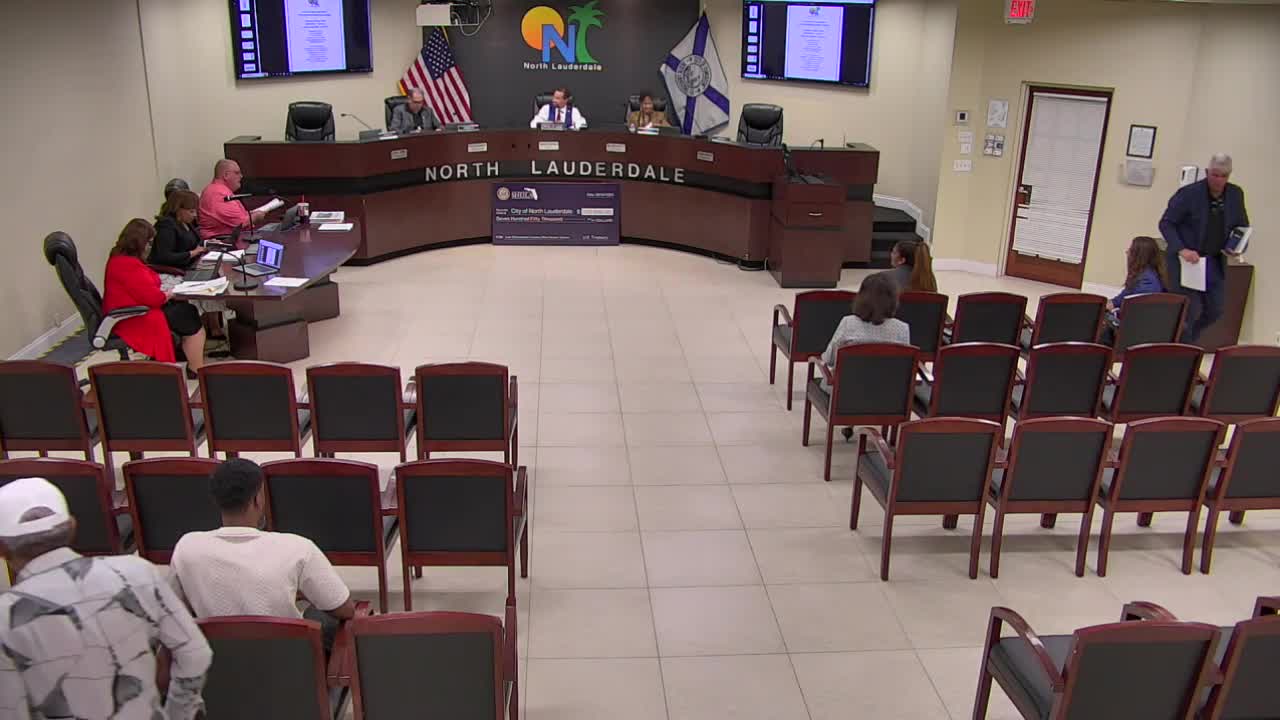
City of North Lauderdale commissioners on a workshop in April 2025 reviewed proposed updates to the city’s comprehensive plan and heard staff recommend transmitting the draft amendments to state and regional review agencies for comment.
City of North Lauderdale commissioners on a workshop in April 2025 reviewed proposed updates to the city’s comprehensive plan and heard staff recommend transmitting the draft amendments to state and regional review agencies for comment.
The draft update, presented by Scarlett Hammonds, senior planner with the Corodino Group, revises multiple plan elements — including future land use, housing, transportation, recreation and open space, conservation, and infrastructure — and updates the city’s water supply planning to align with requirements from the South Florida Water Management District. Hammonds told the commission the plan “looks to 2040” and described the comprehensive plan as “a policy document … [that] provides the cities with policies. And this is to look into the future for a minimum of 10 years.”
Why it matters: The comprehensive plan sets the policy framework for future zoning, capital projects and intergovernmental coordination. Commissioners and staff said transmitting the draft to state and county reviewers is the next step; agency comments are expected within about 60 days, after which the commission would take a second reading and consider final adoption.
Major proposals and edits - Future land use: The draft introduces six overlay districts aimed at channeling redevelopment along major corridors (including U.S. 441, McNabb Road and Rock Island Road), adds mixed‑use residential and transit corridor categories, and updates level‑of‑service language to match county standards. Staff emphasized those density changes will be coordinated with Broward County going forward.
- Housing: The housing element was revised to add policies addressing accessory dwelling units, mixed‑use residential, green building, and “missing middle” housing types (for example, small multiunit buildings that can buffer single‑family areas). Staff said the revisions are intended to support workforce and affordable housing consistent with county and state expectations.
- Transportation: The draft expands multimodal and safety language, calls out FDOT engineering and level‑of‑service standards, and identifies transportation surtax funds for local circulators and community shuttles. Staff highlighted bus rapid transit corridors where appropriate and unspecified improvements to access Tri‑Rail.
- Recreation and open space: The update aligns with the county standard of 3 acres of parkland per 1,000 residents and suggests potential locations for new or expanded open space, including under utility easements and along canals. Staff recommended development of a parks master plan to prioritize capital improvements and link projects to the city’s capital improvement program.
- Conservation and infrastructure: The draft adds stormwater best practices (permeable pavers, green roofs), flood control language consistent with state and federal codes and the National Flood Insurance Program, and updated level‑of‑service numbers for water, wastewater and solid waste used for capital planning.
Process, timing and next steps Staff recommended approval of the amendments for transmittal to state and regional review agencies and explained the agencies will review the draft and return comments in roughly 60 days. If agencies’ comments are minor, staff said the commission will schedule a second reading for formal adoption and then complete county recertification before implementing the plan. City Manager Sargis told the commission staff will begin concurrent work on the land development code and related zoning updates so that, if the plan is adopted, the city can follow with code amendments to implement the new policies.
Public outreach and equity concerns Several commissioners asked about outreach to underserved and underrepresented neighborhoods. Commissioners noted most of the presentation and outreach to date represented the end of a multi‑year process and that earlier phases — including neighborhood meetings and initial data collection — are where targeted outreach to specific communities would normally occur. Staff said the city has used past events (for example, North Lauderdale Days) and board hearings (planning and zoning, housing and sustainability boards) and that it will continue in‑person outreach, town halls and condensed, plain‑language materials during the post‑transmittal phase.
Parks and capital projects Commissioners asked about specific park projects. City staff and the city manager said work is underway on a pavilion and related improvements at one park (permit issued; delivery and installation timing to be provided), and that Parks & Recreation will link recommended park improvements to the capital improvement plan. Commissioners raised Silver Lakes Village and other local park needs; staff said conceptual drawings and CIP entries will follow.
No formal action at workshop Staff’s recommendation at the workshop was that the commission approve transmittal of the amendments to reviewing agencies. The presentation concluded without a formal vote; staff said the item will return as a formal hearing at the regular commission meeting for transmittal/acknowledgment and later for second reading and adoption after agency review.
Staff and consultants who presented the draft said they will provide a version of the plan with page numbering, a clearly marked revision year (2025) and condensed reference materials for commissioners and the public.
Ending If the commission transmits the plan as recommended and agency comments are minor, staff expects to return with a second‑reading adoption and then pursue zoning and land‑development code changes to implement the plan’s policies. Commissioners asked staff to prioritize additional community outreach and plain‑language materials during the agency review and implementation phases.