Get Full Government Meeting Transcripts, Videos, & Alerts Forever!
Get email alerts on the Background Checks topic
No spam. Unsubscribe anytime.
Health committee reviews bill to extend background‑check certificates to three years, seeks annual RAPBACK checks and vendor transparency
Summary
The Puerto Rico House Health Committee heard testimony on Proyecto de la Cámara 350 — an amendment to Law 300 to extend background‑check certificate validity from one year to three — and directed follow‑up on RAPBACK monitoring, the Department of Justice contract with vendor Biometric for All, and fee and staffing details.
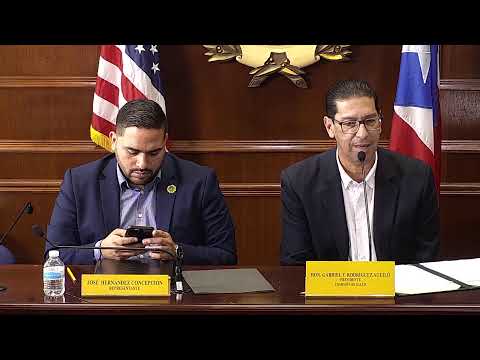
The House of Representatives Health Committee on April 9 took testimony on Proyecto de la Cámara 350, a bill that would amend Law 300 to change the validity period for background‑check certifications issued to people who provide services to children, older adults and persons with disabilities from one year to three.
Committee members heard legal and operational testimony from the Department of Justice, the Department of Health and the Defensoría de las Personas con Impedimento and pressed officials for safeguards, including the use of RAPBACK (continuous monitoring) in the second and third years of any extended certificate and for documentation about a Justice Department contract with a private vendor.
The bill seeks to reduce recurring costs and administrative burdens for providers and employers who must obtain the certification required by Law 300 (Ley de Verificación de Credenciales e Historial Delictivo de Proveedores a Niños, Personas con Impedimentos y Profesionales de la Salud). Viviana Cábala, an attorney with the Department of Justice, told the committee that the proposal “propone enmendar ... establecer una vigencia de tres años para las certificaciones” and described the federal National Background Check Program and related federal requirements that motivated Puerto Rico’s existing system.
Department of Health officials described how Puerto Rico implemented fingerprint‑based checks after federal guidance and grants. Lourdes Borres Otero, director of the Puerto Rico Background Check Program (Department of Health), said the program began taking fingerprints in May 2021: “En mayo del dos mil veintiuno nosotros comenzamos a tomar huellas dactilares.” She told the committee the Health Department currently operates a central office in San Juan with 17 certified staff, is opening regional offices in Fajardo and Ponce, and processes roughly 50,000 fingerprint checks a year. When asked how many applicants fail the check, Borres answered succinctly: “El tres por ciento.”
Officials explained the operational and cost structure to the committee. The applicant fee is $70.00. The Department of Health retains $23.95 of that fee to cover program operations; the remainder flows to cover the FBI transmission fee (reported by witnesses as $13.25), vendor fees (identified in testimony as Biometric for All charges, technology and maintenance fees) and other transmission costs. Health officials said the program runs a deficit of about $700,000 annually and that fingerprint‑capture machines cost roughly $25,000 each.
Committee members raised questions about why the Department of Justice holds the contract for transmission to the FBI and why a private vendor appears to capture a significant portion of the fee while Department of Health staff perform the fingerprinting. Representative Rodríguez Aguilar and others said they plan to summon Justice officials and the vendor to an executive (technical) hearing to clarify the contract terms, staffing and the flow of fees.
The Defensoría de las Personas con Impedimento (DPI) expressed caution. Juan José Troche Villanueva, interim defender, and José Montalvo Vera, principal attorney, said they would not endorse extending certificate validity to three years without an intermediate verification mechanism. In written and oral remarks DPI urged that any extension include “métodos alternativos de cernimiento que sean expeditos, pero sin sacrificar el aspecto de la seguridad de los pacientes,” and recommended that RAPBACK or similar continuous monitoring be used to detect new disqualifying records before a certificate expires.
Committee members and agency witnesses also discussed operational details that would affect committee drafting and implementation: appointment wait times (about 15 days currently, expected to fall after opening regional offices), options for applicants to purchase RAPBACK monitoring (witnesses said some states charge nominal annual RAPBACK fees of around $3), and statutory cross‑references and technical edits DOJ proposed for the bill text.
No formal committee vote on the bill took place at the hearing. The committee directed staff to request, within five days, documentation from Justice and Health including: the detailed fee‑breakdown and vendor contract(s); numbers on how many applicants failed checks and whether any later committed offenses while certified; the program’s staffing and budgetary shortfall; and the plan and timetable for opening regional offices. The committee also announced it will hold an executive technical hearing that will summon Department of Justice officials and vendor representatives to answer contract and procurement questions.
What the hearing did not resolve: whether the bill will include the exact RAPBACK language to require annual or automatic second‑ and third‑year checks, and whether the committee will amend fee distribution. Committee members said they expect to circulate and consider specific amendments before taking a vote.
The committee closed the hearing after agreeing to collect the requested documents and hold additional testimony to clarify procurement and monitoring procedures before advancing the bill.