Get Full Government Meeting Transcripts, Videos, & Alerts Forever!
Get email alerts on the Omnibus Hhs Bill 2025 topic
No spam. Unsubscribe anytime.
Senate HHS omnibus walkthrough highlights $261.8M biennial gap; provider tax, hospital facility fees and pharmacy reforms draw pushback
Summary
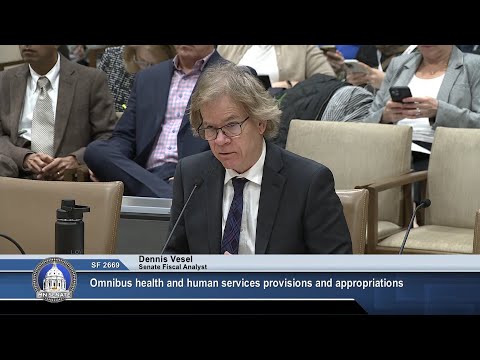
On April 9, the Minnesota Senate Health and Human Services Committee heard a line‑by‑line walkthrough of the omnibus HHS bill spreadsheet showing a general‑fund shortfall of about $261,811,000 for the 2026–27 biennium.
On April 9, the Minnesota Senate Health and Human Services Committee heard a line‑by‑line walkthrough of the committee’s omnibus HHS bill spreadsheet that showed a general‑fund target shortfall of about $261,811,000 for the 2026–27 biennium.
“the amount in 2627 is minus $261,811,000,” said Mr. Bessel, a committee staff member who led the spreadsheet presentation, describing the biennial target on the document.
Committee staff and public witnesses outlined major revenue and policy changes within the draft bill, including a proposed increase in the provider tax, a hospital facility‑fee prohibition in one section of the bill and pharmacy benefit manager (PBM) reforms bundled with directed payment proposals. Advocates and health system leaders warned those changes could shift costs to nonprofit insurers, providers and patients while potentially destabilizing some rural and independent providers.
Why it matters: The omnibus package combines hundreds of program changes, funding adjustments and policy provisions. Stakeholder groups told the committee that tax and fee changes could have near‑term operational consequences for hospitals, pharmacies and nonprofit health plans and long‑term effects on patient access.
Key fiscal and policy points from the walkthrough
- Fiscal target: Mr. Bessel told members the Senate’s general‑fund target shows a $261,811,000 deficit for the 2026–27 biennium; the document also lists multi‑biennium figures and fund‑specific detail, including items in the Health Care Access Fund.
- Health Care Access Fund balance: The spreadsheet shows a Senate projection for the Health Care Access Fund balance of $148,700,000 at the end of fiscal 2029.
- Provider tax: The bill includes a proposal to restore or raise the provider tax (hospital/provider assessment) to 2.0 percent. Committee materials estimate the change would generate roughly $195,000,000 of non‑dedicated revenue to the Health Care Access Fund in the first biennium and $216,000,000 in the second.
- Directed payments and PBM changes: The draft includes several “directed payment” mechanisms and a multi‑article package to centralize drug benefit management for Medical Assistance and MinnesotaCare. Staff described these as complex proposals that aim to be budget‑neutral to the state by matching provider assessments with federal dollars; the PBM change is shown with estimated gross savings but remains subject to further fiscal notes and language refinement.
Public testimony and concerns
- Nonprofit health plans: Dan Anderson of the Minnesota Council of Health Plans said nonprofit plans reported an aggregate operating loss in 2024 and that the bill’s additional taxes and assessments risk further financial harm. “This bill compounds the problem by adding more costs to the system with new assessments and fees,” Anderson said.
- Hospitals and rural systems: Mary Krenke of the Minnesota Hospital Association warned that banning hospital facility fees would cost hospitals roughly $1 billion annually and likely force service line closures. Mike Phelps, CEO of Ridgeview Medical Center, said his system planned to open a clinic to serve Medical Assistance patients but might have to cancel that opening if facility fees were eliminated.
- Rural hospital testimony: Rochelle Schultz, CEO of Winona Health, described multi‑year operating losses at rural hospitals and urged the committee to remove the facility‑fee prohibition, saying facility fees pay for real clinic overhead — electronic records, equipment, maintenance and staff.
Where numbers remain uncertain
Several large items in the omnibus are still “works in progress,” staff said, including directed payment language and PBM estimates that depend on final statutory text and fiscal notes. Mr. Bessel told members that some fiscal numbers are being revised and that additional detail would be provided when available.
What comes next
Committee leaders said the staff walkthrough would continue if not finished; the committee also scheduled testimony from dozens of witnesses on the bill’s provisions. Members indicated follow‑up work was likely on provider tax design, directed payment mechanics and potential impacts on hospitals and insurers.
Ending note
Lawmakers in the coming days will need to balance short‑term revenue choices with potential operational impacts on providers, while final PBM and directed‑payment language is still being negotiated.