Get Full Government Meeting Transcripts, Videos, & Alerts Forever!
Get email alerts on the Public Safety Budget topic
No spam. Unsubscribe anytime.
Council debates expanded public-safety investments; manager presents prioritized "A/B" options and funding scenarios
Summary
City staff presented a prioritized list of enhanced public-safety requests totaling tens of millions over multiple years and outlined several funding options, including a dedicated public-safety fund created by redirecting an 8-cent personal-property tax dedication from mosquito control.
City staff on April 8 presented Chesapeake City Council with a detailed, prioritized package of enhanced public-safety requests and multiple funding scenarios intended to cover some or all of the items in the coming budget year.
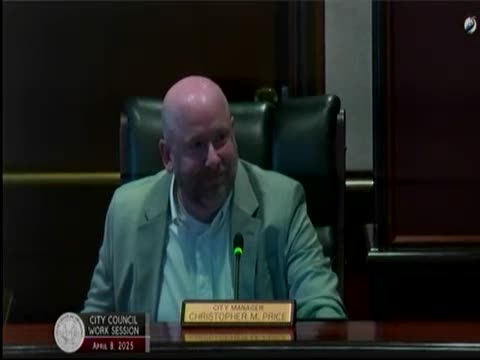
The city manager said staff split the unfunded public-safety requests into Priority A (highest urgency) and Priority B (secondary) to help council choose what to fund if resources are limited. "The total aggregate cost of the enhanced public safety, for priority A would be just under $4,900,000," the manager said, listing items that included a second set of structural turnout gear for all existing firefighters, five full-time animal services positions, staffing for Medic 11, purchase of a water-tanker truck to serve rural areas, and additional rescue staffing.
Priority B items, described as important but not as immediate, included a fire/EMS data-analyst position, annual debt service for Station 4 and a fifth precinct replacement projects, and other capital and staffing requests. The manager said the total aggregate amount for Priority B was just under $3,800,000; the presentation also described longer-range unfunded needs totaling approximately $134 million to cover future stations, capital, and staffing over multiple years.
Funding scenarios presented to council included: (a) use existing budget capacity (roughly $500,000) plus a tax change; (b) increase the real-estate tax by two cents and redirect 8 cents of the personal-property tax; (c) raise real-estate tax by two cents while reducing the personal-property tax by 8 cents (estimated to generate about $7.4 million); and (d) maintain current real-estate and personal-property rates and redirect 8 cents of personal-property tax from mosquito-control to a newly dedicated public-safety fund (estimated at roughly $2.5 million). Staff also identified a utility-funding reallocation tied to a CIP project that could free about $2 million for public safety and discussed better enforcement of existing collection and revenue opportunities raised by the commissioner of the revenue.
Council members asked for more detail on several items: the manager said the hotel-room-night increase (from $1 to $2 per night) already was included in the base budget; the real-time crime center enhancements requested from the General Assembly had been vetoed and could be added as an option for council consideration. Several council members urged that public safety remain the first priority and asked staff to return quickly with refined cost estimates and straw polls to gauge council's appetite for specific items.
Why it matters: The presentation framed public safety as the top city priority and mapped concrete staffing and capital needs to specific budget choices. Staff repeatedly differentiated between one-time or capital purchases (where cash or reserve transfers could be appropriate) and ongoing staffing (which would require recurring revenue).
Ending: Staff said it would return with refined cost estimates and will run straw polls and more-detailed scenarios at the next work session to help council decide whether to fund priority items with existing capacity, tax changes, or reallocated funds.