Get Full Government Meeting Transcripts, Videos, & Alerts Forever!
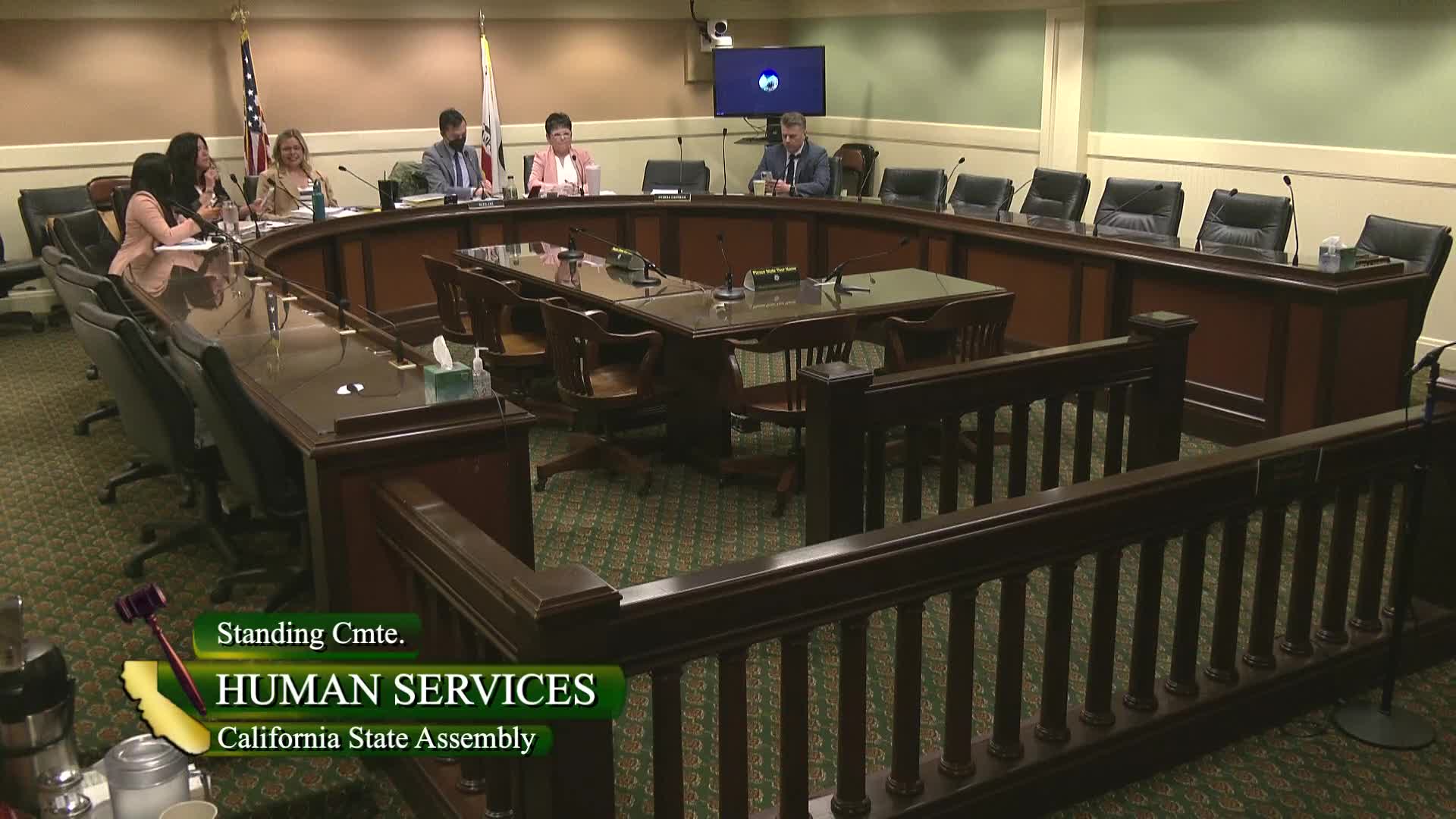
Assembly Human Services committee advances measures on child welfare, childcare staffing, mandated reporting and food aid
Summary
The Assembly Committee on Human Services on Wednesday advanced a package of bills addressing child welfare practices, supports for families with children, and workforce and benefit‑access reforms.
The Assembly Committee on Human Services on Wednesday advanced a package of bills addressing child welfare practices, supports for families with children, and workforce and benefit‑access reforms.
The committee, chaired by Assemblymember Lee, heard testimony on 22 bills, moved dozens to follow‑up committees and recorded roll calls on multiple measures. Topics that drew sustained discussion included: removing criminal penalties for parents of chronically truant elementary and middle‑school students (AB 461); easing residency rules for nonminor dependents (AB 890); creating temporary pathways to permit more associate teachers in child care classrooms (AB 753); a statewide standard training requirement for mandated reporters (AB 601) and related pilot work (AB 970); a rebuttable presumption favoring unsupervised visits between children in foster care and parents unless safety is shown (AB 926); protections so disaster‑displaced residents keep public benefits temporarily (AB 1161); allowing trained staff in adult residential and day programs to give inhalable emergency seizure medication (AB 1172); and steps to protect and study CalFresh benefit levels and eligibility (AB 1211) and to remove “sponsor deeming” barriers in the state CFAP food program (AB 1049).
Why it matters: committee members and witnesses framed the hearing as part of an overarching push to reduce barriers that advocates say keep families from stabilizing — whether the barrier is a criminal sanction, a permit rule that keeps a child care classroom closed, inconsistent mandated‑reporter practice, or paperwork that prevents people from getting food or health coverage during emergencies. Several authors and witnesses said the bills are intended to align state practice with recent administrative guidance and to reduce preventable foster‑care placements, housing instability and hunger.
Several witnesses described personal or programmatic harm under the current rules. Rebecca Gonzales, policy advocate for the Western Center on Law and Poverty, said of AB 461 that “This policy is overly harsh and discriminatory and there is a better way to support these families,” arguing that punitive penalties and cash‑aid sanctions for families with truant children deepen…
Already have an account? Log in
Subscribe to keep reading
Unlock the rest of this article — and every article on Citizen Portal.
- Unlimited articles
- AI-powered breakdowns of topics, speakers, decisions, and budgets
- Instant alerts when your location has a new meeting
- Follow topics and more locations
- 1,000 AI Insights / month, plus AI Chat