Get Full Government Meeting Transcripts, Videos, & Alerts Forever!
Get email alerts on the Regulation And Fees topic
No spam. Unsubscribe anytime.
DFPI proposes fee increases and trailer bill language to address fund shortfall; lawmakers and industry urge phased review
Summary
The Department of Financial Protection and Innovation presented trailer bill language and fee adjustments intended to address structural shortfalls in the Financial Protection Fund. DFPI and an outside consultant said program fees have not kept pace with costs; the LAO recommended a three-year limited-term increase plus reporting; escrow and
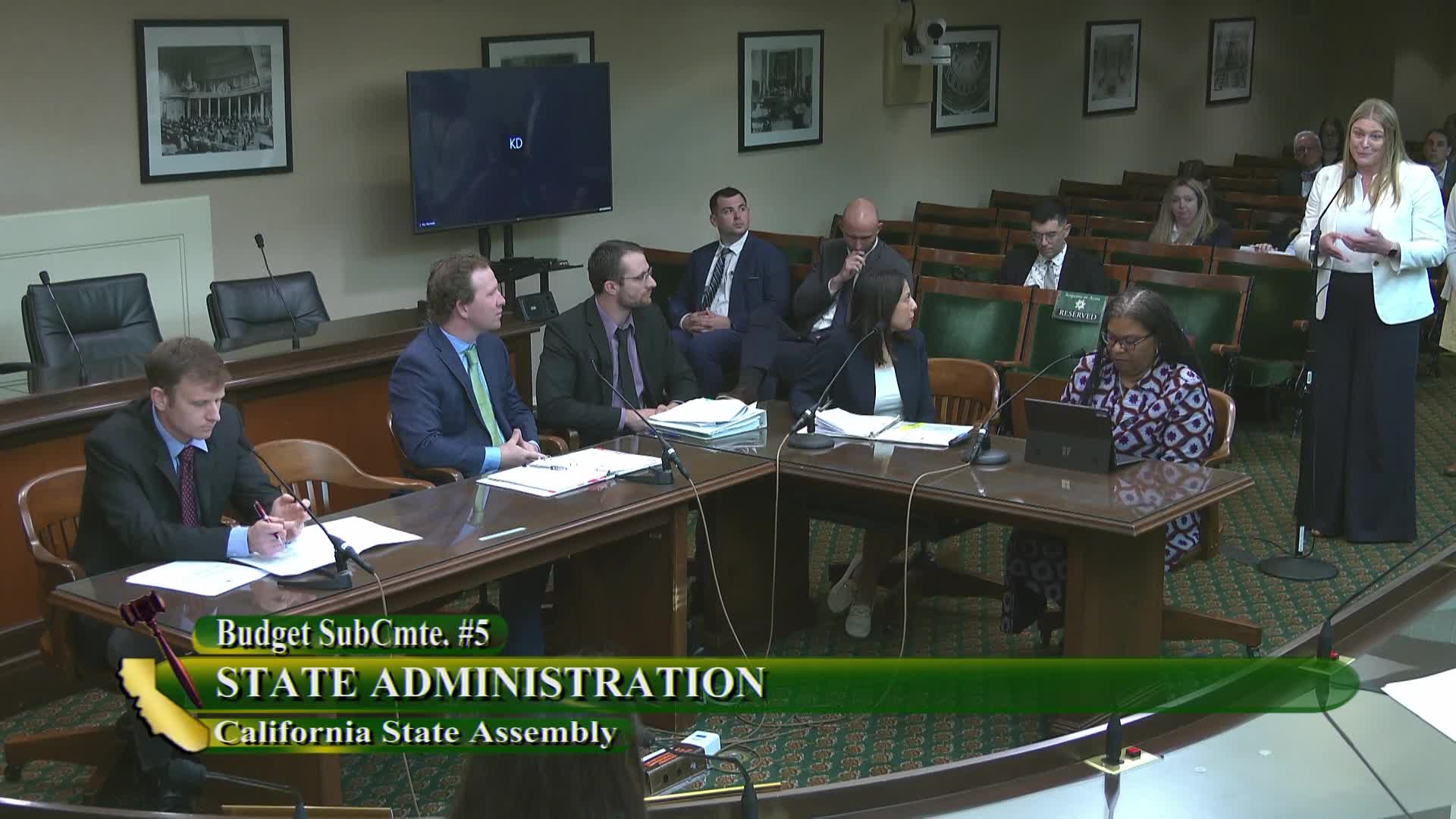
The Department of Financial Protection and Innovation (DFPI) asked the Assembly Budget Subcommittee No. 5 to approve trailer bill language and fee adjustments across several licensing and regulatory programs to address a structural deficit in the Financial Protection Fund.
DFPI officials told the committee an independent financial review by Crowe LLP (finalized November 2024) showed that longstanding fee levels across many programs have not kept pace with rising operating costs and that the fund risks insolvency without adjustments. DFPI requested statutory authority to adjust certain assessments and to set an hourly examination rate tied to estimated average costs; the department said the statutory changes would take effect July 1, 2025.
"Some fees date back to 1959 while the most recent fee adjustments for some programs were made in 2013," Deputy Commissioner Sophia Smith said, summarizing the department's trailer bill rationale. DFPI said new statutory programs (for example, the Debt Collection Licensing Act, the California Consumer Financial Protection Law, and the Digital Financial Assets Law) have increased start-up costs that have not yet produced self-sustaining revenues.
The LAO recommended approving fee increases on a three-year limited term while directing DFPI to report back with actual revenue collection, market impacts and plans to fund programs not included in the trailer bill. "We recommend that the legislature approve the proposed fee increases on a 3 year limited term basis during which time the department should report on actual revenues collected... and on economic conditions for the franchise, mortgage lending, and escrow industries," Heather Gonzales of the LAO said.
DFPI opposed a short-term limit, saying multi-year stability is needed for cost recovery and licensee certainty. "A limited 3 year fee increase would reduce the ability for the department to forecast appropriately for cost recovery and limit the department's ability to provide certainty to licensees," DFPI officials said. DFPI said its fee proposal is based on a five-year window and that annual reviews would align fees to actual costs.
Industry commenters said the proposed increases are substantial for some licensees. The Escrow Institute of California expressed concern that annual assessments for escrow office locations could rise from $2,800 to $8,215 under the proposal and urged an independent audit of DFPI finances. The California Mortgage Bankers Association said increases to residential mortgage lender assessments and higher examination hourly rates raise concerns that fees could outpace measurable program costs and urged continued DFPI-industry dialogue and efficiency measures.
DFPI officials said proposed changes would address an estimated multi-year shortfall identified in the Crowe review. LAO quantified a broader gap and recommended DFPI provide detailed plans for programs not included in the trailer bill; the LAO said DFPI still faces roughly $200 million of additional need through 2027-28, about $112 million for new programs and roughly $80 million for existing programs.
Why it matters: DFPI enforces licensing and consumer-protection functions across many financial sectors. Committee members and industry witnesses urged caution, transparency and phased review to avoid unintended consequences for small licensees.
What's next: The LAO recommended limited-term approval plus reporting on actual revenue and market effects; DFPI asked for multi-year certainty. Industry groups asked for an independent audit, continued negotiations on fee design and safeguards for small firms.