Get Full Government Meeting Transcripts, Videos, & Alerts Forever!
Get email alerts on the Food Packaging Chemicals topic
No spam. Unsubscribe anytime.
Committee advances Safer Food Packaging Act to ban certain chemicals from food contact materials
Summary
AB 1148 would ban phthalates, bisphenols (with specified alternatives accepted) and antimony trioxide from food‑contact packaging. Supporters emphasized links between these chemicals and cancer and developmental harms; industry groups urged more time for regulatory review and raised technical concerns about antimony in PET plastics.
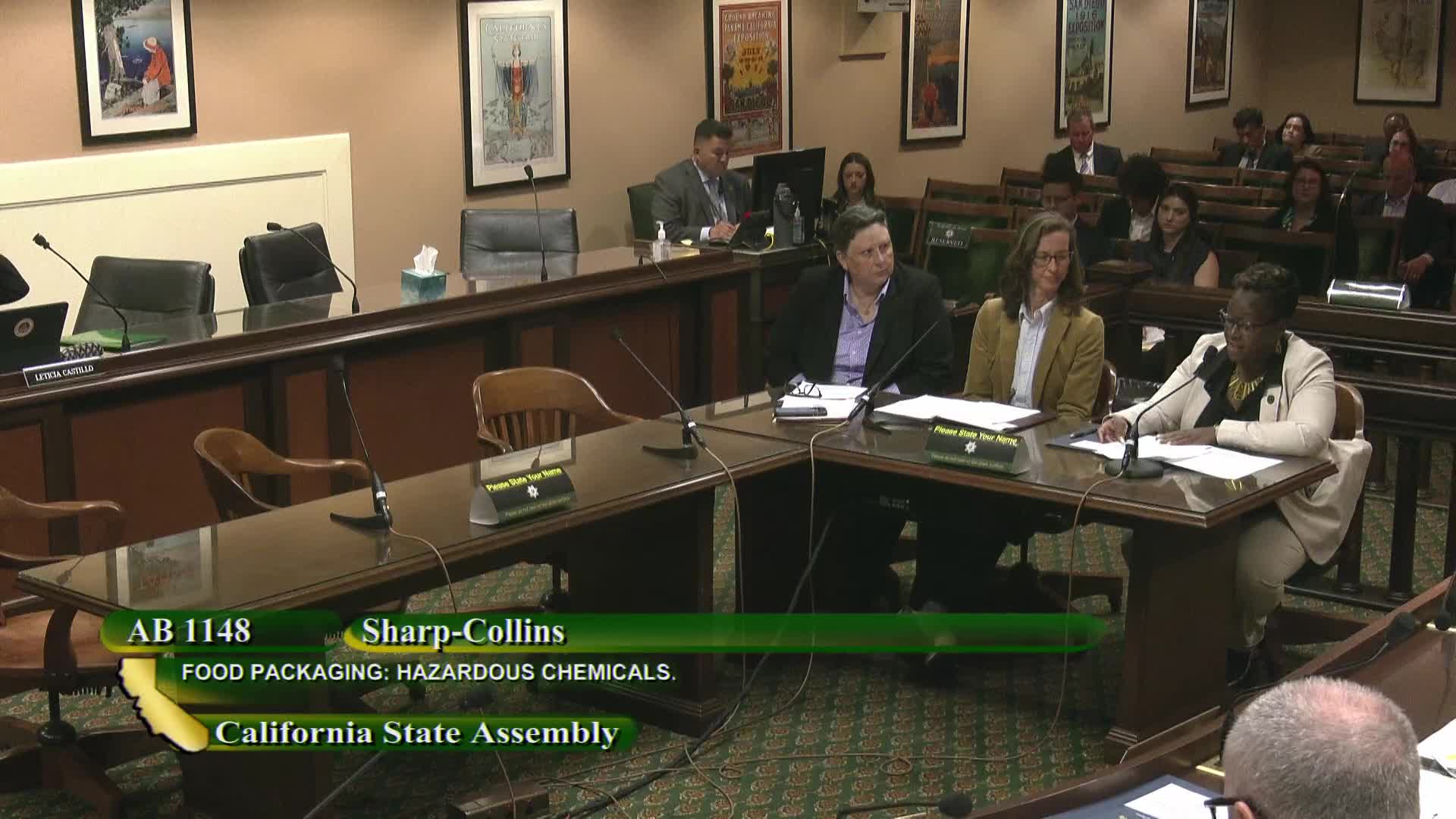
The Assembly Environmental Safety and Toxic Materials Committee voted to pass AB 1148 to the Committee on Judiciary on April 8. The committee recommended the bill be passed as amended.
Assemblymember Dr. Donna Sharp Collins presented AB 1148, the Safer Food Packaging Act, which would prohibit three categories of chemicals in food contact materials: phthalates, bisphenols (with TMBPF accepted as an amended safe alternative for bisphenols), and antimony trioxide. Sharp Collins and sponsoring groups said the chemicals migrate from packaging into food and that removing those exposures reduces cancer risk.
Witnesses from Breast Cancer Prevention Partners described evidence linking bisphenols and phthalates to chronic, developmental and reproductive harms and said that testing of supermarket foods and beverages found widespread contamination. Rainbow Rubin, Ph.D., presented studies showing migration of these chemicals into foods and beverage samples with antimony detected above OEHHA public‑health goals in some bottled beverages.
Industry opposition came from the American Chemistry Council, American Beverage Association, PET Recycling Corporation of California, manufacturers’ associations and other trade groups. Industry witnesses said DTSC already has authority under the Safer Consumer Products program and is evaluating food-contact materials; they urged regulatory review grounded in sound science and argued a 2027 implementation date would be challenging for manufacturers and regulators. The American Beverage Association specifically raised technical and exposure-pathway questions about antimony trioxide in PET production and noted recent OEHHA review for ingestion pathways.
In response to implementation concerns, the author said she would work with stakeholders and indicated during closing remarks she would remove antimony trioxide from the list if no viable alternatives were identified; she also said TMBPF is accepted as a safer alternative to bisphenols in the amended bill.
The committee voted to send the bill to Judiciary for further consideration and requested continued engagement among the author, industry and regulatory agencies on timelines and technical feasibility.