Get Full Government Meeting Transcripts, Videos, & Alerts Forever!
Get email alerts on the Chemicals Fashion topic
No spam. Unsubscribe anytime.
Assembly committee advances Fashion Act to curb toxic chemicals in apparel
Summary
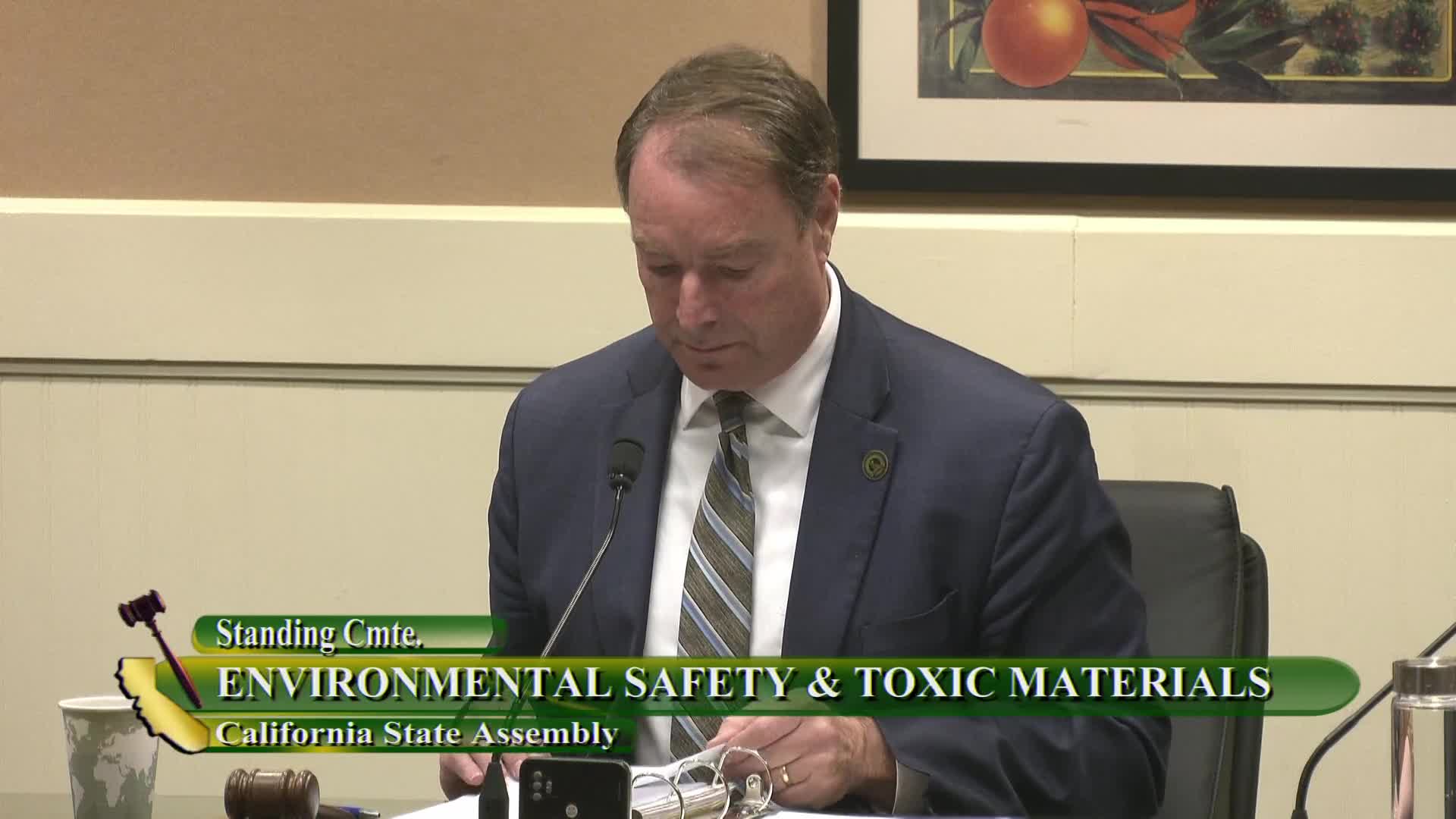
The California State Assembly Environmental Safety and Toxic Materials Committee on April 8 voted to pass as amended AB 405, the Fashion Act, sending the bill to the Committee on Natural Resources.
The California State Assembly Environmental Safety and Toxic Materials Committee on April 8 voted to pass as amended AB 405, the Fashion Act, sending the bill to the Committee on Natural Resources. The committee vote was 5 to 2.
The bill, authored by Assemblymember Jesse Addis, would require fashion companies and sellers to adopt recognized chemical-management frameworks, increase transparency about chemicals used in apparel and footwear production, and align corporate due-diligence reporting with industry standards, supporters said.
Assemblymember Jesse Addis, the bill's author, said AB 405 uses existing industry frameworks to hold companies accountable for chemical use and “implement necessary guardrails to ensure the health and safety of California residents.” Maxine Bedott of the New Standard Institute, the bill’s sponsor, testified the fast-fashion model produces low-quality clothing with elevated toxic-chemical exposures and contributes to greenhouse gas emissions. Scott Echols, chief impact officer at the ZDHC Foundation, told the committee the bill builds on industry standards such as ZDHC’s MRSL and wastewater guidance and would “ensure that health, safety, and environmental integrity are baked into” reconfigured supply chains.
Opponents, led by Rachel Michelin, president and CEO of the California Retailers Association, and Adam Regley on behalf of the California Chamber of Commerce, urged rejection. They said the bill duplicates laws and regulations already in place — pointing to the state’s ban on certain PFAS in textiles, the Department of Toxic Substances Control’s Safer Consumer Products program, SB 253 (corporate climate disclosures) and SB 707 (textile extended producer responsibility). Michelin said AB 405’s compliance requirements including emissions reporting and wastewater testing could raise operational costs that would be passed to California consumers. Regley said some thresholds in the bill’s amendments were not yet clear to business groups.
Committee members asked how the bill would interact with international frameworks and state regulators’ capacity to oversee supply chains that extend outside California. Addis and supporters said the bill was drafted to harmonize with international due-diligence frameworks and allow companies to submit reports prepared to meet other national and international reporting requirements; they also told the committee most major brands already track restricted-chemical lists and the bill would align with existing industry practice.
After discussion and a commitment from the author to continue stakeholder negotiations, the committee voted to send AB 405 as amended to Natural Resources. The author and supporters indicated they will work with retail and manufacturing stakeholders on implementation details as the bill moves forward.
AB 405’s next stop is the Committee on Natural Resources, where committee staff said additional conversations with industry and regulatory agencies will continue.