Get Full Government Meeting Transcripts, Videos, & Alerts Forever!
Get email alerts on the Special Education Transportation topic
No spam. Unsubscribe anytime.
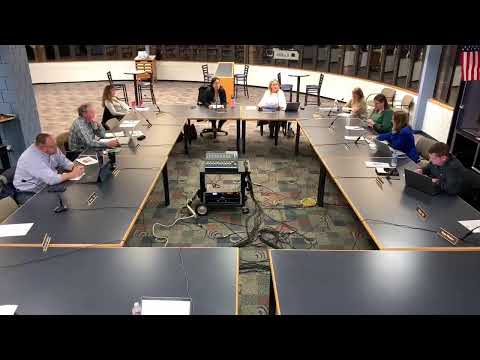
Cromwell board hears $335,000 in new special‑education encumbrances; district explores running its own transportation to contain outplacement costs
Summary
At a school board meeting, district officials said they encumbered $335,000 for unanticipated special‑education services and transportation. Board members discussed legislative fixes and the possibility of starting a district transportation fleet of vans to curb the rising cost of outplacements.
Cromwell School District officials told the school board that the district has encumbered an additional $335,000 to meet new special‑education service and transportation needs, and members discussed both state legislative fixes and the prospect of the district operating its own vehicles to reduce costs.
The district's director of finance, Mr. Boutwell, told the board the extra encumbrance was to “meet new service and transportation needs for some of our special ed students.” He said the district is also continuing to refine projections for state excess‑cost contributions and reimbursements tied to students who attend choice programs, and that some reimbursements remain uncertain pending state confirmation.
Why it matters: board members said the district faces unpredictable, high outplacement bills that can strain the annual budget. Superintendent Dr. Macri said the district was cut $81,494 in the most recent budget process after requesting a 6.25% increase and receiving a 6.03% increase, and that the district will absorb some of that reduction from utility/energy lines. Several board members urged coordinated legislative action, and staff reported engagement with a new state select committee on special education and with the Connecticut Association of Boards of Education.
Board discussion centered on two immediate responses. First, members described recent advocacy with state legislators to change how outplacement and special‑education funding is handled across districts. Dr. Macri and other board members said they have shared proposals and memos with legislators and the Superintendents Association; Dr. Macri said one well‑received proposal would have a sending district continue to fund an outplaced student's budgeted costs for the remainder of the school year after that student relocates to another district. Board members framed such changes as a way to stabilize local budgets and preserve student services.
Second, members discussed operational options to control transportation costs, including creating a district‑run fleet. Board members and administration described one recent single outplacement transportation bill of roughly $72,000 as an example of the expense driving interest in alternatives. Several board members recommended studying whether purchasing a small fleet of passenger vans (five or so) and administering transportation in‑house could be cost‑effective over a multi‑year horizon; they noted start‑up capital and ongoing costs (vehicles, specialized equipment, insurance, and staffing) would have to be modeled carefully. Board members and administrators reported that some districts have begun small‑van fleets and later expanded them; others cautioned that vehicles for students with medical or behavioral needs require special equipment and additional staff such as aides or monitors, which increases cost and regulatory complexity.
Administration said the district will continue legislative advocacy and promised to return with more information. Dr. Macri and several board members asked finance staff to gather comparative data and to continue coordinating with neighboring districts, the Superintendents Association, and the new legislative select committee on special education. Board members proposed a follow‑up discussion after the legislative session concludes and after the district receives more clarity on state reimbursements.
Board members seeking next steps asked administration to prepare a cost‑benefit study if legislation does not change, and to share any memos or testimony with the full board so members can participate in advocacy. The board did not take a formal vote on transportation or a district fleet at the meeting.
The board also discussed the near‑term budget posture: Mr. Boutwell said the district has encumbered funds for instruction, professional development and necessary facility or equipment updates, and that some encumbrances exist even when purchases have not been finalized — a deliberate approach to remain flexible through June.
Ending: District leaders said they will continue to update the board as state reimbursements are confirmed and as further analysis of transportation alternatives is developed. The board asked to revisit the topic after the legislative session and when June budget detail is available.