Get Full Government Meeting Transcripts, Videos, & Alerts Forever!
Get email alerts on the Public Safety Budget topic
No spam. Unsubscribe anytime.
Cranston police and fire present FY26 budget requests; police seek vehicle and equipment funding, fire cites overtime and gear needs
Summary
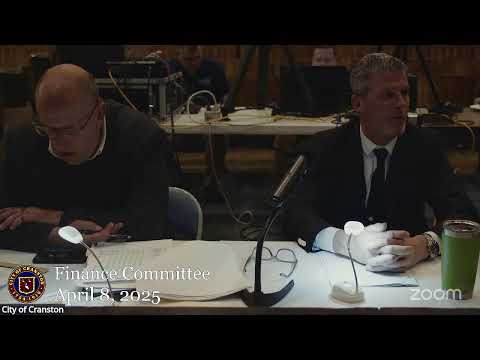
The finance committee heard presentations by Cranston police and fire officials on April 8. Police leaders outlined fixed costs, vehicle replacement and maintenance expenses and ongoing technology and camera contracts; fire officials described overtime pressures, vacancies, equipment and station maintenance needs.
Police and fire department leaders presented their proposed FY26 budgets to the Cranston City Council finance committee on April 8, outlining contractual fixed costs, equipment needs and staffing pressures.
Police presentation: A senior police official (referred to in the hearing as the colonel) said the department—s proposed budget of about $31.7 million funds contractual obligations and benefit costs but leaves limited flexibility. Officials highlighted rising equipment costs (police package vehicles and vehicle equipment), an annual maintenance contract for the city—s license-plate-reader ("FLAW"/Flock) cameras at roughly $70,000 and information-technology and software expenses.
The department said the city typically replaces about eight cruisers per year but noted supply and pricing volatility for police vehicles and major equipment. The colonel and finance staff also described revenue lines that help offset costs: VIN inspections and detail/car fees generated by contractor work and public projects, which the department expects to track near recent actuals.
Police public-safety items raised in questions: Councilors asked about a proposed tactical (Armored/BearCat) vehicle for SWAT use; police leaders said regional mutual-aid agreements exist but that an on-site vehicle shortens response times and provides protection in high-risk incidents. The department also described statewide mutual-aid arrangements and noted capital needs for specialized equipment such as tasers, radios and mobile data terminals. The council discussed whether some fees could be adjusted and heard that the department is evaluating fee schedules in coordination with finance staff.
Fire presentation: Fire Chief Mancini (the chief) and finance staff characterized the fire budget as affected by minimum-manning overtime obligations, vacancies and long-term disability cases. The department reported 9 personnel on long-term IOD (industrial disability) at the time of the hearing, and finance staff said overtime was running ahead of budget year to date and annualizing higher.
Fire leaders described capital and operational needs including replacement firefighting gear (10-year service life for some turnout gear), calibration and maintenance for hazardous-materials detectors, vehicle and station maintenance, and improvements at mechanics— facilities that cannot safely handle modern apparatus without upgrades. The department described a planned recruit class (about 10—1) that will reduce overtime exposure as new hires complete training and field assignments.
Grants and reimbursement: Both departments reported active grant-seeking efforts. The fire department noted FEMA SAFER-related reimbursements and reimbursement timing that can change year-to-year; police staff said they had pursued federal and state grants for canine, radio and tactical gear but had not yet realized additional sustained grant revenue for FY26.
Budget process notes: Finance staff explained that some year-to-year variances are timing differences for reimbursements and quarterly maintenance payments. Members of the committee asked for updated actuals and clarified that some capital items could be shifted to capital budgets rather than operations, while others are recurring maintenance and technology costs.
Ending: Council members thanked both departments for the presentations and their public-safety work. There were follow-up requests for more detailed line-item actuals and for exploration of fee adjustments and regional procurement options to reduce equipment costs.