
Residents, teachers urge Cranston City Council to fully fund school budget as layoffs loom
Get AI-powered insights, summaries, and transcripts
Sign Up Free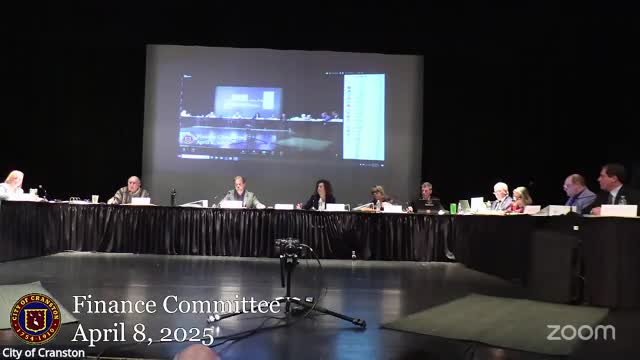
Summary
Dozens of residents, parents and educators urged Cranston City Councilfinance committee on April 8 to approve the school committee—s requested FY26 increase, warning that 51 layoff notices already issued to teachers could grow and that aging school buildings and low per-pupil funding threaten programs and staff retention.
Dozens of residents, teachers and school leaders urged the Cranston City Council finance committee on April 8 to fully fund the Cranston Public SchoolsFY26 budget request, saying recent underfunding has forced painful staff cuts and left district facilities at risk.
The appeals came during the committee—s public hearing portion of a special meeting and a subsequent finance committee meeting. Speakers included Cranston School Committee chair Dominic Fusco, Cranston Teachers Alliance president Lizbeth Larkin, Vice Chair Anthony Malillo and Superintendent Janine Nadeau-Massey.
"Please fully fund the school department budget," Dominic Fusco said, noting the district had issued 51 layoff notices this year and asking the council to act to avoid more cuts. Superintendent Janine Nadeau-Massey told the committee the district is at a "crossroads" and said underfunding was starting to harm programs and staff retention.
Why it matters: Cranston—s public schools educate more than 11,000 students. Residents and school officials said city funding per pupil—about $19,483 in figures cited at the hearing—lags the state average of roughly $22,000 and leaves limited room to absorb rising costs such as pensions, health care and utilities. Speakers also warned that a low capital reserve and aging buildings increase the risk of expensive emergency repairs.
What the district asked for: School committee members and public commenters described two competing budget figures. Mayor Hopkins— proposed increase to the city appropriation for the schools was roughly $2.28 million (about 2.3% over the current appropriation), while the school committee—s request ranged from $3.3 million to $3.9 million (3'—% over the current appropriation in figures presented at the meeting). Anthony Malillo said the committee—s draft budget already assumed $2.4 million in savings (described by school officials as reductions), meaning deeper cuts would likely affect staff and programs.
Program and personnel impacts: Speakers described program reductions and staffing pressures already under way. Lizbeth Larkin, president of the Cranston Teachers Alliance, said longstanding austerity had eliminated programs and left educators among the lower-paid in the state. "Your educators deserve better," she told the committee. School committee members said possible savings that have not been identified would likely come from personnel, which would increase class sizes and reduce services.
Capital and facilities: Several speakers, including former superintendents and current school committee members, emphasized building needs. The superintendent and others noted a reimbursement model from the state that pays districts after work is completed, requiring local up-front funds. Committee member Keith Catone and others said three-quarters of Cranston school buildings are older than 70 years and that the district—s capital and rainy-day reserves had been drawn down in prior years.
State funding and pensions: School officials and committee members discussed how state aid and formula changes affect Cranston. Joseph Balducci (school department staff) told the committee a change in the state—s share ratio reduced Cranston—s state contribution by roughly $900,000 in the planning figures presented by the governor, and a mid-year increase in pension rates produced an unexpected $1.2 million cost this year for the district. Balducci said the district expects not to finish the current year with a surplus and is beginning next year from a weakened position.
Federal grants and other revenue: Superintendent Nadeau-Massey and several public speakers noted the district relies on federal program funds for services that would be difficult to replace if reduced at the federal level. School business discussions also referenced the SAFER grant (a federal grant that helped fund new firefighter positions in other departments) and typical school reimbursements for capital projects from the state.
Public-comment highlights: Parents and PTO leaders said that while PTOs and volunteers raise funds for libraries, playgrounds and other items, that approach creates disparities among schools and is not an adequate substitute for city funding. Several parents described crowded classrooms, temporary classrooms used for instruction and broken mechanical systems. A parent of a child with autism said investments in smaller class sizes and paraprofessional support at some schools had produced substantially better outcomes.
Council discussion and next steps: Council members thanked speakers and said they would work through the budget document with the administration. Several councilors expressed support for the schools and said they would look for funding in other parts of the city budget and review revenue options. Council members and school officials discussed capital-bond reimbursement rates (the administration said the city—s bundled projects would be eligible for about 74% reimbursement from the state if approved on that basis) and whether one-time sources such as asset-protection and capital-reserve funds could be used to close current-year gaps. School officials said those funds had already been drawn down in recent years and would not cover recurring needs.
Formal action: The finance committee did not vote on the school appropriation at the hearing. The meeting included procedural votes (a short extension of the meeting—s end time and an adjournment motion later in the session) but no final action on the FY26 school appropriation.
What the school officials and many speakers asked the council to do: Adopt the school committee—s requested increase or otherwise identify additional local revenue to avert staff layoffs, preserve programs and begin to replenish capital reserves.
Ending: Council members said they would continue budget work in committee and urged residents to continue to engage with council offices and their elected representatives as FY26 deliberations continue.