Get Full Government Meeting Transcripts, Videos, & Alerts Forever!
Get email alerts on the Municipal Budget topic
No spam. Unsubscribe anytime.
West Warwick council advances FY 2026 provisional budget, sets tax-collection rate at 97.7% and adds $150,000 in revenues
Summary
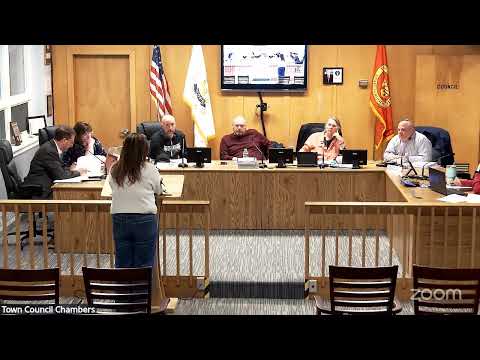
The West Warwick Town Council on April 8 provisionally advanced the town's fiscal year 2026 budget after voting to add $150,000 in projected revenues and to set the tax collection rate at 97.7%, a combination council members said would lower the proposed tax-rate increase to about 1.75% if current assumptions hold.
The West Warwick Town Council on April 8 provisionally advanced the town's fiscal year 2026 budget after voting to add $150,000 in projected revenues and to set the tax collection rate at 97.7%, a combination council members said would lower the proposed tax-rate increase to about 1.75% if current assumptions hold. The council voted to send the provisional budget to the Rhode Island Division of Municipal Finance for required advertising and to return to vote on a final budget at its May meeting.
The vote matters because it frames how much the town will ask taxpayers to cover next year's municipal and school spending. Council members repeatedly pointed to limited flexibility in the town budget, saying roughly 90% of the town's spending is fixed by payroll, benefits and pension obligations while only 8'to 10% remains for discretionary changes.
Council members approved a motion, offered during the public hearing, to increase projected revenues by $150,000 through a combination of higher investment income and other fees. By voice vote the council also approved changing the assumed tax collection rate for FY 2026 to 97.7%. The town manager and finance director told the council those two changes together reduce the estimated tax-rate increase under the draft numbers to roughly 1.75% from earlier estimates in the notice materials.
Town Manager Mark (role provided in the record) and Finance Director Kristen Benoit explained the drivers behind the FY 2026 numbers. Mark told the council the budget reflects continuing uncertainty in state aid, federal funding, inflation and supply costs and that the town has applied employer pension rates from the Employees' Retirement System of Rhode Island (ERSRI) to pensionable salaries. Benoit supplied updated figures the council used for Monday's deliberations.
Council members and members of the public pressed managers on the budget's details. John Reed, a resident, asked where revenue from police details and other special-revenue lines is held, saying, "Where is that money?" Council and staff said such revenue is in special-revenue accounts and has been used for police vehicles and a dispatch console upgrade rather than general-tax purposes.
School funding drew significant attention. The school department had requested an increase of roughly $991,000. Several council members said they were reluctant to reduce that full request after the school committee and administration had already trimmed millions from earlier proposals. One council member said the schools had cut more than $3 million from their original asks and that the council should not "cut the schools' nose to spite our face" now. The council did not alter the school request during the hearing.
Staffing, vacancies and potential cuts generated prolonged debate. Council members and department leaders discussed a single frozen vacancy that the administration said had been held as part of the budget process; the sewer/wastewater position cited was expected to be filled internally. Department heads and the town manager urged caution about cutting filled positions, noting collective-bargaining constraints and the operational impacts of layoffs. The director of public works (DPW) said the department needed current staffing to sustain services, particularly for unpredictable events such as storms and winter operations.
Pension and legacy benefit costs were a recurring theme. The town has transitioned employees into the State retirement plan (ERSRI); staff told the council the legacy pension-related Arc contribution will remain a material expense for years. Council members noted the town's long-term pension obligations will continue to shape budgets going forward.
Other line items discussed included electricity costs that contain a bond repayment tied to town-owned turbines; staff said the annual bond payment is allocated to departments proportionally by usage. Legal settlements and judgment-related budget lines were also discussed; staff said settlement payments come from surplus or fund balance if not otherwise budgeted.
The motion to increase revenues by $150,000 was described in the hearing as including higher investment interest estimates, an increase in building-permit revenue and additional tax-sale fees; councilors discussed shifting $50,000 to building revenue and $25,000 to tax-sale fees while adjusting investment income assumptions. Council adopted the revenue adjustments and the 97.7% collection-rate assumption by voice vote. A council direction followed: staff were authorized to prepare the required advertisement and submittal to the Division of Municipal Finance so the council could hold its final budget vote at the May 8 meeting.
Council members and speakers emphasized the limited discretionary portion of the budget and the trade-offs between lower tax increases and maintaining key services. One council member summarized that roughly "8 to 10%" of the budget was variable during the hearing.
The next formal step is the advertised final public hearing and vote; the council scheduled the final vote for the May 8 meeting. If numbers change between now and then'for example through finalized state aid or successful appeals of property valuations'those figures could alter the final tax-rate change the council adopts.
Votes at a glance: - Revenue adjustments: Motion to increase projected revenues by $150,000 (breakdown discussed at the hearing); approved by voice vote. (Mover: Council member as restated in the public hearing; second recorded.) - Collection rate: Motion to set the tax-collection assumption at 97.7%; approved by voice vote. (Mover: council member; second recorded.) - Provisional budget: Council voted to send the provisional budget to the Division of Municipal Finance for advertising and to schedule the final vote for May 8; the motion moved forward after a roll-call style confirmation during the meeting. (Partial roll-call recorded in meeting minutes.)
Background and next steps: Staff will prepare the required municipal finance filing and advertising to meet the Division of Municipal Finance's 10-day notice requirement ahead of the final hearing. The council expects to return May 8 for a final vote on the FY 2026 budget.