Get Full Government Meeting Transcripts, Videos, & Alerts Forever!
Get email alerts on the Special Education topic
No spam. Unsubscribe anytime.
District reviews special‑education boundary options to cut long bus rides for about 75 families
Summary
Litchfield district staff presented three options to realign specialized program boundaries with neighborhood schools; staff said changes could reduce bus miles and shorten student ride times but raised capacity and open‑enrollment concerns.
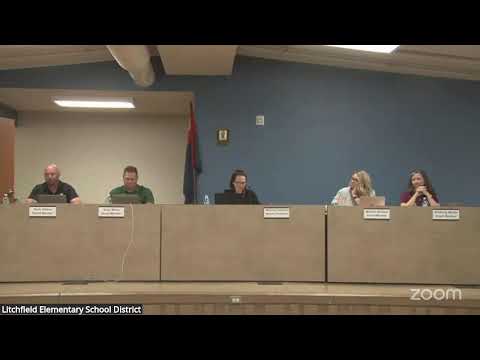
District special‑education leaders presented potential specialized‑program boundary changes to the governing board April 8 designed to place students as close as possible to their neighborhood schools while keeping them in their assigned specialized program under their Individualized Education Program (IEP).
Director Chassen and Director Aiken told the board the work aims to shorten long bus rides, improve continuity of services and reduce transportation costs and staff time. Staff said a small sampling of specialized‑program routes showed about 451 miles driven daily under current routing; the proposed grid codes could reduce that sample to about 58 miles daily and lower fuel costs by an estimated $9,000. Staff said those figures are from sampling and represent preliminary estimates.
Special‑education staff reported that some students in specialized programs have lengthy daily bus times: among a sample, the average daily on‑bus time was about 72 minutes and one student’s total daily ride time reached 128 minutes. Staff said the district’s target for ride time is 30 minutes or less where possible.
Staff described three rollout approaches: (1) move all affected students to their new boundaried school at the start of the next school year; (2) a phased approach allowing current fourth graders (moving to fifth) and current seventh graders (moving to eighth) to remain at their current site while others move; or (3) phase-in beginning with kindergarten and newly enrolled students while allowing current families to choose to remain and fully implementing in 2026–27. Staff said about 75 families would be affected by a boundary change.
District staff sought family input. They reported contacting 10 randomly selected affected parents by phone and sending a survey to all affected families. As of the most recent review, staff said survey responses among affected families were about 57% yes and 43% no; among respondents who answered yes, 75% receive transportation and 25% do not, while among no responses 17% receive transportation and 83% do not. Staff said these figures will be expanded into a full report the board will receive in a Friday update.
Board members and staff discussed capacity and open enrollment. Trustees asked whether nearby schools would be required to house programs they do not currently offer; staff said campuses generally would keep their current specialized programs except for two planned program openings next year (Stride at Verrado Middle School and Labs at Wigwam Creek). Officials said open‑enrollment spots for specialized programs are reviewed case‑by‑case because capacity can change daily; staff said they will work with families who request to remain through open enrollment where capacity exists and that the district can grandfather specific students as appropriate.
Board member Miss Moran said she favored the phased approach that exempts current fourth and seventh graders (approach 2) rather than an immediate wholesale change. Board member Mister Owens suggested families be able to opt out of district transportation by providing their own transport if they wished to remain at their current campus; staff affirmed that is a possible accommodation where families supply transportation and space permits.
No formal boundary decision was made; staff said next steps include finalizing and publishing grid codes, completing parent outreach, running routing in May to confirm efficiencies, and returning implementation options and timeline recommendations to the board.