
Rochester City School District presents draft 2025–26 budget; administrators warn of future funding gaps
Get AI-powered insights, summaries, and transcripts
Sign Up Free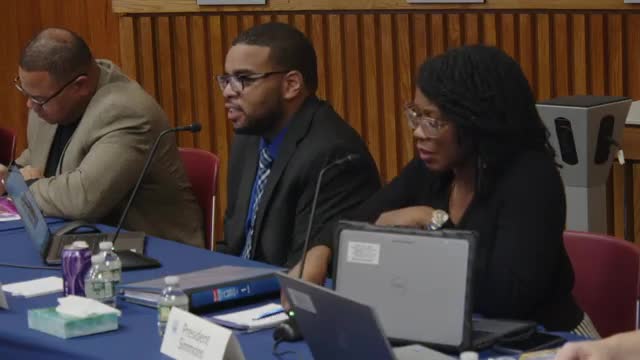
Summary
Interim Superintendent Demario Strickland and finance staff presented the district’s draft 2025–26 budget during the April 8 board meeting, showing higher appropriations and general‑fund revenue this year but warning of multi‑year funding risk tied to declining enrollment, legacy costs and uncertain federal support.
Interim Superintendent Demario Strickland opened the board’s scheduled budget deliberations during the April 8 special meeting, presenting an initial draft of the 2025–26 Rochester City School District budget and turning the presentation to finance staff for detailed figures.
Acting Chief Financial Officer Derek Blair summarized the draft’s headline numbers: "The budget total appropriations, our anticipated spend has increased by 34,600,000.0 compared to last year. Our special aid budget was reduced by $3,700,000 and our general fund revenue increased by 38,300,000.0," he said. The presentation noted grant reductions (about $2.8 million) and described shifts in fund accounting tied to the district’s migration from PeopleSoft to Oracle and realignment to the New York State Comptroller’s chart of accounts.
Administrators said the draft maintains investments in graduation pathways, curriculum alignment (elementary math, high‑school ELA), literacy and numeracy supports, expanded special‑education programming and bilingual program models, continued funding for 12 community schools, social‑emotional supports (counselors, social workers, telehealth), and a one‑year continuation of an East EPO memorandum of agreement. The presentation also identified reductions in central office and non‑instructional staff and noted that some school food service budgets were moved into school profiles.
Finance staff warned of longer‑term fiscal risk. The budget book notes projected future gaps that could reach tens of millions of dollars in coming years; the finance presentation flagged a potential multi‑year shortfall if federal support declines and described drivers including declining student enrollment, rising health care and legacy costs, increased contract and operational costs, and charter school enrollment shifts. The superintendent said one purpose of the process was to avoid using fund balance: "One of the largest parts of this process was to ensure that we were not using the fund balance," Strickland said.
Board members pressed for additional detail and transparency. Commissioner Griffin asked for itemized school budgets and whether the district could provide a line‑item accounting of each school’s expenditures; finance staff responded that schools maintain TAPU funds and that line‑item budgets and requisitions exist for each school and could be provided. Commissioner Ali asked whether budget allocations could be mapped to the board’s strategic goals; Strickland said the team will prepare a high‑level supplement showing allocations tied to goals where practicable, beginning with Title funds and other targeted allocations.
Other questions included the relationship between enrollment and staffing, the number and placement of teachers on assignment, and the effectiveness of moving positions from central office into schools through a building‑based budgeting approach (work on that model is underway via a research/resource allocation grant). State Monitor Jaime Alaseya noted an inconsistency in the draft materials on employee counts: "When I look in the book, page, 6, it has 5,666 68 employees. When I look at the end of the book, page 2 18, it has 5,800," and asked that the counts be aligned.
Administrators emphasized the draft nature of the budget book and ongoing adjustments as special‑education and English‑language‑learner placements are finalized and flagged that further deliberations (additional days) will cover grants, school profiles and district data. The board was asked to submit follow‑up questions to a question log and to expect additional supplemental materials.
Ending: After questions and the first round of deliberations, the board recessed the budget discussion and adjourned the special meeting. Staff committed to providing requested itemizations, supplements tying funds to board goals where feasible, and clarifications of employee counts in the draft budget book.