Get Full Government Meeting Transcripts, Videos, & Alerts Forever!
Get email alerts on the Housing topic
No spam. Unsubscribe anytime.
Sedona raises Rent Local cap to $2,500 to attract more long‑term rentals for workforce
Summary
The Sedona City Council unanimously amended the Rent Local program to raise the three‑bedroom monthly cap from $2,200 to $2,500, aiming to align incentives with current market rents and encourage homeowners to convert short‑term rentals to long‑term housing for local workers.
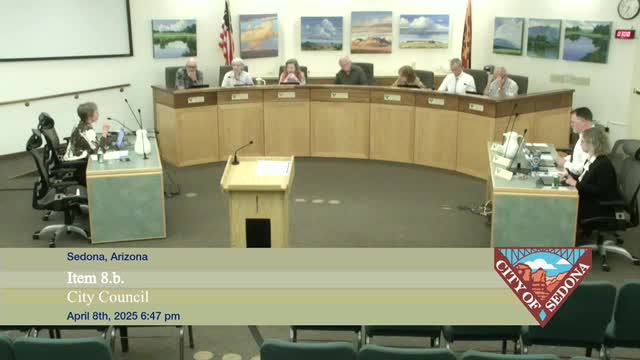
The Sedona City Council voted unanimously on April 15 to amend the Rent Local program by raising the monthly rental cap for three‑bedroom properties from $2,200 to $2,500.
City staff said the change is intended to better align the program with current Sedona market rents and encourage more homeowners to convert short‑term rentals (STRs) to long‑term housing for local workers. Jeanne (last name not specified) told council that since the program began in 2022, only seven properties have enrolled — housing 19 people — and that inquiries are often discouraged because the cap sits below current market expectations.
Staff presented data showing a disparity between HUD fair‑market rents for Yavapai County and actual advertised rents in Sedona. Jeanne said HUD’s 3‑bedroom fair market rent for the county is about $2,050 per month, whereas Sedona’s current market averages for 3‑bedroom listings were around $3,500. The raised cap, combined with the program’s existing $10,000 one‑time incentive for a three‑bedroom conversion, will bring the effective first‑year return closer to local market levels and, staff said, make the program more attractive to property owners.
Council members asked about budget impacts, program longevity and whether the one‑time incentive influences renewal. City budgeting staff said the housing fund has sufficient resources to absorb program payments and any needed mid‑year adjustments can be handled by fund transfers; no additional appropriation was required to change the cap. Jeanne said the $10,000 incentive is a one‑time payment per property; several council members suggested exploring tiered or multi‑year incentives to improve retention.
Public speaker Lindsay Hammersmith, who manages local rental properties, supported the change and urged the council to focus on 2–3‑bedroom units that serve families. Several council members asked staff to return with additional program options — potentially multi‑year incentives, graduated payments for landlords who keep properties in long‑term rental for multiple years, and metrics to measure program success — if the $2,500 cap returns early traction.
Council approved the amendment unanimously; staff will monitor participation and report back with data and recommended adjustments if necessary.