Get Full Government Meeting Transcripts, Videos, & Alerts Forever!
Get email alerts on the Jail Reform topic
No spam. Unsubscribe anytime.
Santa Clara County advances jail reform study, directs community engagement and technical assessment
Summary
County administration presented a working plan to assess jail facilities, launch community engagement and hire consultants to produce technical and operational options. The board accepted the reports with follow-up directions including a six‑month monitoring update and requests for additional reports on fatalities and parenting programs.
The Santa Clara County Board of Supervisors accepted a set of reports from county administration, the sheriff’s office and outside monitors on jail reform and ordered a concurrent technical assessment and community engagement process to inform long‑term facility decisions.
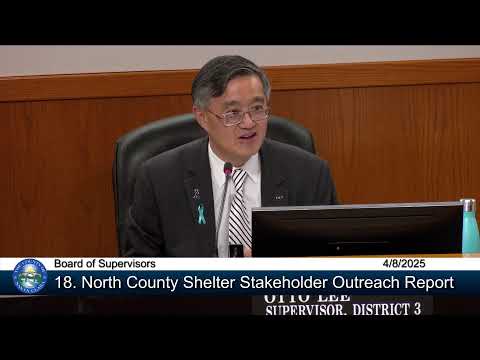
County officials told the board on April 8 that an 18‑month assessment led by CGL Management Group will evaluate the condition, operations and programming needs of the county’s jails, and that a community engagement plan is being shaped to run in parallel. County staff described the draft engagement plan as a “working draft” intended to rebuild trust and give residents an early role in defining options before final proposals are developed.
Why it matters: Board members said they want faster progress on safety, ADA compliance and programming, but also urged robust outreach so community members, people currently in custody and staff can shape any proposals. The board’s action preserves administrative momentum on the needed facility work while directing several specific follow‑ups to strengthen oversight and timelines.
County administration said the county has four complementary pieces of work: (1) community and stakeholder engagement, (2) a technical assessment of physical facilities, (3) best‑practice and design analysis, and (4) a custodial population projection study that would be updated to reflect recent legal and policy changes. Officials said CGL was selected after a qualifications process because it combines custodial operations experience with facility planning expertise.
Sheriff’s office and custody health representatives described operational and medical improvements already underway, including deployment of monitoring screens at intake, new pharmacy and medication‑in‑hand discharge work, and reorganization of a restorative services division that runs education and vocational programs inside the jails. Custody health reported activation of transitional care pharmacists, dental consent‑decree milestones and Medi‑Cal pre‑release benefit activations for people leaving custody.
The board accepted the reports and added direction: require a report back to Public Safety and Justice Committee (PSJC) on the proposed community engagement plan and timeline; include options for phased implementation and costing from CGL; ask the sheriff for a confidential off‑agenda report on recent fatal violent incidents at Elmwood and Main Jail with a public summary where possible; and request a June 25 PSJC briefing on parenting and reentry programming options for people in custody.
Office of Correction and Law Enforcement Monitoring (OCLM) also presented its seventh audit of 6,23 jail‑reform recommendations and recommended a shift to ongoing monitoring in seven priority areas. OCLM said many recommendations had been completed or were being implemented under the federal consent decrees; it will continue to monitor outstanding items such as internal affairs timeliness and transparency.
What’s next: The board asked administration to return to PSJC with refinements to the engagement plan and a schedule for the CGL technical assessment. The board also asked that monitoring updates include progress on implementation items and a six‑month recheck for outstanding audit areas.
Quotes: “We have really tried to move a lot of this work forward with a tremendous sense of urgency,” county Chief Operating Officer said during the presentation. Julie Ruhlin, director of the Office of Correction and Law Enforcement Monitoring, said: “We have produced six reports and in our first six reports we addressed 316 of those recommendations.”
Ending: The board’s vote to accept the reports and direct the parallel engagement and technical work was unanimous. County staff said they will return to PSJC with a revised engagement plan and the CGL work plan, and the board emphasized communicating progress publicly to rebuild trust.