Get Full Government Meeting Transcripts, Videos, & Alerts Forever!
Get email alerts on the Public Safety Child Protection topic
No spam. Unsubscribe anytime.
Monroe council directs legal review, coordination on defining adult entertainment and protecting minors
Summary
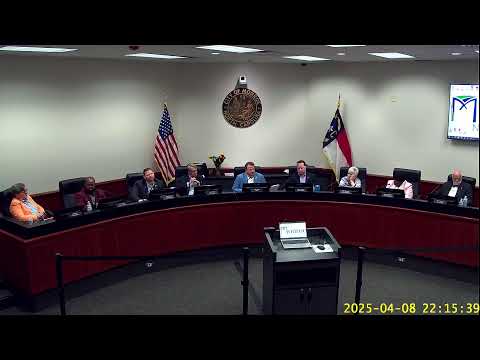
The Monroe City Council on April 8 voted to direct city attorneys to review state and federal obscenity standards, draft a position statement and coordinate with law-enforcement and state agencies to bolster enforcement aimed at keeping minors away from sexually explicit live entertainment.
The Monroe City Council on April 8 voted to direct city attorneys to draft legal definitions and a position statement and to coordinate with law‑enforcement and state agencies to strengthen enforcement aimed at preventing minors’ exposure to sexually explicit live entertainment. The motion passed after extended discussion among council members and public commenters concerned about live performances they described as inappropriate for children.
Council members adopted a resolution-like motion that directed the city attorney to define “prurient interest” using applicable federal and state standards, review and strengthen existing city ordinances on obscenity and child protection, and to work with the Police Department, the district attorney’s office, Union County Social Services and the North Carolina Alcoholic Beverage Control Commission on enforcement protocols and education. The council also asked legal counsel to draft a formal position statement declaring Monroe’s commitment to safeguarding minors as a core principle.
Why it matters: The decision responds to months of public comment and high-profile concerns about so-called all‑age drag events held in local venues. Supporters of stricter local rules said such events can expose children to sexualized conduct; opponents and some council members warned that municipal authority is limited by state and federal precedent and urged cooperation with venue owners and state authorities rather than overbroad local ordinances.
Council discussion and legal limits: Mayor Daryl Burns introduced the staff report and described three recommended steps. City Attorney Long cautioned about legal constraints, stating in open session, “Not under current Supreme Court law,” when asked whether the council could unilaterally define drag performances as adult entertainment. Councilwoman Julie Thompson outlined a long history of local work on the topic and said, “I, Julie Thompson unequivocally and without reservation, fully support and advocate for the protection of children in our community,” while also noting that statutory changes would need to come from the General Assembly to give municipalities clearer authority.
Enforcement and coordination: The motion asks the Police Department to audit local ordinances and strengthen protocols, and to coordinate with the district attorney’s office, Social Services and the N.C. ABC Commission on compliance and investigative steps. Council members also requested research into how other North Carolina municipalities (cited examples during discussion included Raleigh and High Point) handle zoning and cabaret definitions for adult‑oriented businesses.
Public comment and community division: More than two dozen members of the public spoke during an extended public comment period, with many urging the council to classify drag performances as adult entertainment or otherwise restrict children’s access, and others urging restraint and legal clarity. Council members acknowledged the community’s strong feelings on both sides and emphasized continued outreach to state lawmakers and enforcement partners.
What the motion does not do: The council did not adopt a new ordinance tonight that explicitly reclassifies performances; instead it authorized legal research, a position statement, and interagency outreach. Council members repeatedly noted that without statutory changes from the state, a municipality’s ability to ban or broadly reclassify performances may be limited.
Next steps: City attorneys will prepare the requested definitions and a position statement and report back; the Police Department will coordinate with the DA’s office, Social Services and the N.C. ABC Commission as directed. Several council members urged citizens who want new statutory authority to contact state legislators in Raleigh.