Get Full Government Meeting Transcripts, Videos, & Alerts Forever!
Get email alerts on the Legislation Hb2486 topic
No spam. Unsubscribe anytime.
Texas bill to restrict access to unsubstantiated officer records worries Dallas oversight staff
Summary
A legislative briefing to the board warned House Bill 2486 (and a Senate companion) could restrict access to department files containing unsubstantiated allegations and limit independent oversight review of those records.
Office of Community Police Oversight policy staff briefed the board on House Bill 24‑86 on April 1, saying the measure would require law enforcement agencies to keep a separate confidential “department file” for each license holder and limit public disclosure of unsubstantiated allegations.
Sierra Obasuyi, OCPO policy analyst, told the board that under HB 24‑86 a department file would include letters, memos or documents relating to a license holder that are not in personnel files and that the files would be confidential and not subject to the Texas Public Information Act in most circumstances.
“If enacted, HB 24‑86 may prevent independent oversight bodies from reviewing content related to unfounded, exonerated or unsubstantiated officer misconduct allegations,” Obasuyi said, noting the bill’s text and a companion Senate bill by Senator Phil King (SB 781) seek similar protections.
Obasuyi said the House Homeland Security, Public Safety, and Veterans Committee voted the bill out 10–0 and recommended it for full House consideration without amendment; she said the Senate companion remained pending in committee. She told the board the bill references Texas Occupations Code sections that regulate access to licensing files and that the change could affect agencies that have civil‑service structures like Dallas.
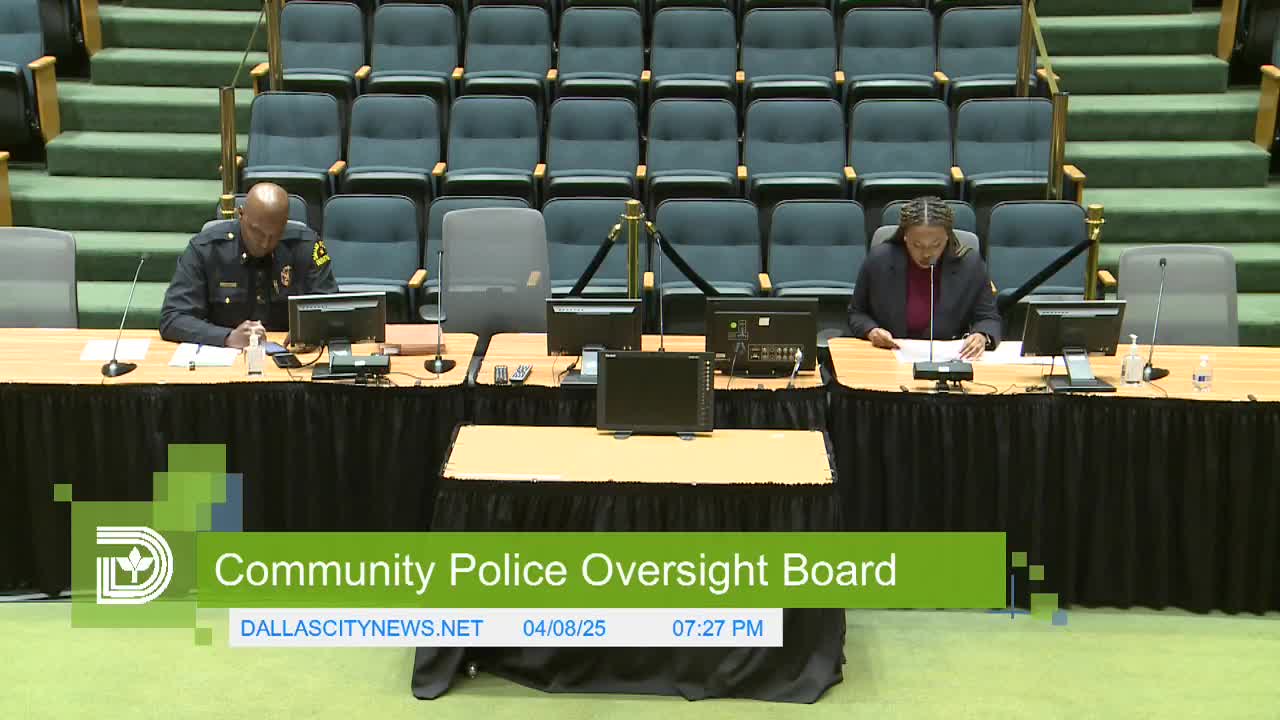
Board members discussed advocacy options. Chair John Mark Davidson and other members asked whether the OCPO could offer language amendments and whether staff could coordinate with the city attorney and other stakeholders. The city attorney present explained that the OCPO director, as a city employee, does not need to register as a lobbyist to provide testimony or submit comments to committees; however, board members said they must be careful about quorum and Tomay/ open‑meeting rules if they plan coordinated visits to Austin.
Why it matters: HB 24‑86 would change how allegations that were not sustained are recorded and shared. The OCPO and board said the restriction could limit post‑investigation review of unsubstantiated allegations, which oversight bodies use to assess patterns or missed investigative steps. Board members discussed contacting state representatives individually and considering the policy subcommittee as a forum for coordinated response.