Get Full Government Meeting Transcripts, Videos, & Alerts Forever!
Get email alerts on the Public Health topic
No spam. Unsubscribe anytime.
Hernando County mosquito control defends targeted, species-driven spraying as residents press for broader spraying
Summary
Hernando County mosquito-control officials said Tuesday they use species-specific surveillance and targeted larval and adult treatments rather than routine truck spraying, drawing pushback from residents who said last summer's localized responses left neighborhoods and farms severely bitten.
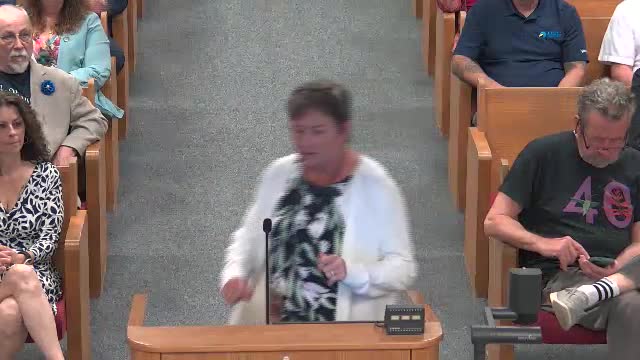
Hernando County mosquito-control officials explained at the April 8 Board of County Commissioners meeting why crews ofteninspect and trap before spraying, and defended a strategy the director described as "integrated mosquito management." County mosquito-control director Sandra Fisher Granger told the board the program relies on surveillance, targeted larval treatments, and limited adulticide applications rather than routine area-wide truck spraying.
Why it matters: Residents said repeated localized problems last summer left farms and evening workers exposed to heavy biting; they asked the board and mosquito-control staff for faster, broader responses and clearer public guidance. County officials said different mosquito species require different responses and that routine blanket spraying can be unnecessary and harmful.
Fisher Granger said decision-making is species-specific and evidence-based. "If we don't know what we're looking for, we don't know which tools to bring," she told the commissioners and assembled residents. She described four pillars of county practice: surveillance (trapping and testing), targeted larval control (biologicals and insect-growth regulators), adult control only where needed, and public outreach. She said technicians inspect properties for breeding sources, check surrounding lots and drainage retention areas, and either treat on the spot or schedule a truck for area treatment.
The director explained why different areas received different responses last year. "On the east side of the county the primary problem is floodwater mosquitoes," she said; those breed in ground depressions and marshes and can fly long distances. "On the west side the problems are often container breeders limited to small areas." Trapping is used when staff cannot readily find the source; traps also identify species that are active at odd hours and might not otherwise be caught.
Tools described: Fisher Granger said the county maintains a tank of Gambusia ("mosquito fish") used in sustained water bodies, employs multiple insect-growth-regulator formulations to target larvae, and uses light-sheen products to interrupt pupal breathing. She described how insect-growth regulators work and said the program avoids applying products that would treat flowering plants or harm pollinators. The office also operates sentinel chicken testing for mosquito-borne viruses and runs public education events.
Public concerns and staff response: Several residents told the board that localized spot spraying they were offered last year was ineffective and that broad truck spraying only happened after east-side flooding. One woman who farms said she and other neighbors were "eaten alive" on summer evenings until crews sprayed further away, which she said eased conditions on her property.
Fisher Granger said staff will review any specific calls that apparent mistakes were made. "I will personally get with my assistant to understand better" the particular complaint about how a prior call was handled, she told the board.
Commissioner follow-ups: Commissioners pressed about beehive and insect impacts and whether county spraying kills beneficial insects. Fisher Granger replied the program avoids neonicotinoids (a class used in agriculture linked to bee harm) and times applications to reduce pollinator exposure; the county also recommends leaving leaf litter in place in early spring to protect beneficial insects such as lightning bugs and ground-nesting bees.
What the county will do next: The director offered to follow up with individual residents who reported problems, to review complaint handling and to continue public outreach explaining the biology behind targeted response. The board did not change program policy during the meeting.
Ending: Residents pressed for faster, more visible responses; staff reiterated that broader spraying is used only where surveillance shows it will be effective, and that targeted measures can achieve longer-lasting control when the source is identified. The department said it will follow up with residents who reported unsatisfactory responses and continue public education about source reduction and the tools used.