Get Full Government Meeting Transcripts, Videos, & Alerts Forever!
Get email alerts on the Utilities topic
No spam. Unsubscribe anytime.
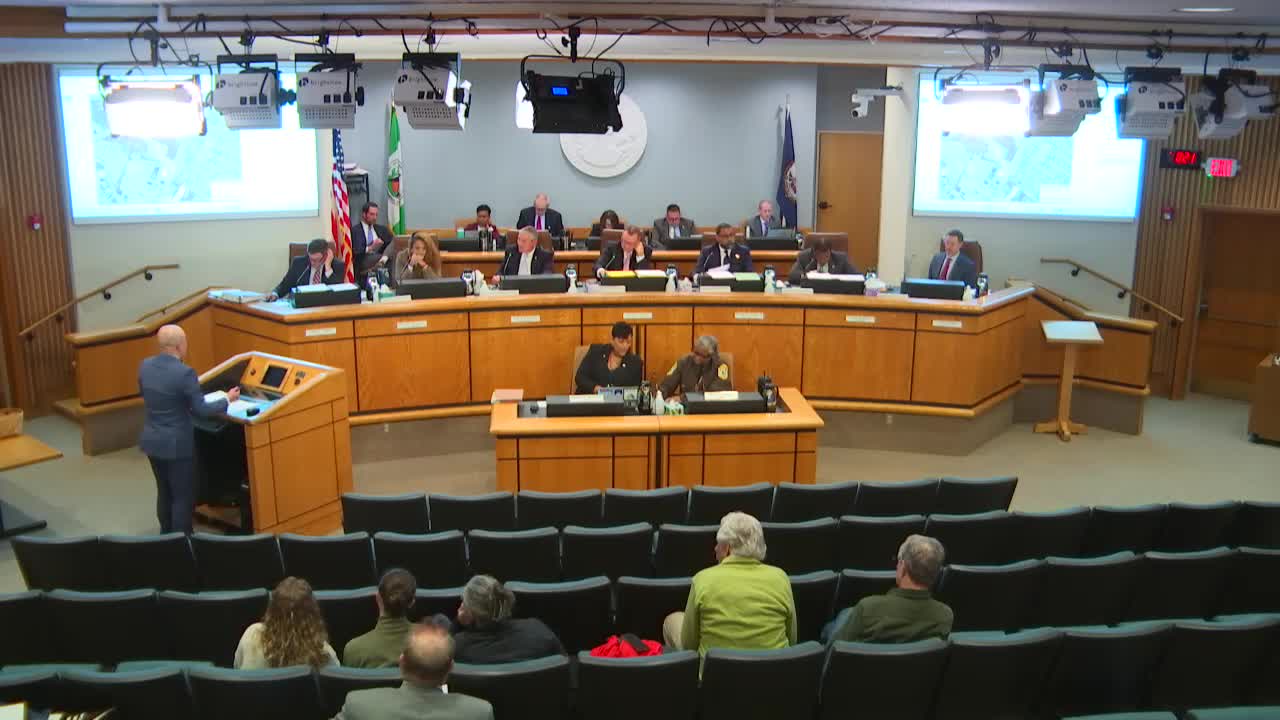
Henrico board backs water and sewer rate increases; staff cites infrastructure and resilience needs amid public concern over fluoridation and costs
Summary
The board approved bimonthly water and sewer charge increases (effective July 1) to fund operations, debt service and capital projects; staff cited frequent water-main breaks and resiliency work as drivers while residents raised concerns during public comment about costs and water fluoridation.
Henrico County supervisors on April 8 acted on an ordinance to increase bi-monthly water and sewer service and volume charges, citing operating costs, debt service and capital funding needs for renewal and resiliency projects. Staff told the board the total increase for a typical residential customer using 10 CCF of water every two months is $7.35 (roughly 12 cents per day) and would take effect July 1.
Public Utilities staff and the director of finance explained the increases support system renewal and resiliency work, including major water-main replacements and projects to improve redundancy for critical corridors such as Staples Mill, Broad Street and Monument Avenue. Staff said the county has had elevated water-main break counts in recent years (staff cited roughly 374 breaks in 2024), driven by age, soil conditions and weather extremes, and that incremental rate adjustments avoid large "rate shock" later.
Finance staff also described the administrative details: the county's water and sewer operation is an enterprise fund largely supported by utility charges; the general fund provides limited targeted transfers (staff referenced a roughly $6 million transfer for economic development and infill connections), but the utility fund is principally self-supporting.
The public hearing drew extended testimony. Several speakers opposed fluoridation of the water supply, linking the chemical's costs and the hiring of equipment and arguing the county had not voted on a fluoridation program; speakers asked that the county stop fluoridation to avoid the increased expense. The board and staff responded that the documented annual chemical cost for fluoride is small compared with overall chemical and system costs (staff cited an $11,000 figure for fluoride in a past year), but public comments raised broader concerns about governance, consent and costs.
Medical and scientific commenters addressed fluoride directly and urged the board to reconsider mass fluoridation. A physician who identified himself as a neurologist summarized research on systemic fluoride exposure and dental fluorosis and said topical fluoride (toothpaste) is effective without adding fluoride to public water. Several residents also said the proposed utility increases would disproportionately affect lower-income households and questioned the county's capital spending priorities.
Board members asked detailed budget and operational questions: how frequently rates had been raised historically, rationale for continuous small increases, the magnitude of water-main breaks and the county's approach to infill connections. Public Utilities staff said the proposed increases would support replacements and resilience projects and noted the county continues to pursue collaborations with the City of Richmond for long-term treatment capacity.
After the public hearing and board questions, the board recorded a motion and second to adopt the ordinance raising water and sewer rates; staff were directed to proceed with customer outreach and billing updates in advance of the July 1 effective date.