Get Full Government Meeting Transcripts, Videos, & Alerts Forever!
Get email alerts on the Ukraine topic
No spam. Unsubscribe anytime.
UN representative tells Security Council civilian deaths and displacement in Ukraine remain high, urges more funding and humanitarian access
Summary
A representative addressing the U.N. Security Council described continued air and drone strikes across Ukraine that have killed and injured civilians, including children, and warned that funding shortfalls are forcing aid agencies to scale back life-saving programs.
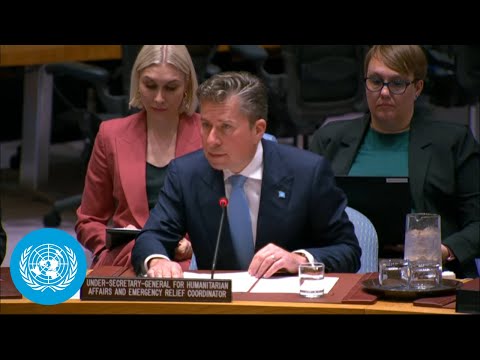
An unnamed representative told the United Nations Security Council on March 31, 2025, that recent Russian air and drone strikes in Ukraine continue to inflict heavy civilian casualties and extensive damage to civilian infrastructure, and urged member states to increase funding and ensure unimpeded humanitarian access.
The representative said a recent strike in the Dnipro region killed 18 civilians, including nine children, and injured dozens after a children—s playground and nearby residential area were hit. "This was the single deadliest strike harming children since February 2022," the speaker said, citing verification by the Office of the High Commissioner for Human Rights (OHCHR).
The risks to civilians and the scale of need are large: the speaker said OHCHR had verified at least 12,910 civilian deaths, including 682 children, and nearly 30,700 injuries in Ukraine between Feb. 24, 2022, and March 31, 2025; nearly 3.7 million people remained internally displaced; and almost 7 million refugees from Ukraine were recorded globally. The representative added that an estimated 1.5 million civilians in parts of Donetsk, Kherson, Luhansk and Zaporizhzhia under occupation could not be reached by humanitarian actors.
Why it matters: the address combined casualty figures, widespread displacement and a shortfall in humanitarian financing to explain why agencies are reducing services. The representative said 17% of the $2.6 billion requested for the 2025 Ukraine humanitarian needs and response plan had been secured, forcing a narrowing of priorities to frontline communities, emergency response, evacuations and assistance to the displaced.
The speaker described damage to health-care facilities, apartment blocks, schools and playgrounds in multiple regions, and said recent hostilities had caused civilian casualties in Kherson, Kharkiv, Donetsk and the border areas of Sumy. "The fighting rages on. Civilians continue to suffer, and the humanitarian crisis deepens by the day," the representative told the council.
The address highlighted particular concerns for women and children. The representative cited a new report co-published by the World Health Organization, UNFPA and UNICEF about maternal mortality worldwide and said in Ukraine preterm births have made up nearly half of all deliveries since February 2022, increasing risks for mothers and newborns. The representative also said intimate-partner and other forms of gender-based violence had risen by 36% during the period since Feb. 24, 2022.
On delivery and access, the representative reiterated that international humanitarian law requires parties to facilitate rapid, unimpeded humanitarian relief. The speaker welcomed an announced ceasefire focused on energy infrastructure and negotiations to secure safe navigation in the Black Sea but said the best protection for civilians is an end to the war. The speaker—s second request was for increased funding to sustain humanitarian operations: "If you cannot stop the attacks on civilians in Ukraine and elsewhere, please at least give us the security to operate and the resources we need to save as many survivors as we can," the representative said.
The representative said that in the first two months of 2025, about 290 humanitarian organizations, including many national NGOs, had reached some 1.7 million people with emergency support and services. The address noted that donor contributions to date covered 17% of the $2.6 billion 2025 plan and warned that aid partners were scaling back critical programs as a result.
The statement also referenced media reports of civilian casualties and damage to civilian infrastructure in the Russian regions of Kursk, Belgorod and Bryansk. The representative called on the Security Council and the international community to uphold the rules of international humanitarian law and to ensure protection for civilians across conflict zones.
The address concluded with two requests to the council: (1) that parties to conflicts protect civilians and civilian infrastructure in accordance with international humanitarian law; and (2) that member states provide the funding and security needed for humanitarian actors to continue saving lives.