Get Full Government Meeting Transcripts, Videos, & Alerts Forever!
Get email alerts on the Emergency Possessory Orders topic
No spam. Unsubscribe anytime.
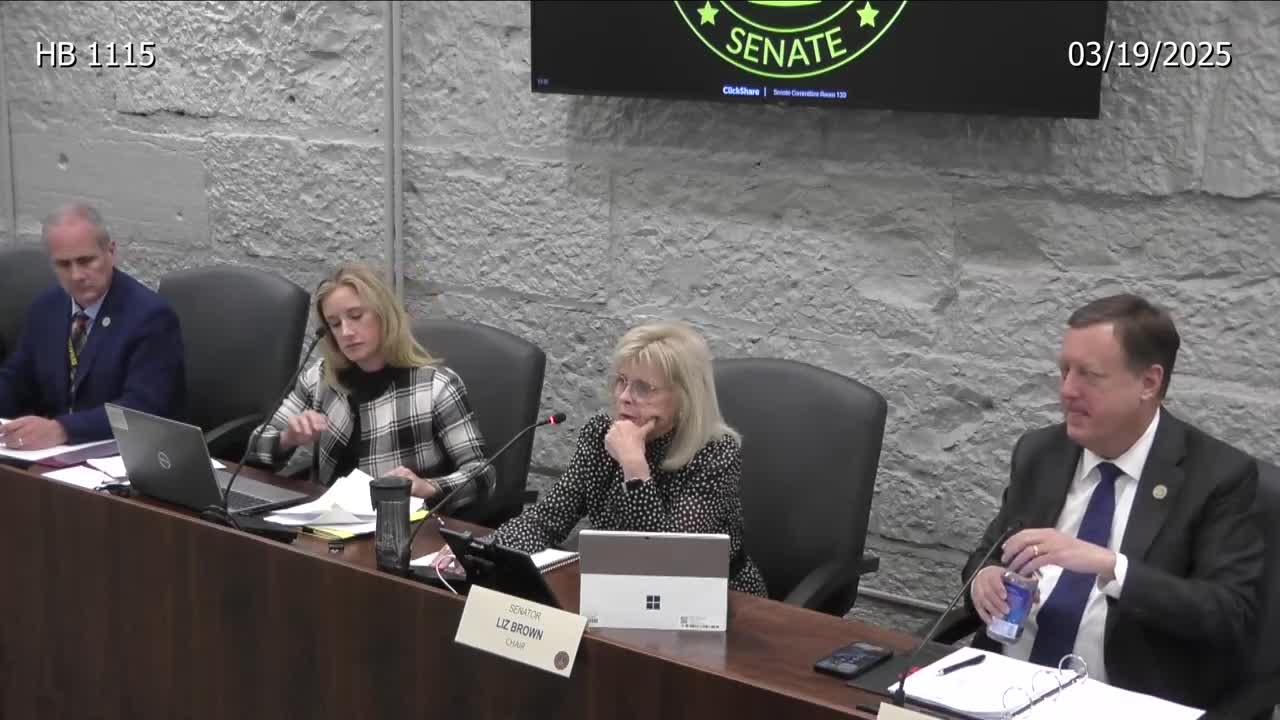
Committee advances bill expanding grounds for emergency possessory orders, keeps tenant due-process timeline
Summary
House Bill 1115 would add two new grounds that allow landlords to seek emergency possessory orders — crimes threatening others' health or safety and fraud via false information to obtain possession — and clarifies timing and standard of proof; committee amended language and advanced the bill 10-0.
House Bill 1115, presented by Representative Manning, would add two circumstances in which landlords may seek an emergency possessory order: (1) when a tenant or a tenant's guest has committed a crime that directly affects the health or safety of another tenant or a rental agent; and (2) when a tenant used identity deception, counterfeiting, forgery or other material false information to obtain possession of a unit.
Representative Manning told the committee the bill preserves the existing speedy hearing timeline and due process: courts must review a petition and schedule a hearing within three days under current law, and the bill retains that timeline. Manning said that if the court finds for the landlord, “the court shall order the tenant to return possession of the property no later than 7 days after the emergency hearing.”
The committee debated standards and scope. Members discussed replacing a probable-cause standard with a civil preponderance-of-evidence standard for emergency orders, and they debated whether to include “invitees” (people on a property by invitation) within the bill’s language. The author and sponsor narrowed the bill to tenant or tenant's guest and removed “invitee” after committee discussion. The committee also agreed to clarify that the seven-day clock should run from the date of the court’s order, and sponsors said they would fix the precise drafting on second reading.
Christopher Lee of the Apartment Association testified in support and described two concerns the bill addresses: synthetic identity fraud in rental applications and criminal acts that threaten other residents. Lee said the association has found examples of fake-identification fraud in Indiana; he testified that an audit of 6,000 units found 80 occupants using fake identities. He also described safety incidents, saying a recent case involved shots fired in an apartment that nearly struck a baby in a neighboring unit. Lee told the committee the change would allow landlords to remove individuals who pose immediate threats more quickly than a standard eviction process.
Committee members raised hypothetical scenarios and cautioned about unintended consequences. Senator Taylor described situations in which a leaseholder is absent and another occupant remains — a fact pattern that can leave an occupant without notice of court proceedings if the named leaseholder is not present. Committee members discussed existing anti-squatting law as a related remedy and emphasized the role of the judge at the emergency hearing to sort contested factual situations.
The committee took an amendment removing “invitee” and adopting the preponderance standard by consent and advanced the amended bill. The roll-call recorded the final committee action as 10-0 in favor.
The bill retains the three-day hearing requirement, preserves due process, and requires courts to order return of possession within seven days of the court’s order when the court finds for the landlord; sponsors said they will refine statutory language on second reading to ensure the order and timing are explicit.