Get Full Government Meeting Transcripts, Videos, & Alerts Forever!
Get email alerts on the Charitable Bequests topic
No spam. Unsubscribe anytime.
Committee approves amendment narrowing immunity in charitable-beneficiary bill, sends bill to floor 8-0
Summary
The Insurance and Financial Institutions Committee adopted an amendment to House Bill 1081 that revises procedures for financial institutions to release charitable bequests when a death certificate is not available and removes broad immunity language. After debate the committee voted to move the amended bill to the floor by voice/roll call.
The committee considered House Bill 1081, which would make it easier for charitable organizations to collect funds bequeathed to them when the decedent’s death is not yet proven by a death certificate. Representative Manning introduced amendment 11, which adds an ‘‘indirect proof of death’’ pathway (two of three documents such as notice of probate publication, proof funeral expenses were paid, or published obituary), lengthens the institution response period from 30 to 45 days and directs complaints to the applicable primary regulator rather than specifying a single enforcement remedy.
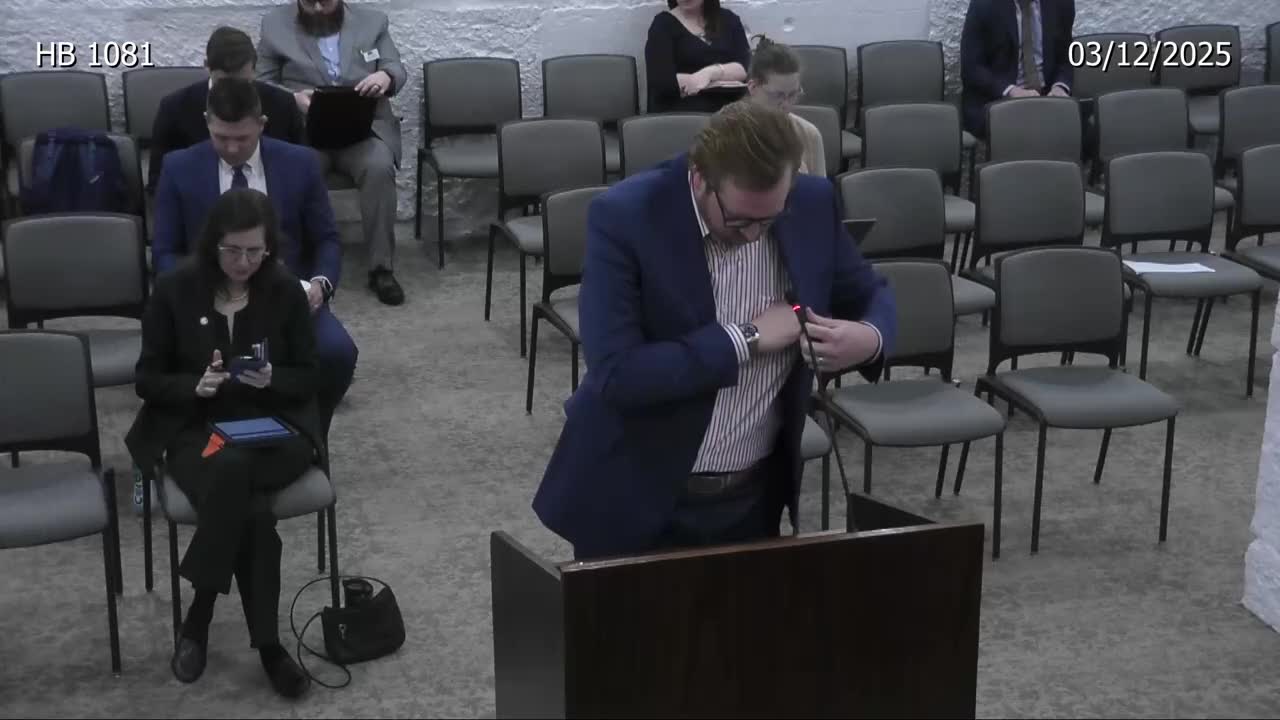
Representative Manning said the changes were developed with stakeholders and were intended to strike a balance between the needs of charities and the verification practices of financial institutions. ‘‘We worked with stakeholders over the last several days, and I think it’s safe to say we’re in agreement with what we have here with amendment number 11,’’ Manning told the committee.
The amendment originally included a ‘‘safe harbor’’ immunity provision for financial institutions that comply in good faith. Several senators questioned that immunity. Senator Freeman and others said the carve-out was unnecessary because institutions that ‘‘do everything the law requires’’ should already be protected; Senator Freeman recommended striking the immunity language. Senator Gaskell said he would vote for the amendment only if he could pursue a second-reading change to tighten the bill.
On a roll call the committee approved amendment 11 with a majority yes vote and an expressed lone no on record during consent (the clerk recorded one ‘‘No’’ during the consent agreement to strike the immunity language). After adoption of the amendment the committee voted to move the bill as amended to the full Senate for second reading; the committee reported the bill to the floor 8-0.
What the amendment does: it clarifies acceptable indirect proof of death when a death certificate or court finding is not available, extends timelines for institutions to respond, replaces mandatory enforcement language with a regulator-driven investigation and penalty process, and (after committee action) removes a provision granting broad immunity to financial institutions for third-party fraud in these circumstances.
Discussion and rationale: proponents said the amendment balances due diligence by financial institutions with the needs of charities to receive bequests. Opponents of the immunity language argued that statutory immunity was unnecessary and that existing good-faith protections should suffice.
Actions taken: amendment 11 (striking lines 29–38 — the immunity language) was adopted; the committee then voted to move House Bill 1081, as amended, to the full body. Representative Manning and committee members said they will continue to refine technical points on second reading.