Get Full Government Meeting Transcripts, Videos, & Alerts Forever!
Get email alerts on the Health Insurance Pricing topic
No spam. Unsubscribe anytime.
Committee hears bill to credit cash medical payments toward deductibles; ERISA scope to be researched
Summary
Representative McGuire and supporters presented House Bill 1604, a proposal ‘‘modeled after the Cicero Institute’s Patients Right to Save initiative’’ that would let patients who pay a provider directly for a medically necessary service have that amount credited to the patient’s deductible and out-of-pocket maximum if the payment is not submitted to the insurer and is lower than the insurer’s negotiated rate.
Representative McGuire and supporters presented House Bill 1604, a proposal ‘‘modeled after the Cicero Institute’s Patients Right to Save initiative’’ that would let patients who pay a provider directly for a medically necessary service have that amount credited to the patient’s deductible and out-of-pocket maximum if the payment is not submitted to the insurer and is lower than the insurer’s negotiated rate.
The bill’s sponsor, Representative McGuire, told the committee the measure is a ‘‘market driven approach to the health care reform that enhances price transparency and incentivizes patients to seek cost effective care.’’ She cited nationwide trends and state-level figures, saying medical debt is a leading cause of bankruptcy and noting average premiums she gave as $8,435 for single coverage and $23,968 for family coverage.
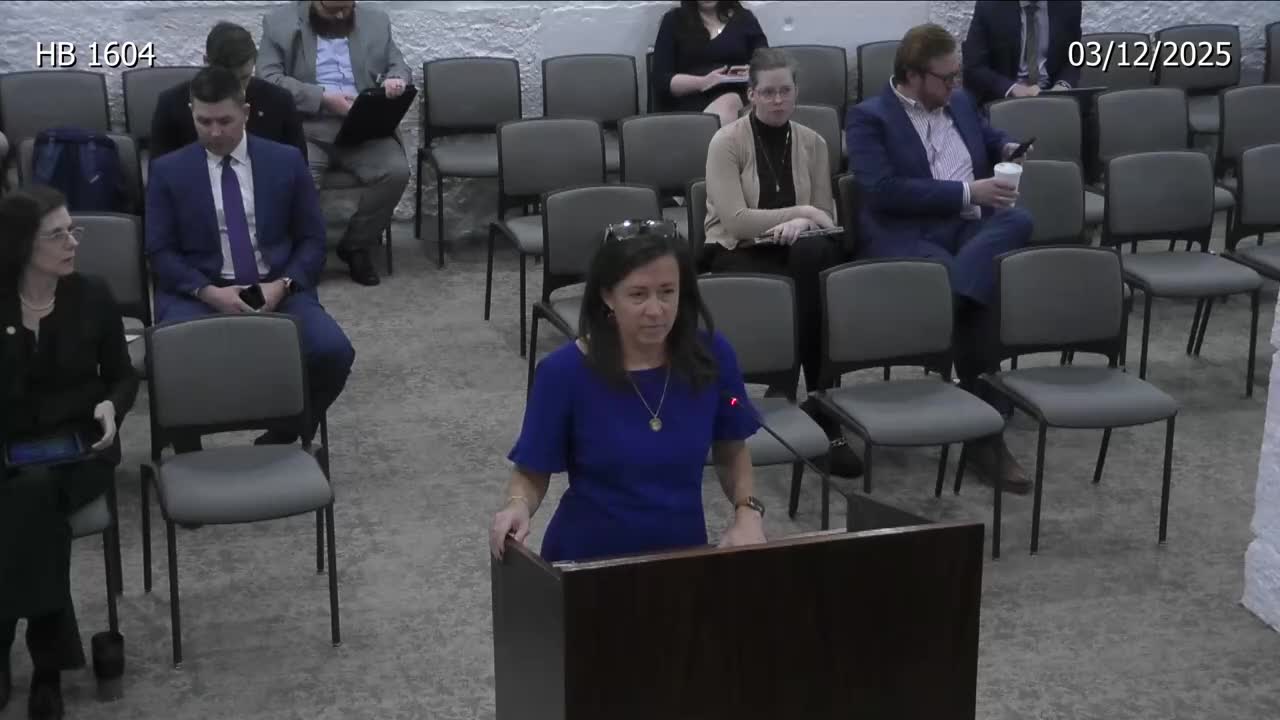
Supporters from the governor’s office and patient-advocacy organizations testified in favor. Audrey Arbogast, chief of staff to the secretary of the Department of Health and Family Services, said the governor ‘‘supports’’ the bill because it ‘‘incentivizes consumers to get in the driver’s seat of their own health care’’ and can help lower employer premiums by encouraging lower-cost choices. Matt Bell of Hoosiers for Affordable Healthcare and Graham Renbarger of Americans for Prosperity also urged committee support, saying the measure would spur competition and support independent providers.
Key bill provisions described by the sponsor would require health plans to establish a process to allow a covered individual to submit documentation and have an out-of-pocket cash payment applied to the plan deductible and out-of-pocket maximum when the payment is for a medically necessary service, the claim is not submitted for insurance reimbursement, and the cash payment is lower than the insurer’s discounted network rate. Insurers also would be required to publish the average discounted rate they have negotiated for healthcare entities and to display the claims-credit procedure on their websites. The Department of Insurance would adopt implementing rules.
Industry witnesses generally supported the policy goals but raised legal concerns about the scope. Ash Neller of the Indiana Manufacturers Association told the committee he supported the bill’s objectives but objected to language that would apply the rule to ERISA plans, saying ‘‘ERISA plans are already heavily regulated at the federal level’’ and that states lack authority to impose plan-design mandates on self-funded ERISA plans. The IMA asked that ERISA plans be excluded.
Senator Gaskell and other committee members pressed for research on whether states that have adopted similar laws applied them to ERISA plans and whether those laws have faced legal challenges. Representative McGuire and the committee staff agreed further analysis was needed. Mason Hamilton of the Legislative Services Agency was asked to research the ERISA question and related legal risks.
After testimony and questions the committee did not vote on the bill. The chair said the large amendment to the underlying bill touches ERISA-related issues and that, with the author’s consent, the committee would take additional testimony on that amendment next week and vote then if appropriate.
Discussion points: supporters argued the bill would increase transparency and patient savings; providers and consumer groups described potential provider-side time savings and competition benefits; the Indiana Manufacturers Association flagged federal preemption concerns. The committee directed staff to research ERISA implications and delayed action pending that review.
Proponents cited four other states as adopting similar approaches (Arizona, Tennessee, Texas and Maine) and noted Maine has had a version of the policy since 2017. Representative McGuire told the committee ‘‘cash options are typically on average 30% less than insured negotiated rates.’’
What’s next: the committee left the bill open for further testimony and directed staff to prepare a legal analysis of ERISA preemption and related state experience; a vote was not taken at the hearing.