Get Full Government Meeting Transcripts, Videos, & Alerts Forever!
Get email alerts on the Workforce Economics topic
No spam. Unsubscribe anytime.
Senate committee advances bill directing UCLA Labor Center to study AI's effects on California jobs and revenues
Summary
SB 366 instructs the UCLA Labor Center to analyze how artificial intelligence may reshape California's labor market and state and local revenues; the committee passed the bill as amended and sent it to the Labor Committee unanimously.
A Senate committee voted to advance SB 366, which would direct the UCLA Labor Center to conduct a comprehensive study of the economic and workforce impacts of artificial intelligence (AI) on California's economy, including potential effects on state and local revenues.
Senator María Smallwood Cuevas, the author, said the bill is intended to produce primary data on which sectors are most vulnerable to AI disruption and to quantify potential fiscal effects such as reduced income-tax revenue if labor demand declines. "SB 366 helps California get ahead of this disruption," she said, arguing that policymakers need data to understand the fiscal implications of rapid technological change.
Brian Justy, a senior research analyst at the UCLA Labor Center, testified in support and said the bill would produce novel, California-specific research linking workplace AI adoption to revenue impacts and workforce outcomes. Justy said many public discussions about AI rely on speculation and that a focused, state-level study would yield actionable findings for policy makers.
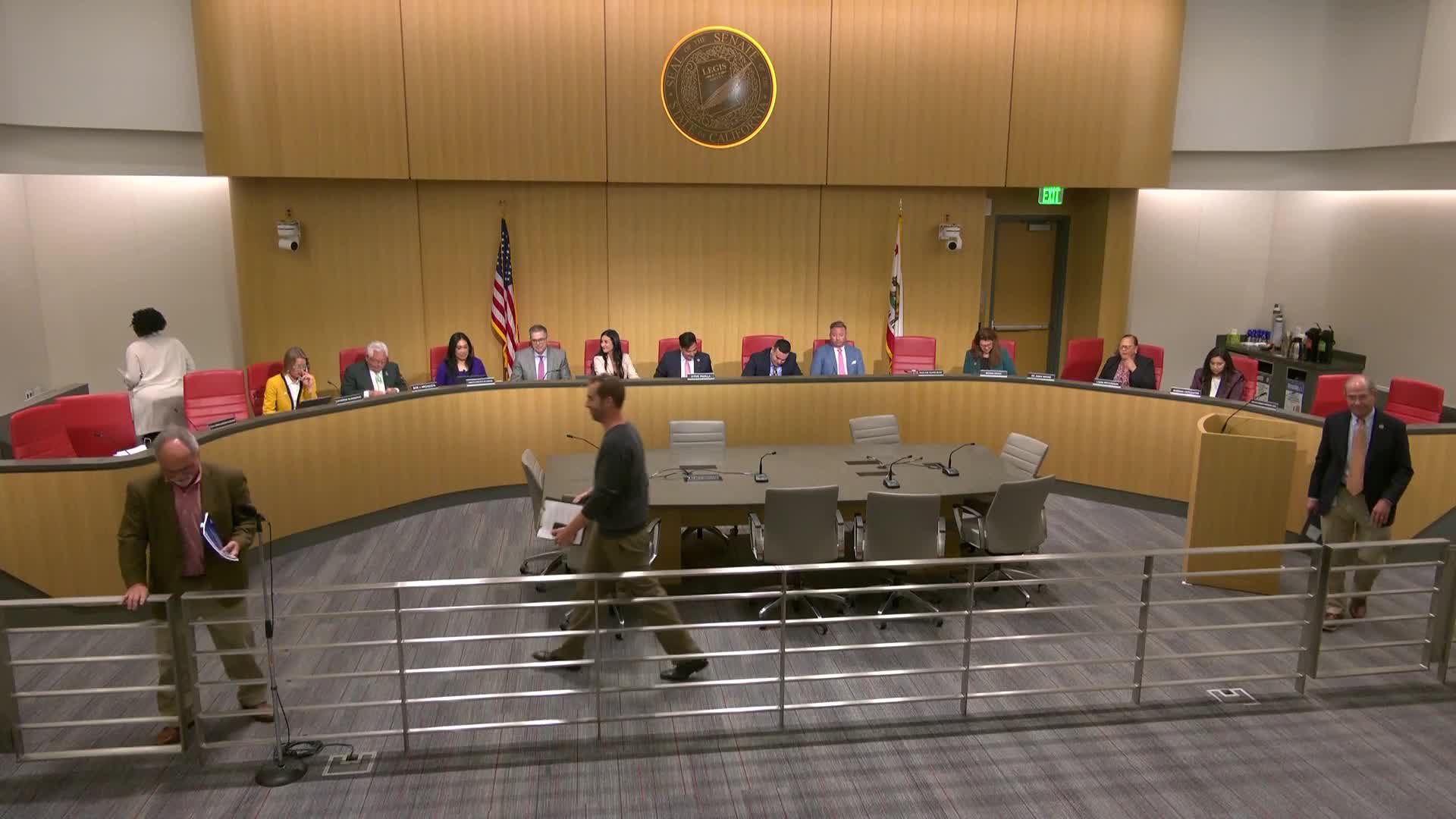
The committee accepted amendments and recorded a motion to pass the bill as amended to the Senate Labor Committee. Committee members who spoke praised the effort to gather data and to frame AI impacts in fiscal terms. No organized opposition appeared at the hearing. The committee recorded the motion as passed and the tally was 15-0 in favor.
If enacted, SB 366 would create a mandated research project with delivery requirements to inform future legislative and budget decisions about AI-related workforce transitions.