Get Full Government Meeting Transcripts, Videos, & Alerts Forever!
Get email alerts on the Oig Funding Monitoring topic
No spam. Unsubscribe anytime.
State inspector general seeks funding to expand monitoring of staff sexual‑misconduct investigations
Summary
The California Office of the Inspector General asked the Assembly subcommittee for staff and ongoing funding to increase its monitoring and investigation of alleged staff sexual misconduct in state prisons, citing a significant gap between complaints and the office’s current capacity to review them.
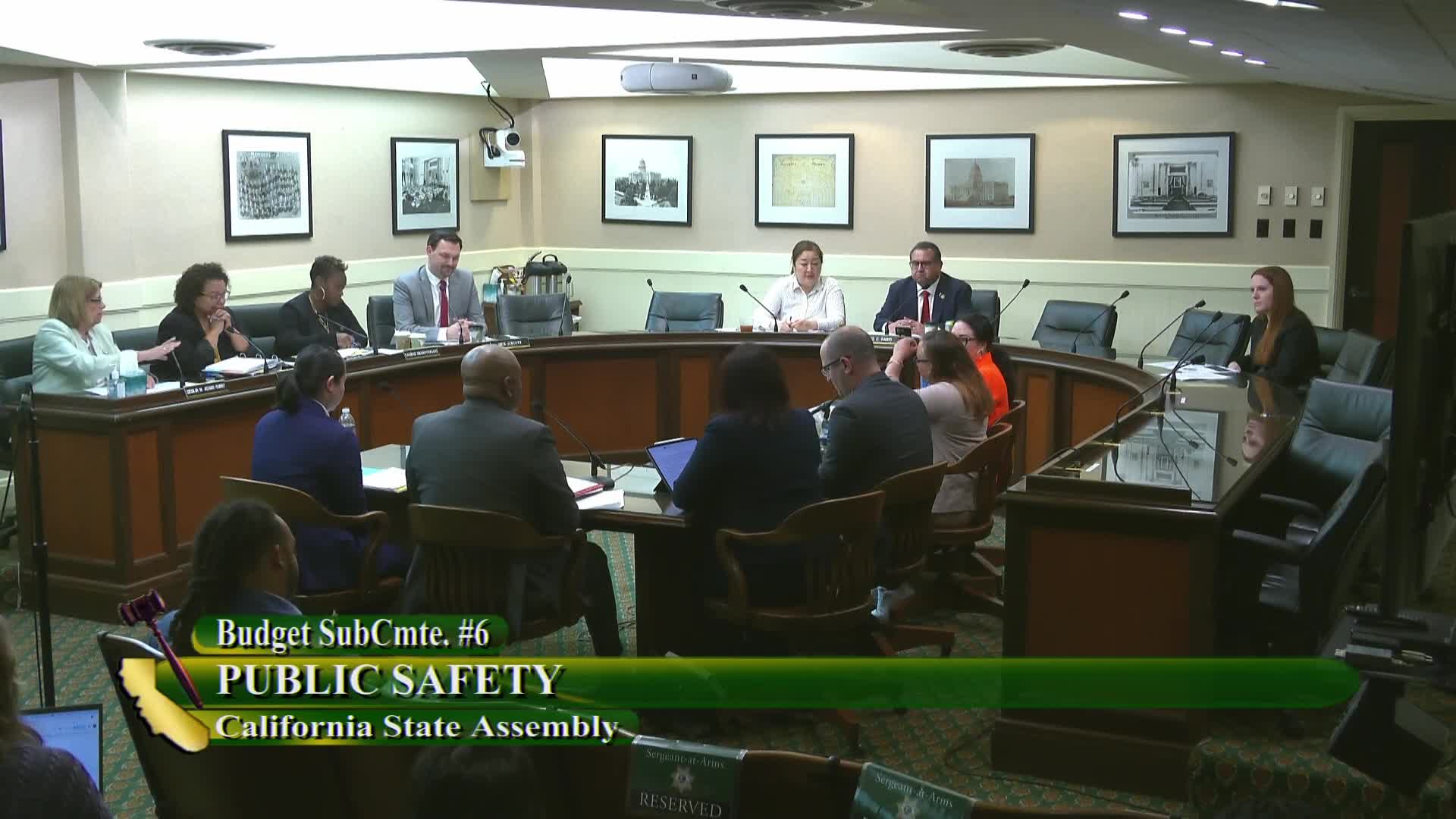
The California Office of the Inspector General told the Assembly Budget Subcommittee No. 6 that it needs additional staffing and funding to monitor and investigate allegations of staff sexual misconduct within the California Department of Corrections and Rehabilitation.
Inspector General Amarik Singh said the OIG is implementing statutory duties from Senate Bill 1069 that expanded the office’s responsibility to monitor allegations of staff sexual misconduct. Singh told the subcommittee the OIG’s budget change proposal requests $3,600,000 in one‑time funding for 22 positions in 2025‑26 and $5,715,000 for 29 positions in 2026‑27 and ongoing. Those positions, he testified, would allow the OIG to review far more screening decisions and to monitor or investigate an estimated 350 staff sexual‑misconduct cases per year — roughly 25% of the current annual volume of cases that involve incarcerated people.
Singh described a recent, single‑month snapshot: CDCR opened 203 investigations in March alleging staff sexual misconduct; the OIG had capacity to monitor only 31 of those cases, leaving 172 unmonitored. He said earlier projections based on 2024 data estimated about 1,400 complaints a year, but March figures suggest the annual total may be closer to 2,400. The OIG proposed monitoring roughly 3,600 additional grievance routing decisions per year and publishing monthly summaries and annual reports on the cases it monitors.
Why it matters: lawmakers and advocates told the committee that independent monitoring is essential because many survivors fear retaliation and the department historically conducted many internal investigations without consistent external review. The OIG characterized the staffing proposal as necessary to ensure allegations are routed and investigated properly and to allow the OIG to conduct supplemental investigations when CDCR probes are inadequate.
Singh said the office would expand its team of attorneys to perform supplemental investigative work when an investigation “was either not adequate or not performed at all.” He told lawmakers the OIG would track each case it monitors and publish assessments when monitoring is complete. Committee members repeatedly asked for follow‑up data, including how many complaints are referred to district attorneys and what share of alleged incidents result in criminal charges.
Committee response: some legislators said the OIG’s initial monitoring target of reviewing 10% of grievances was too low and called for much higher oversight. The OIG answered that its auditors identified 25% as a representative sample that the office could monitor meaningfully with the requested staffing and that staffing must be hired and trained before the greater review volume can be achieved.
What was not decided: the Legislature did not vote on the OIG request during the hearing. Members asked the OIG and CDCR for more detailed breakdowns of DA referrals, historical grievance counts and evidence on whether complaint volumes represent increased reporting or increased incidents.