Get Full Government Meeting Transcripts, Videos, & Alerts Forever!
Get email alerts on the Prison Staff Misconduct topic
No spam. Unsubscribe anytime.
Legislators, survivors and advocates press CDCR on staff sexual misconduct at women’s prisons
Summary
Lawmakers, formerly incarcerated survivors and advocates told a California Assembly subcommittee that staff sexual misconduct remains a crisis in the state’s two women’s prisons and urged stronger oversight, survivor protections and decarceration options.
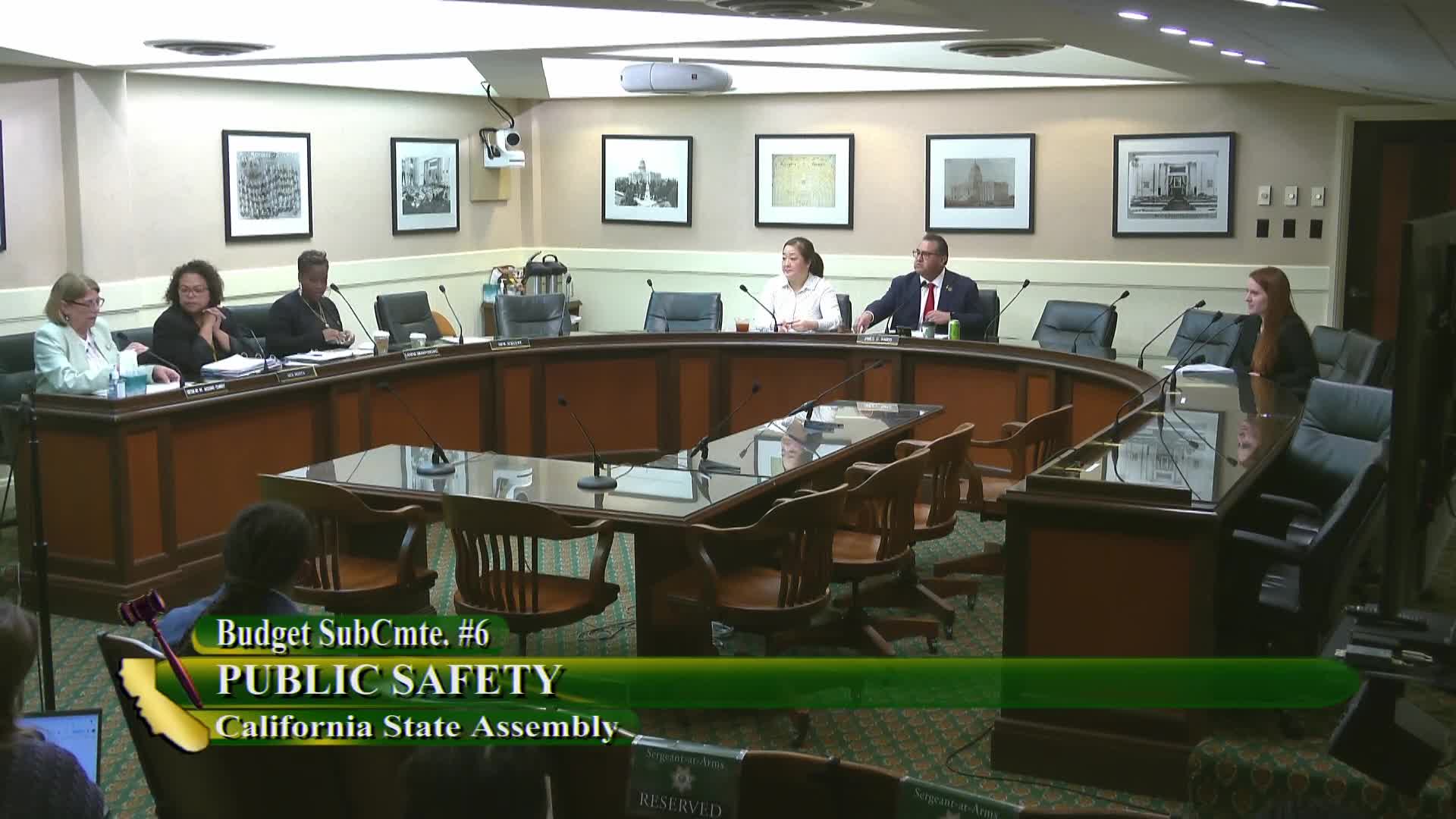
Legislators, formerly incarcerated survivors and prison advocacy groups pressed the California Department of Corrections and Rehabilitation and the Office of the Inspector General on longstanding staff sexual misconduct and retaliation at the state's two women's prisons, telling members of the Assembly Budget Subcommittee No. 6 that current measures have not stopped abuse.
The session on staff sexual misconduct and the department’s complaint processes brought testimony from wardens at Central California Women's Facility in Chowchilla and the California Institution for Women in Chino, the Office of the Inspector General, survivors and community organizations including Sister Warriors Freedom Coalition and Transformative Programming Works. Survivors recounted assaults and described fear of retaliation that discouraged reporting.
Why it matters: witnesses and lawmakers said staff misconduct and the threat of retaliation undermine safety, rehabilitation and reentry for incarcerated women and transgender people, and they urged legislative action on oversight, funding for survivor services and expanded pathways to release for victims of staff abuse.
Warden Anissa Dela Cruz told the committee she oversees care and custody for 2,006 incarcerated people at Central California Women's Facility and said the institution has “a zero tolerance for ****** abuse and harassment,” listing partnerships with external groups and training efforts. Warden Lavelle Parker described CIW as a medically licensed facility with programs for education, vocational training and mental health, and said her institution has expanded training and victim-support partnerships, including body‑worn and stationary camera investments.
Survivors and advocates disputed that improvements are sufficient. Amika Mota, executive director of Sister Warriors Freedom Coalition, described a pattern of alleged physical assaults by officers, sexual abuse by staff and obstacles survivors face when they report. “Most will keep their abuse to themselves, knowing that they are vulnerable to retaliation from the same officers and prison system that failed to protect them,” Mota said. Sol Mercado, a reentry coordinator and former incarcerated person who identified herself as a Jane Doe plaintiff in a civil case, described being raped by a corrections officer during a legal visit and said she feared filing a grievance because of retaliation.
The Office of the Inspector General described new statutory duties enacted in Senate Bill 1069 and asked the Legislature for staff and funding to expand monitoring and investigations of staff misconduct. Inspector General Amarik Singh said the OIG intends to monitor and, when necessary, investigate allegations of staff sexual misconduct and to publicly report monthly summaries of cases the office monitors. He told the committee that in March CDCR opened 203 investigations alleging staff sexual misconduct; OIG staffing currently allowed monitoring of 31 cases, leaving many unmonitored.
Lawmakers pressed CDCR officials on use of video and body cameras, how evidence is preserved, and whether officers implicated in misconduct are moved to other facilities rather than removed from duty. Warden Dela Cruz said evidence is preserved for investigation and that staff are redirected and referred to the Office of Internal Affairs when appropriate. Warden Parker said problem officers are removed from direct contact with incarcerated people pending investigation, but described limits set by bargaining‑unit rules and due‑process obligations for employees.
Several members of the Legislative Women's Caucus and other lawmakers emphasized that reporting rates likely undercount actual abuse because of fear of retaliation and the power imbalance inside prisons. Assemblymember Rob Bonta and others urged more funding for independent oversight so a higher percentage of grievances and investigations are monitored outside the department.
Survivors and outside advocates urged legislative steps beyond improved investigations: prioritized access for community organizations, survivors' access to advocates, enhanced protections against retaliation, and expedited release or other pathways to safety for survivors of staff sexual misconduct. Sister Warriors and other groups asked for sustained funding for ambassador programs and community‑based services that visit facilities and provide confidential support.
What was not decided: the hearing produced testimony, requests and follow‑up questions but no formal votes or policy enactments. Lawmakers asked CDCR and the OIG for follow‑up data on DA referrals, numbers of sustained complaints and patterns of retaliation.
The subcommittee said it will continue oversight work and requested additional information from CDCR and the OIG about investigations, referrals to district attorneys and protections for complainants.