Get Full Government Meeting Transcripts, Videos, & Alerts Forever!
Get email alerts on the Economic Development topic
No spam. Unsubscribe anytime.
Committee backs bill letting San Francisco create hospitality zone with 20 low-cost liquor licenses
Summary
SB 395 would allow the City and County of San Francisco to designate a downtown hospitality zone and authorize up to 20 nontransferable, low-cost restaurant liquor licenses to spur restaurant openings; the Senate committee passed the measure to Appropriations unanimously.
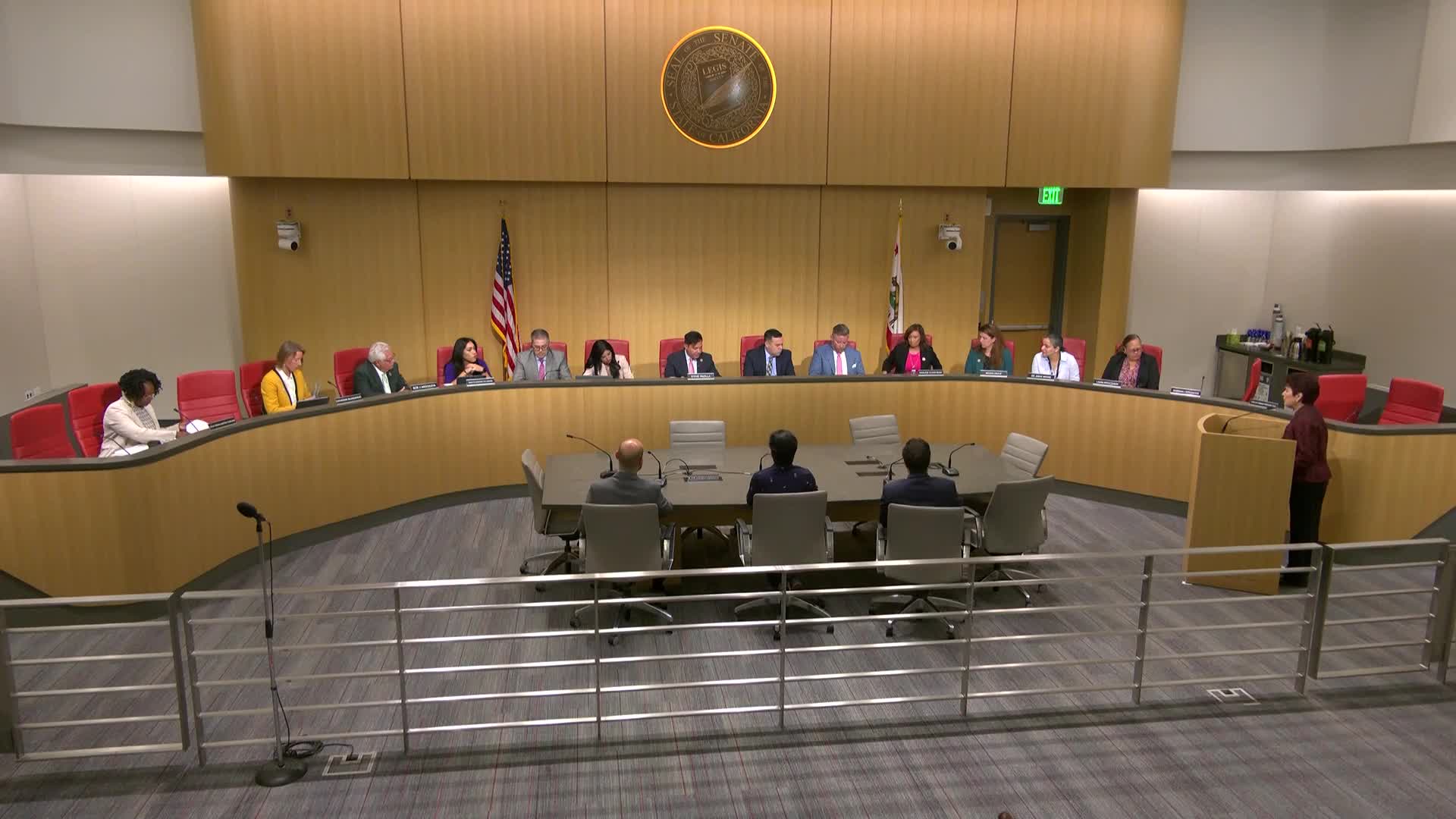
A Senate committee advanced SB 395, a bill that would allow the City and County of San Francisco to designate a downtown "hospitality zone" and request up to 20 new, nontransferable restaurant liquor licenses from the state Alcoholic Beverage Control (ABC) to encourage small restaurant openings in a specified downtown area.
Senator Scott Wiener, the bill's author, said the licenses would be available only in a local-designated hospitality zone such as Union Square and Yerba Buena to help vacant storefronts attract nightlife operators and support downtown economic recovery. "SB 395 will authorize 20 low cost, nontransferable liquor licenses for restaurants in this new hospitality zone," Wiener said.
City officials supporting the measure told the committee the licenses would be priced far below secondary-market purchases, which can exceed six figures, and would be nontransferable so they would not inflate the broader market for liquor licenses. Eileen Mariano, who manages state and federal affairs for San Francisco Mayor Daniel Lurie, said the provision would help downtown recovery by lowering a major barrier for entrepreneurs and directing investment into tenant improvements.
Ben Van Houten, San Francisco's director of Nightlife Initiatives, described how the licenses would operate: ABC would issue the licenses only after the city adopts an ordinance establishing the hospitality zone; the licenses would be nontransferable and would be cancelled if an operator closed, enabling future applicants in the zone to seek the license. He said local policymakers would retain control over implementation and the program could be adjusted based on conditions in real time.
The California Restaurant Association registered support at the hearing; no organized opposition appeared. Committee members raised no significant objections, and Senator Richardson moved the bill. The committee recorded the motion as passed to the Appropriations Committee; the committee tally was recorded as 15-0 in favor.
If enacted, the bill would give San Francisco a tool to reduce start-up costs for restaurants in the targeted hospitality zone and intentionally avoid enlarging the statewide liquor license cap by limiting licenses to the zone and making them nontransferable.