Get Full Government Meeting Transcripts, Videos, & Alerts Forever!
Get email alerts on the Flood Protection topic
No spam. Unsubscribe anytime.
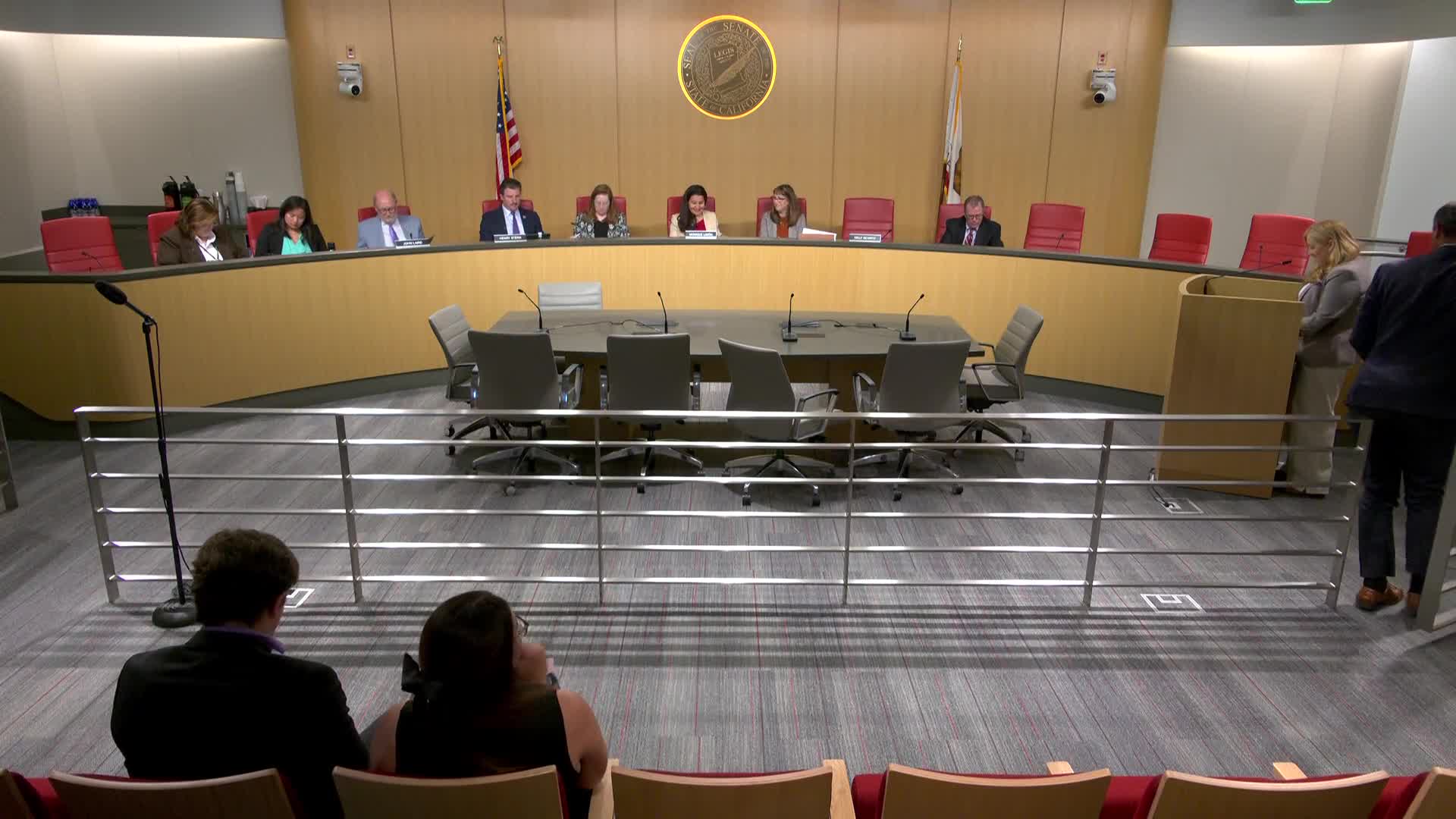
Committee advances Ashby bill to extend flood‑protection deadline for Sacramento projects
Summary
SB 639 would extend deadlines for three Sacramento projects to achieve urban level of flood protection from 2026 to February 1, 2030; city and county officials said the projects are on track but the extension is an insurance policy against federal timing uncertainties.
Senator Ashby presented SB 639, the “Sacramento Flood Control Authorization Act,” explaining the measure is a narrowly tailored extension for three capital projects in Senate District 8 that must achieve an urban level of flood protection (ULOP) before local jurisdictions can permit new development. Ashby said, “This bill extends the deadline for three projects within Senate District 8 so that we can achieve the urban level of flood protection from 2026 to 02/1930, ensuring Sacramento avoids critical infrastructure setbacks.”
Remy Mendoza, principal planner for the City of Sacramento, and Audrey Rataichak (representing Sacramento County) testified in support, telling the committee the three projects are substantially complete but could be delayed by staffing changes at the U.S. Army Corps of Engineers or other federal uncertainties. Mendoza told the committee the extension applies to two subareas (the Natomas Basin and the Beach Lake subareas) and that without the extension “approximately 2,000 new infill housing units could be hindered.”
Jack Gualco of the Sacramento Area Flood Control Agency described the region's progress, noting many projects have achieved 200‑year protection and only two pumping stations and a slurry wall remain for full certification; he said federal scheduling vagaries create a low but nonzero risk. Committee members probed that federal funding and Corps scheduling have been unpredictable in past cycles; Senator Laird described the extension as “insurance” to allow narrowly focused projects to finish.
The committee recommended SB 639 as a due‑pass referral to the Local Government Committee; Senators present voted and the motion was recorded and left on call for absent members.