Get Full Government Meeting Transcripts, Videos, & Alerts Forever!
Get email alerts on the Master Plan Career Education topic
No spam. Unsubscribe anytime.
Labor agency outlines six priorities in governor’s master plan for career education
Summary
Labor Secretary Knox told the Assembly Budget Subcommittee that the governor’s master plan for career education aims to reduce fragmentation, strengthen regional coordination and link students to employer demand through six priorities, including a career passport, data linkages and expanded wraparound services.
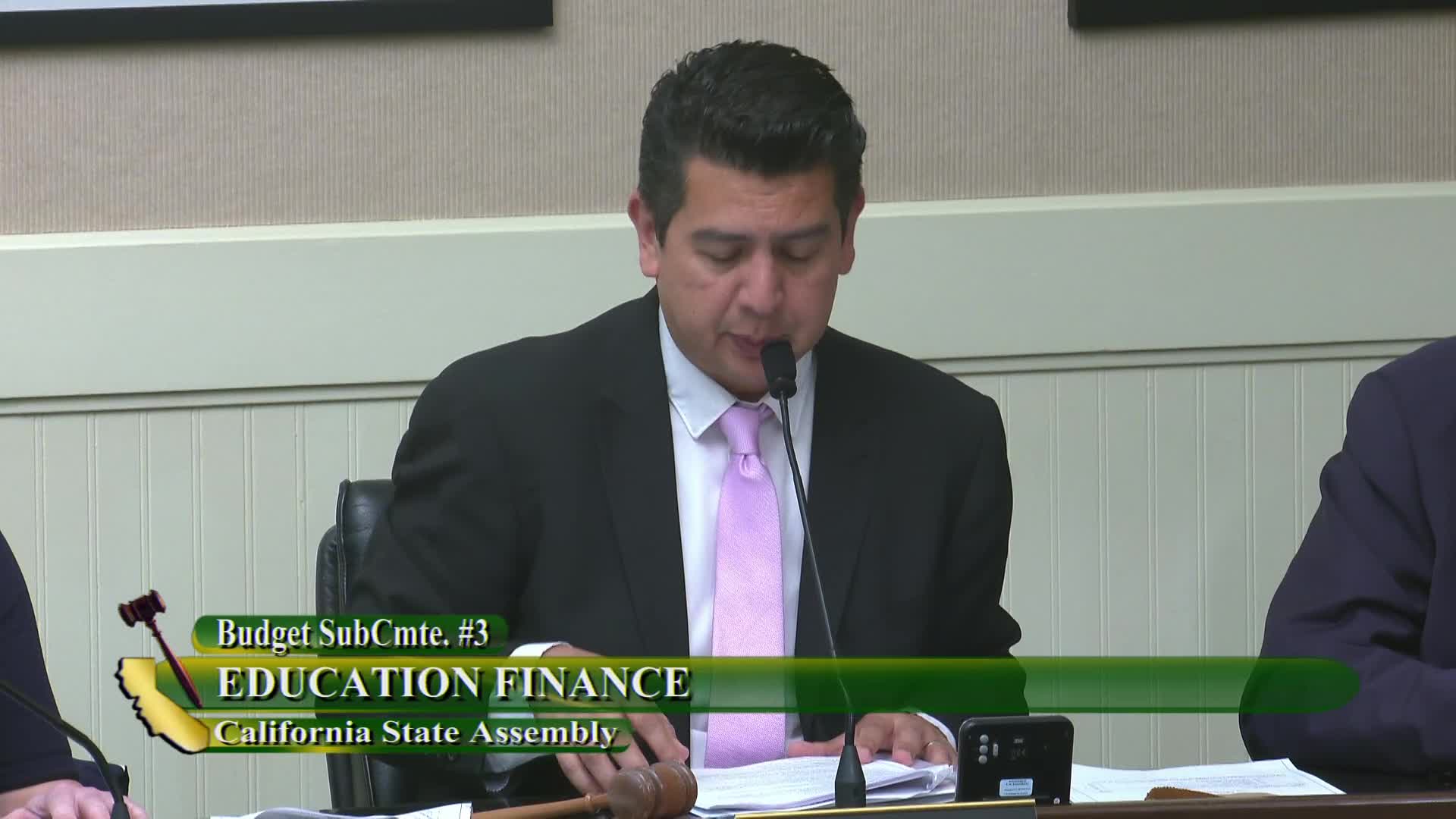
Labor Secretary Knox told the Assembly Budget Subcommittee on Education Finance that the governor’s newly released master plan for career education aims to better connect students, employers and regions across California.
“This plan has potential to change the lives of millions of Californians and put them on the path to good jobs,” Secretary Knox said in her presentation to the committee.
The plan, Knox said, seeks to reduce fragmentation that now forces local program leaders and learners to navigate multiple funding streams and separate data systems. The secretary said the plan builds on statewide convenings and regional listening sessions and identifies six priorities: creating robust statewide coordination; increasing regional coordination; supporting skills-based hiring through a career passport and industry-recognized credentials; expanding career pathways and earn-and-learn models; strengthening training for young people and adults—especially those disconnected from education and work; and expanding access and affordability by coordinating wraparound services such as childcare, housing and CalFresh/CalWORKs benefits.
Why it matters: committee members and agency staff said the plan responds to long-standing critiques that career technical education (CTE) in California is fragmented across agencies and funding streams. Secretary Knox emphasized that the state needs better data linkages—what she described as a single “data lake”—and stronger regional leadership to scale successful models to meet employer demand.
What the plan proposes and how officials framed it - Statewide coordination: The master plan would create an overarching coordinating structure to bring employers and education partners together and align funding and data across programs administered by multiple agencies. - Regional capacity: The plan emphasizes regional leadership where “the work actually happens,” building on models Knox praised in the North State and other regions. - Skills-based hiring and credentials: The plan promotes competency-based education, credit for prior learning, e-transcripts and a career passport to make credentials portable and to connect employers with local talent. - Earn-and-learn and apprenticeships: Knox described expansion of work-based learning and apprenticeship models, and said the plan would build on existing apprenticeship and pre-apprenticeship programs. - Targeting disconnected youth and adults: Knox cited an estimated “500,000-plus” young people not connected to school or work and said the plan aims for a “no wrong door” approach to re-engage them. - Wraparound supports: The plan proposes closer coordination with Health and Human Services and county partners to expand childcare, housing, food and healthcare supports for students in training.
Lawmakers’ questions and concerns Assemblymembers pressed the administration on three recurring points: (1) measurable outcomes and key performance indicators to judge success; (2) how the plan differs from prior state-led regional efforts; and (3) how funding can be aligned to incentivize regional collaboration rather than driving local fragmentation. Several members noted prior investments and structures such as the regional occupational centers and programs (ROCP) and recent regional collaboratives, asking how the new plan will scale proven models and avoid duplication.
Secretary Knox and agency staff said the plan will coordinate with existing entities (for example, community college and workforce partners) and that an early priority is improving data linkages—uploading program participation and wage outcomes to a common system tied to EDD wage files—so the state can report results in a comparable way.
Context and limits: Knox stressed that the master plan is a vision for connecting supply and demand, but did not present new statutory authorities or a single funding package in the hearing. Committee members repeatedly asked for clearer success metrics and statutory levers to ensure the plan produces different results than past efforts.
Looking ahead: Committee members said they intend to press for concrete metrics, budget language and program design details as the plan moves through the budget process and related pieces such as the proposed interagency council and regional planning work.
Ending: The hearing moved from the master plan presentation into related agenda items that will further probe data, funding alignment and governance changes proposed by the administration.