Get Full Government Meeting Transcripts, Videos, & Alerts Forever!
Get email alerts on the Legislative Votes topic
No spam. Unsubscribe anytime.
Votes at a glance: key outcomes from the Tennessee Senate Judiciary Committee
Summary
A summary of formal committee actions on several bills heard May 20 before the Senate Judiciary Committee with brief notes, vote tallies and next steps.
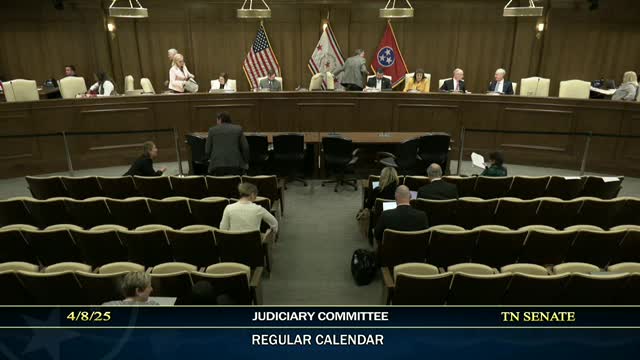
The Tennessee Senate Judiciary Committee considered a slate of bills on May 20. Below are the committee’s formal actions, the vote tallies recorded by the secretary and the committees to which the bills were referred.
Votes at a glance
- Senate Bill 13‑84 (enhanced armed guard license — allows private security to carry shotgun/rifle under new "enhanced armed guard" license; requires psychological evaluations): Committee recommendation favorable; roll call yielded 8 ayes; outcome: to calendar.
- Senate Bill 30 (sign/banner restrictions and enforcement clarifications): Committee recorded 6 ayes, 2 noes; outcome: to calendar.
- Senate Bill 10‑75 (criminal law clarifications including machine gun definition and probation eligibility): Committee recorded 7 ayes, 1 no; outcome: to finance.
- Senate Bill 10‑82 (expansion of dangerous felony statute — adding additional violent crimes): Committee recorded 7 ayes, 1 no; outcome: to finance.
- Senate Bill 13‑18 (handgun‑carry eligibility clarifications; aligns law with court order lowering age for permit): Committee recorded 6 ayes, 2 noes; outcome: to calendar.
- Senate Bill 1‑63 (increase penalty for firing into an occupied motor vehicle): Committee recorded 7 ayes, 1 no; outcome: to finance.
- Senate Bill 6‑57 (adds carjacking/related offenses to racketeering list): Committee recorded 6 ayes, 2 noes; outcome: to calendar.
- Senate Bill 13‑60 (limits on foreign judgments against firearms manufacturers; expands state protections): Committee recorded 6 ayes, 2 noes; outcome: to calendar.
- Senate Bill 14‑07 (authorize deadly force in certain nighttime property crimes): Committee vote was 4 ayes, 3 noes and 1 present not voting; outcome: remains in committee.
- Senate Bill 12‑27 (replace "handguns" with "firearm" in code; long‑gun carry changes): Committee vote was 4 ayes and 4 noes; outcome: remains in committee.
- Senate Bill 6‑01 (revisions and standards for electronic GPS monitoring providers for domestic‑violence‑related conditions): Committee recorded 8 ayes; outcome: to calendar.
- Senate Bill 4‑18 (streamline restoration of voting rights for persons with felony convictions; separate voting from gun‑restoration): Committee recorded 6 ayes and 2 noes (after amendment); outcome: to calendar.
- Senate Bill 4‑45 (funding for additional public defender positions): Committee recorded 8 ayes; outcome: to finance.
- Senate Bill 4‑64 (limits on bail bond premium rates and other bail procedures — several technical and timing reforms): Committee recorded 8 ayes; outcome: to calendar.
- Senate Bill 11‑33 (bench‑warrant entry and NCIC reporting requirements; surety liability updates): Committee recorded 8 ayes; outcome: to calendar.
Notes on procedure and interpretation
- Where the committee placed a bill "to calendar," that means the committee voted a favorable recommendation and the bill proceeds to the next legislative steps recorded in committee minutes.
- Several bills were amended on the floor of the committee; the short descriptions above reflect the statute language as discussed at the May 20 hearing and any amendment that the committee adopted before voting.
Why this matters: The committee moved a number of criminal‑justice, firearms and court‑procedure bills forward while shelving two of the session’s more controversial measures (deadly‑force expansion and long‑gun public‑carry changes). Committee action sets the agenda for floor debate and informs stakeholders about which proposals are moving and which will require further work.
Provenance: Each tally above matches the roll‑call language recorded in the committee transcript and verified by the secretary at the conclusion of each vote.