Get Full Government Meeting Transcripts, Videos, & Alerts Forever!
Get email alerts on the Firearms Policy topic
No spam. Unsubscribe anytime.
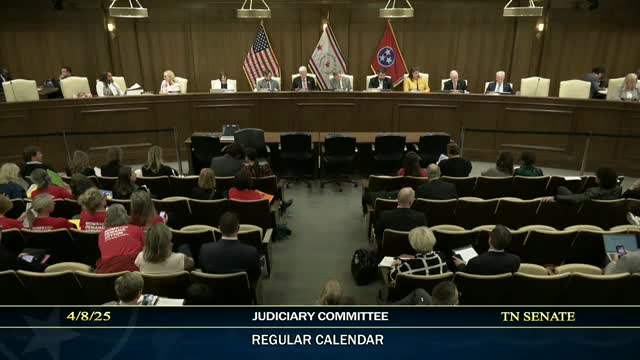
Long‑gun carry bill tied in Judiciary committee after heated safety testimony
Summary
A proposal to replace the word “handguns” with “firearms” in state law and to align carry rules with recent Supreme Court precedent produced lengthy testimony from law enforcement and public‑safety officials and failed to reach a majority in committee.
The Tennessee Senate Judiciary Committee debated a bill, introduced by Senator Bill Lowe, that would replace references to "handguns" with the broader term "firearms" in state law and thereby affect how public‑carry rules apply to long guns outside the home. The measure sparked broad opposition from state law‑enforcement officials and split the committee.
Sponsor Sen. Lowe framed the legislation as a constitutional and doctrinal update following U.S. Supreme Court decisions about the Second Amendment. "This isn't a grand bill to revoke class 3 licenses or tax stamps," Lowe said, and he argued the change would align Tennessee law with recent precedent and treat long guns and handguns consistently for public‑carry rules.
Department of Safety and the Tennessee Bureau of Investigation both urged the committee to reject the change. Elizabeth Stroker, assistant general counsel for the Department of Safety, said the department was concerned about "allowing someone to carry a high‑capacity style rifle in front of courts, in front of jails, in front of schools, in front of this building," and that introducing such rifles into public spaces raised safety concerns.
TBI Deputy Counsel Rachel Russell told the committee "this changes is 1 that would endanger public safety in the state of Tennessee." Sheriff and police association representatives said that widespread long‑gun carry would complicate routine calls for service and could escalate encounters. Jimmy Musick of the sheriffs and chiefs associations said officers would be forced to assume the worst when they respond to reports of an armed person on public property and that carrying a long gun in public could trigger victims or bystanders to claim they felt in imminent fear.
Senators traded anecdotes and policy concerns during a lengthy debate. Lowe and supporters argued the change would restore historical parity between types of firearms and respect the constitutional rights of law‑abiding citizens; opponents emphasized enforcement challenges and potential increases in public fear and policing costs.
The committee vote ended in a 4–4 tie, leaving the measure in committee.
Why it mattered: The bill touched on fundamental questions about the scope of the Second Amendment in public spaces, the role of state law after recent Supreme Court rulings, and practical law‑enforcement consequences. The tie vote reflected the tension between constitutional arguments and public‑safety concerns.
What’s next: The bill remains in committee. Supporters said they will continue to press the issue; opponents asked lawmakers to consider the implications for courthouses, schools and voting places.