Get Full Government Meeting Transcripts, Videos, & Alerts Forever!
Get email alerts on the Use Of Force topic
No spam. Unsubscribe anytime.
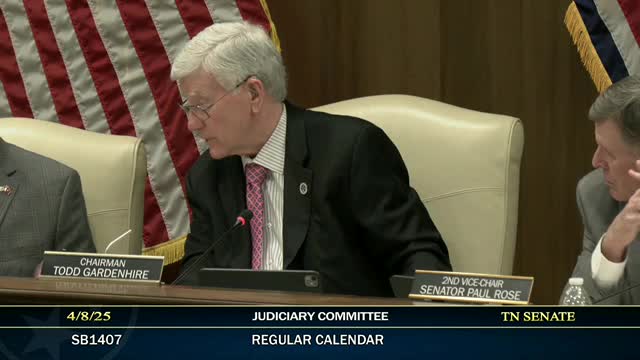
Senate Judiciary committee stalls bill to allow deadly force to protect property after hours of testimony
Summary
A Tennessee Senate Judiciary Committee split over a proposal that would allow deadly force in some nighttime property crimes left the measure in committee after emotional testimony from survivors, law enforcement and advocacy groups.
The Tennessee Senate Judiciary Committee considered Senate Bill 14‑07, a measure that would have authorized a private citizen to use deadly force in narrowly described circumstances to prevent certain property offenses at night, but the panel did not advance the bill.
Supporters, led by Senator Todd Hensley, said the change was intended to give property owners an option when law enforcement response is delayed. "In rural areas it may take 15, 20 minutes for law enforcement to get to your house," Hensley said, adding that the measure would apply only when a person "reasonably believe[s]" deadly force is the only way to protect listed property crimes.
Opponents warned the change would invite more violence and create confusing legal standards for juries. Linda McFadgen Ketchum of Moms Demand Action testified that the bill would make "property more important than human life," and cited high‑profile shootings where people were mistaken for threats. "This is a step too far. Shoot first, ask questions later will result in innocent Tennesseans being hurt and killed," she said.
District attorneys and law enforcement officials also urged caution. Steven Crump, executive director of the Tennessee District Attorneys General Conference, said the bill would make jury decisions "very difficult" and that Tennessee has long favored a clear distinction between protecting life and protecting property. Patrick Powell of the Tennessee Bureau of Investigation warned that the bill's daytime/nighttime distinction could produce "vastly different outcomes" for identical conduct, depending on the calendar.
Committee members pressed witnesses on real‑world scenarios: whether homeowners confronting thieves would face criminal charges under current law and how the statute would affect rural residents and disaster response. Crump and others said they had not seen routine prosecution of homeowners who defended their property under prior practice, but cautioned the bill would change legal expectations and could lead to divergent outcomes.
After more than an hour of testimony from advocacy groups, prosecutors and law enforcement, the committee voted. The tally was 4 in favor, 3 opposed and 1 present, not voting, leaving the measure in committee.
Why it mattered: The bill prompted a sustained, bipartisan debate about the line between self‑defense and defense of property, the role of judges and juries in resolving disputed facts, and how statutory language would affect everyday decisions by homeowners and first responders. The committee kept the measure in committee, signaling lawmakers were not prepared to adopt the proposed expansion of deadly‑force law.
What’s next: The bill remains in committee. Supporters said they will continue to press the issue; opponents urged lawmakers to pursue other avenues for addressing theft and response time without expanding deadly‑force authority.