Get Full Government Meeting Transcripts, Videos, & Alerts Forever!
Get email alerts on the Budget topic
No spam. Unsubscribe anytime.
Wake County Board reviews superintendent’s 2025 budget proposals; dental cost shift and facilities reductions draw board concern
Summary
Wake County Schools presented the superintendent’s proposed 2025 operating budget at a board work session, focusing on a recommended employer dental contribution change and proposed maintenance and custodial reductions; board members pressed staff for alternative options and asked for additional modeling.
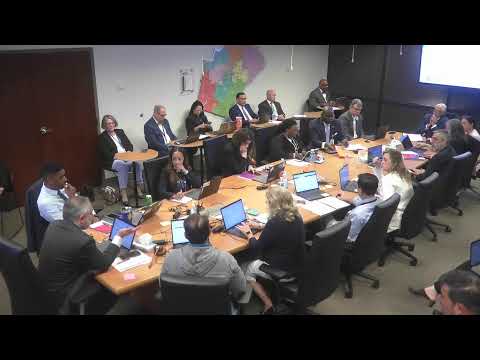
At an April work session (date not specified), Wake County Schools chiefs reviewed the superintendent’s proposed 2025 operating budget and answered board questions on a range of proposals, with much of the discussion centering on a proposed employer contribution change to the district dental plan and proposed reductions to maintenance and operations.
Chief financial and HR staff described the superintendent’s baseline recommendations and responded to board questions submitted in advance. Staff said the district has roughly 16,400 full‑time employees participating in the self‑insured dental plan; employees who participate now pay $6 per month for self‑only coverage and the district pays approximately $28 per participating employee per month. The superintendent’s proposal would shift the $28 per‑participant employer contribution to employees; because any change must follow the district open‑enrollment calendar, staff estimated a six‑month realization of savings in the first year (about $2.5 million) and roughly $5 million in annual savings thereafter.
Board members asked staff to model alternatives. Finance staff presented several illustrative sliding‑scale scenarios—using salary bands similar to state health‑plan proposals—and showed how different band definitions and monthly employee contributions would reduce district savings. One example would lower the first‑year savings to about $2.0 million (instead of $2.7 million under the full shift) and require the district to find roughly $700,000 in alternative reductions to meet the superintendent’s proposed budget gap. Staff said they could run additional scenarios (different bands, different monthly contributions) and would present those at the finance committee and at upcoming board sessions.
The budget presentation also detailed proposed reductions in facilities operations as a means to cut costs. Staff outlined recommended adjustments that together could reduce central custodial, maintenance and grounds spending by roughly $1.5 million to $1.6 million. Examples cited by staff included a proposed $850,000 custodial reduction that would eliminate supplemental daytime subcontracted coverage, no non‑routine custodial services, and reduced high‑dusting and exterior power washing; a proposed $250,000 regional maintenance reduction that would limit floor and carpet replacements and pause non‑urgent painting; and proposed $180,000 reductions each for energy/physical‑plant contracting and grounds work that would reduce contracted preventive boiler maintenance and mulching/athletic‑field work.
Board members expressed strong concerns about the operational impacts of these proposals. Multiple members urged staff to prioritize preserving student‑facing positions, building‑level substitutes, and preventive facilities work, and to search for alternative reductions that would not eliminate core maintenance or reduce day‑to‑day custodial capacity. Several board members signaled they would rather find other cuts than remove dental contributions or degrade maintenance programs that influence school air quality and long‑term asset condition. The superintendent and chiefs said they were actively modeling alternatives and would return with options.
Staff also described other technical changes in the superintendent’s budget: a revision to the high‑school assistant‑principal formula that, if applied in isolation, would affect five high schools; revised counselor and assistant‑principal tiers for some school sizes; and a proposed $1.6 million priority high‑school fund to support six high schools as they exit Title I status (two of those are also restart schools and could receive additional restart resources).
The board agreed to ask staff to return with further modeling, including multiple sliding‑scale options for dental, alternative reductions that protect student‑facing resources, and clearer scenarios showing tradeoffs if county or state revenue differs from assumptions. The board’s finance committee will review the refined options at an upcoming meeting, and staff said they will share updated materials with board members and the public. The work session concluded with a formal motion to go into closed session to discuss personnel, student and attorney‑client matters; the motion passed (mover: Mr. Hershey; second: Vice Chair Swanson; vote: unanimous).