Get AI Briefings, Transcripts & Alerts on Local & National Government Meetings — Forever.
North Kingstown subcommittee reviews RIDE comments on $137 million school bond; considers preschool wing and design changes
Loading...
Summary
The North Kingstown School Building Subcommittee on April 7 reviewed RIDE/SBA comments on the district's Stage 2 application for a proposed roughly $137 million middle-school bond and considered design and program changes, including adding an on-site preschool wing, intended to increase state reimbursement and reduce net district cost.
The North Kingstown School Building Subcommittee on April 7 reviewed preliminary comments from the Rhode Island Department of Education School Building Authority (RIDE/SBA) on the district's Stage 2 application for a roughly $137 million school construction bond and discussed design and program changes aimed at increasing the state reimbursement portion and lowering the district's net cost.
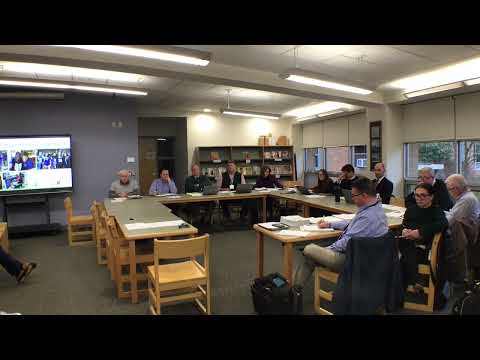
Chris Murphy, chairman of the School Building Subcommittee, opened the special meeting at 4:30 p.m. at 150 Fairway Drive and invited public comment before the committee's review of RIDE feedback and next steps.
Why it matters: The district's submission seeks RIDE approval and the maximum possible reimbursement for a new middle school and related capital projects; RIDE flagged cost and documentation items in preliminary comments, and district staff and consultants told the committee they will submit a comprehensive response by May 5 and meet with the SBA on May 4. The timing matters because the Council on Elementary and Secondary Education will consider applications in late May.
Public concerns and context
Several residents urged the committee to pause or slow the process and provided detailed criticisms of cost estimates and communications. Joe Teixeira, a resident who identified himself as a town-council candidate earlier this year, said the project looked to cost roughly $1,000 per gross square foot and pressed the committee for "all receipts of how much we've spent so far," saying the public was owed transparency. "Show us how the money's been spent so far," Teixeira said.
Pam Panaro, a parent and meeting attendee, told the committee she supported the bond with reservations and asked officials to "address head on" the comments from RIDE and the building authority, and, if mistakes were made, to present a plan of correction to rebuild trust.
Holly Quinn and other speakers raised questions about how proposed school changes intersect with redistricting, bus routing and site work, and asked for clearer, easier-to-find public materials and updates.
What the administration reported
Dr. Duba (identified in the meeting as the district official leading the presentation) summarized the March 26 meeting with RIDE/SBA representatives and listed attendees from the school department, town staff, Jacobs (owner's project manager), Perkins Eastman (architect), and Rouse (design consultant). Duba told the committee the Stage 2 addendum was submitted to RIDE on Feb. 15 and that the district received preliminary RIDE comments on April 7.
Duba said the district has expended $1,611,721.64 since early design work began in 2022; those costs include feasibility studies, owner's project manager fees, architectural fees, and environmental/site studies tied to multiple site investigations. She emphasized the district is working with the design team to identify cost savings and to respond to all SBA requests.
Key numbers and issues discussed
- Bond amount presented to voters: approximately $137,000,000 (proposal relates to a new sixth-through-eighth-grade school plus district capital improvements). - Total invoiced expenditures the district reported so far: $1,611,721.64. - Current estimated building size for the Wickford (reported in materials as —or Whitford/Wickford/Wakeford references) Middle School project: about 77,717 gross square feet. - RIDE reimbursable benchmark cited by the SBA reviewers: about $592 per gross square foot; the district's current estimate shows a higher per-square-foot figure (committee and consultants discussed figures approaching $900'$1,000 per GSF for comparison purposes). - Net-zero energy design cost uplift that the administration identified: roughly $4,900,000 to incorporate geothermal wells and other features; an additional $500,000 was noted for coastal-code wind/debris resilient exteriors.
RIDE/SBA comments summarized (topics the district must address)
Dr. Duba outlined the SBA's preliminary application review including requests for: detailed line-item cost estimates (especially MEP, plumbing and electrical); structural-certification reports for existing buildings; updated NEC HPS (Northeast Collaborative for High Performance Schools) scorecards; updated demographic and utilization narratives; floor plans and program descriptions for Davisville Academy and other district sites; clarification of contingencies and escalation assumptions; separate project budget worksheets for projects that blend renovations and additions; and documentation for capital-planning costs and local approvals.
Consultants and options under consideration
Perkins Eastman architect Mark McCarthy told the committee that the current design is schematic and that cost estimates are preliminary; he said the team will refine estimates as the design advances and contingencies can be reduced as documents become more detailed. The design team and RIDE recommended two parallel approaches: (1) try to reduce building and envelope costs (for example by simplifying glazing and envelope details, tightening the footprint and reconsidering exterior materials) and (2) increase eligibility for state reimbursement by adjusting the proposed program to increase enrollment or add qualifying program spaces.
One specific program option RIDE asked the district to examine is adding an on-site preschool wing to the new middle school. Perkins Eastman and district staff discussed schematic options that would stack preschool space on dedicated lower floors and keep the preschool program operationally separate (separate entries, drop-off loops, playgrounds and circulation). The design team's first pass showed space to accommodate roughly 10 preschool classrooms in addition to the middle school program, which would raise total square footage and the overall project cost but could increase the reimbursable amount by raising reported enrollment or program eligibility.
Committee directions and next steps
The administration and consultants told the committee they would: - Provide a detailed response packet to RIDE/SBA by May 5 (the district scheduled a follow-up meeting with SBA on May 4), including revised cost breakdowns and required supporting documents. - Continue evaluating a more compact building geometry, a possible third floor, envelope simplifications and alternative construction delivery models (design-build vs. construction-manager at-risk vs. lump-sum contract), and report comparative implications for schedule and cost at the next check-in. - Post the SBA comments and the district's cost breakdowns to the district facilities webpage; the administration confirmed packet materials reviewed at the meeting are on the school facilities page.
Public process concerns
Multiple commenters asked the committee for greater transparency and easier public access to documents. Several residents said they used social media to locate missing documents and urged more proactive posting and direct email communication from the district.
Votes at a glance
- Motion: Adjourn the meeting. Outcome: Approved (mover and seconder not specified in the transcript; recorded response: "All in favor? Aye. Aye.").
What the committee will revisit
The committee scheduled a follow-up check-in on or about the week of April 21'24 to review updated cost breakdowns, schematic alternatives (two- vs. three-story layouts and the preschool option), and a recommended timeline for the May 5 submission. The committee was told the Council on Elementary and Secondary Education is expected to consider the application in the week of May 27'28; successful Stage 2 responses in early May are therefore time-sensitive.
Ending
Committee chair Chris Murphy closed the meeting after scheduling the follow-up check-in and calling for a motion to adjourn. The subcommittee will reconvene after staff and the project team deliver the requested RIDE response materials and updated cost comparisons.