Get Full Government Meeting Transcripts, Videos, & Alerts Forever!
Get email alerts on the School Calendars topic
No spam. Unsubscribe anytime.
Research finds no measurable achievement effect from year‑round calendars; staff recommends Lake Myra convert to multitrack in 2026–27
Summary
Elon University researcher Dr. Katie Rouse told the Wake County Board that after statistical controls, year‑round calendars show no measurable effect on student achievement; staff recommended converting Lake Myra Elementary to a four‑track multitrack calendar for 2026–27 to address near‑term crowding.
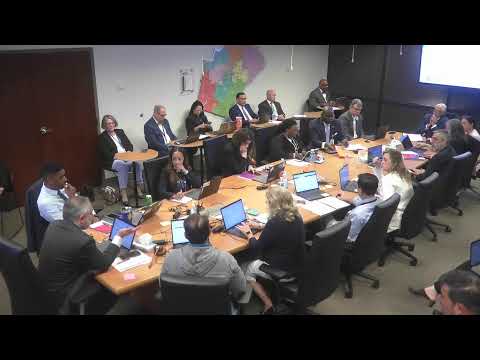
At a Wake County Board of Education work session in April (date not specified), researchers and district staff presented updated analysis of multitrack year‑round calendars and recommended 1 calendar conversion for the 2026–27 school year.
Dr. Katie Rouse, professor of economics at Elon University, summarized a district‑partnership research program that examined year‑round calendars, crowding and student achievement. Rouse said multitrack year‑round calendars are a planning tool the district has used to add capacity without building new schools: a four‑track multitrack schedule can increase a school’s usable capacity by roughly 25 percent. She noted, however, that operating a year‑round school can be more expensive on an ongoing basis because of utility, maintenance and administrative costs.
Using district data, Rouse said average test scores are higher at year‑round schools on raw comparison, but when researchers controlled for differences in student, teacher and school characteristics the apparent advantage disappeared. “Once we control for differences in student populations and school characteristics, those differences essentially disappear,” Rouse said, summarized from the presentation. Her earlier research on the district found multitrack calendars partially offset the negative achievement impacts of severe crowding, but the recent analysis of the last decade showed no measurable effect on achievement overall.
Following the research presentation, staff recommended a single calendar conversion for 2026–27: convert Lake Myra Elementary from its current single‑track arrangement to a four‑track multitrack schedule. District staff said the conversion would increase Lake Myra’s permanent capacity from 616 to 814 seats. Staff described the recommendation as a near‑term measure to address a high‑growth area in eastern Wake County while the CIP schedules new capacity (Marshburn Road and other projects) that will not be available until later years. Staff noted trailers and other temporary capacity exist at neighboring schools, but growth projections suggest those seats will be taken as development proceeds.
Staff said they had met with Lake Myra leadership and staff and opened a targeted thought exchange for Eastern Wake respondents; the district reported 67 respondents from Knightdale, Wendell and Zebulon areas and said responses emphasized the need for family outreach, child‑care planning and careful calendar alignment. Staff will open a Lake Myra‑specific thought exchange and, at the board’s request, schedule a virtual public engagement session in June before the board votes. Board members asked staff to coordinate with local child‑care providers and municipal partners to help families plan for track‑out care and other logistics.
Ending: Staff will return the Lake Myra conversion as an action item for a future board meeting after public engagement; staff kept the thought‑exchange window open for additional feedback and will present timing and public‑engagement details to the board.