Get Full Government Meeting Transcripts, Videos, & Alerts Forever!
Get email alerts on the Permit Fees topic
No spam. Unsubscribe anytime.
Board approves multi-year increase to permit fees; staff says most facilities will see small increases
Summary
The board unanimously approved amendments to Rule 42 to raise permit processing fees, deposits and emission-rate fees over a multi-year schedule to cover program costs; staff said most permitted facilities would see modest increases and the change is expected to raise about $150,000 annually for the district.
The Ventura County Air Pollution Control Board voted unanimously to adopt proposed revisions to Rule 42 (permit fees), including phased increases to emission-rate fees and a higher minimum processing fee and deposit to recover district program costs.
District staff presented the rationale: program revenues have not kept pace with costs, federal PM2.5 standards tighten obligations and staff identified an outdated per-unit rate that had not been raised since 2011. "We decided to increase the fee rate for all of the pollutant by 5%, except for CO and PM," the presenter said, explaining a phased approach to limit year-to-year impact.
Key changes adopted include raising the minimum processing fee (proposed from $250 to $500), increasing the fee deposit (from $2,000 to $5,000), reducing late-penalty from 30% to 15%, and a multi-year schedule of emission-rate adjustments that generally increase rates by about 5% per year for most pollutants and larger adjustments for CO and PM to correct longstanding underpricing. Staff told the board the proposal seeks to remain within a 15% cap set by state law for any single-year increase.
Staff estimated the fiscal impact to the district at approximately $150,000 in additional revenue and said roughly 91% of the county’s permitted facilities would see increases of less than $100 annually; the majority of facilities would experience very small changes (median change about $37). The district presented a spreadsheet-based analysis used to minimize large increases for individual permittees.
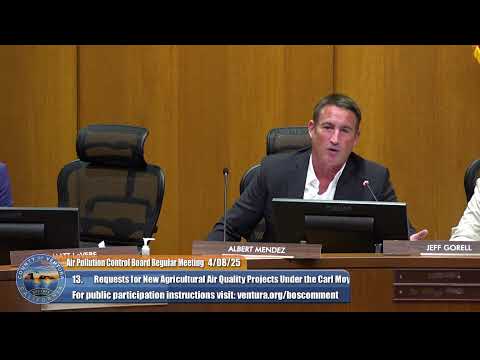
Board members pressed staff on advisory committee opposition: Supervisor Parvin asked why two advisory committee members opposed the measure; staff said the dissenters were opposed to any fee increases and felt the district should consider eliminating programs or staff rather than raising fees. Supervisor Goral asked whether the district had received applicant comments; staff said it had not received written comments and speculated that many applicants pay so little that they did not feel impacted.
The board opened the public hearing; no members of the public requested to speak. After additional discussion about the distributional effect on small and medium businesses, the board moved, seconded and adopted the amendments. The board also reopened the hearing briefly for public input and then took the final vote, which passed unanimously.