Get Full Government Meeting Transcripts, Videos, & Alerts Forever!
Get email alerts on the Land Use topic
No spam. Unsubscribe anytime.
Council reviews draft municipal utility district policy to manage growth in Amarillo’s ETJ
Summary
City staff and outside counsel presented a proposed policy to govern municipal utility districts (MUDs) in Amarillo’s extraterritorial jurisdiction, emphasizing infrastructure standards, financial safeguards and options for annexation and retail utility service.
The Amarillo City Council heard a detailed briefing on a proposed municipal utility district (MUD) policy intended to guide development that occurs in the city’s extraterritorial jurisdiction (ETJ).
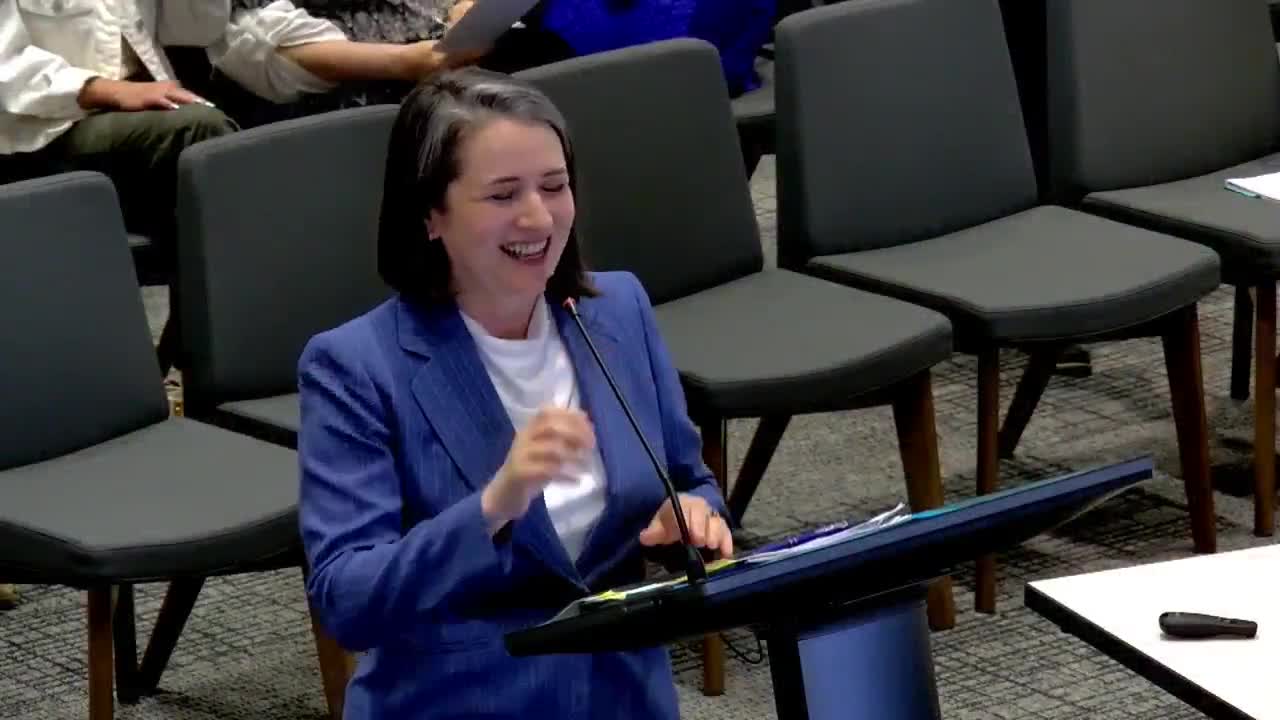
Aliyah Vincent, an attorney with Allen Boone Humphreys Robinson who consulted on the draft, told the council the policy is aimed at “providing predictability, certainty, and consistency” when MUDs are created outside the city limits. Vincent said the draft requires that public infrastructure built in a MUD comply with city development standards and proposes development agreements, utility agreements and a strategic partnership agreement as the core documents that would govern a proposed district.
Under the draft policy, the city would generally require that any MUD in the ETJ remain intact until it has paid its outstanding bonded indebtedness, and the policy would require developers to fund infrastructure upfront and be reimbursed only after taxable value is established. The presentation also recommends that the city require a 150 percent utility rate for customers located in a MUD outside city limits (to avoid subsidizing outside connections) and that the city require the developer to pursue a public improvement district (PID) to provide long‑term maintenance funding for parks and drainage if the city later annexes the area.
Vincent told council the policy would give the city the option — not the obligation — to annex commercial portions of a MUD on the front end and recommended that the city reserve the right to appoint a non‑voting ex‑officio member to the MUD board and to require transparency provisions (agendas/minutes posted online).
Council members asked about risks and protections. Vincent noted MUDs in Texas are tightly regulated by state law and by the Texas Commission on Environmental Quality; she said municipal utility districts must meet economic feasibility standards before bond reimbursements are permitted and argued the policy’s provisions — limits on maturities, required plan review and the requirement that developers bear initial costs — help reduce risk to the city.
Public Works staff and the city manager recommended that the council consider a $1,000 application fee for petitions and noted staff will return with the policy for formal adoption after additional review. The council set an April 22 agenda item to return this draft for a vote and asked staff to bring a finalized draft with recommended application fee language and any necessary implementation steps.
Why it matters: Amarillo is growing and the policy would be the city’s main tool to protect taxpayers and preserve options to annex while allowing developers a pathway to finance required infrastructure.