
Clay County to pursue purchase-and-renovate option for substance use disorder recovery center
Get AI-powered insights, summaries, and transcripts
Subscribe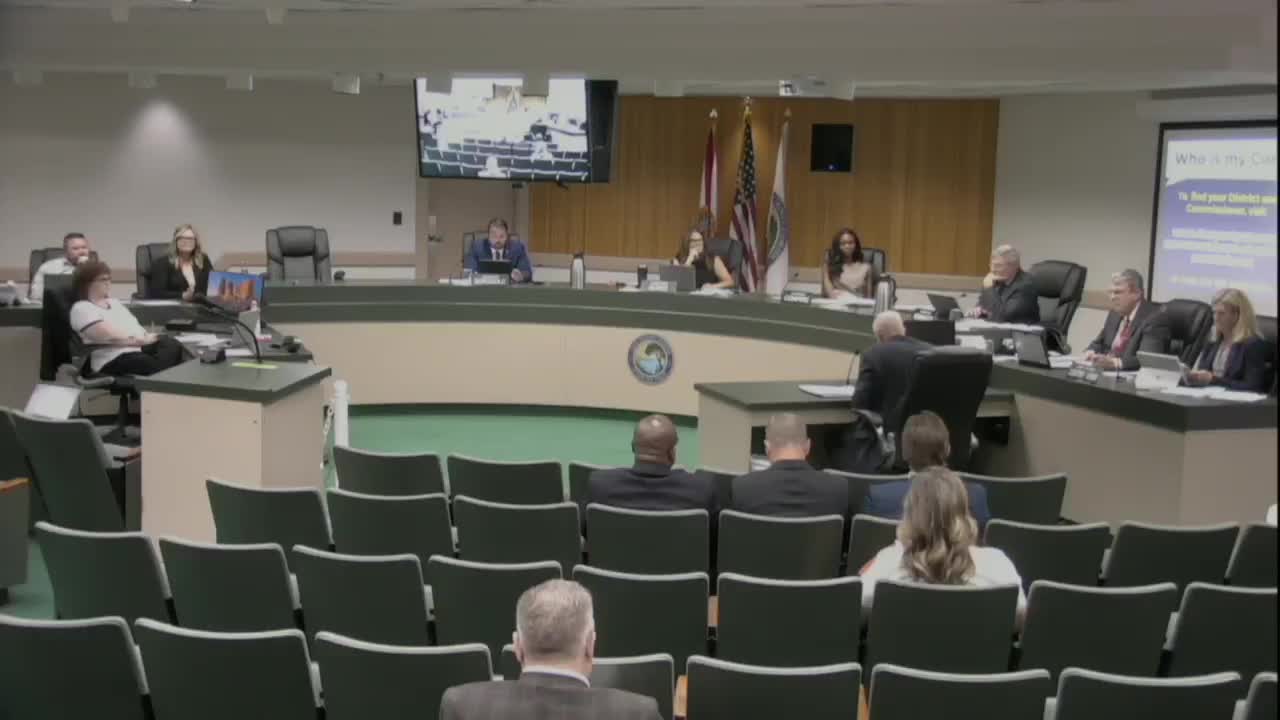
Summary
County staff recommended and the board approved pursuing purchase and renovation of an existing commercial building for a new substance use disorder recovery center, favoring a lower-cost, faster option over building new at a county-owned site. Staff requested authority to use an alternate procurement procedure while negotiating terms.
The Clay County Board of County Commissioners authorized staff April 8 to pursue the purchase and renovation of a commercial building as the county's substance use disorder recovery center and to use an alternate procurement procedure to advance negotiations.
Craig Singleton, project manager for the initiative, told the board the county's initial plan to remodel two vacant county-owned buildings proved infeasible; staff presented three options. Option 1, which the board approved to pursue, would buy and renovate an existing commercial property. The rough order estimate for Option 1 was about $4.0 million; Option 2, building new on county-owned land, was estimated around $6.3 million. Funding currently identified for the project includes a $3.0 million state grant, approximately $1.0 million in opioid settlement funds received to date, and $500,000 in CIP for design.
Craig said the commercial building under consideration is about 9,373 square feet, larger than the roughly 8,600 square feet Clay Behavioral Health Center indicated would meet program needs. A representative from Clay Behavioral, Irene Toto, told the board the site's proximity to existing behavioral-health services (about half a mile from Clay Behavioral's facility) would support continuity of care and ease transportation for clients.
The board approved a motion directing staff to pursue Option 1 and authorized use of an alternate purchasing procedure to begin negotiations and bring a purchase-and-sale agreement back for formal approval. Commissioners framed the decision as a cost- and time-saving approach that would enable services to come online sooner than building new.