Get Full Government Meeting Transcripts, Videos, & Alerts Forever!
Get email alerts on the Education topic
No spam. Unsubscribe anytime.
Worcester County Board of Education requests $11.1 million increase, cites teacher pay and class-size priorities
Summary
The Worcester County Board of Education presented a FY2026 operating budget request that would raise spending by $11,128,285 (10%), driven mainly by negotiated salary increases, health insurance and student-support services. The school system asked the county for a $116.6 million local appropriation and noted state and grant funding changes.
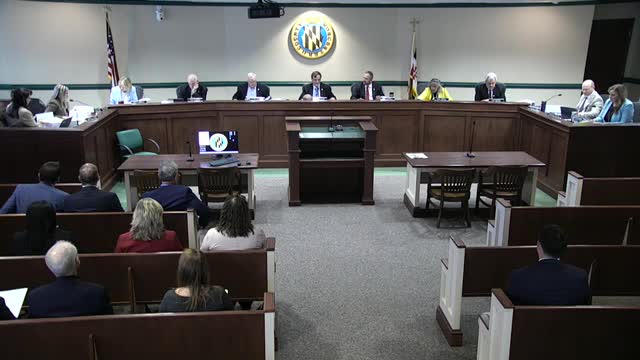
The Worcester County Board of Education presented a FY2026 operating budget request on April 8 seeking an $11,128,285 (10%) increase over FY2025, driven largely by negotiated pay increases, fixed charges and investments in special education and student supports.
The request lists total unrestricted revenue of $145,021,039, including $27,416,342 in state aid (about $1.46 million more than FY25), a proposed county local appropriation of $116,562,686 and $200,000 in local grant funding from the Donnie Williams program for after-school and summer-school services, Vince Tolbert, chief financial officer for Worcester County Public Schools, said during the presentation.
The district highlighted compensation as its single largest cost-driver. Officials said the FY26 proposal includes a negotiated package that adds a $4,000 flat increase for certificated staff and a $2,000 flat increase for support staff on top of step increases, along with step/cola and other fixed charges such as health insurance and employer retirement costs. The district said this package is intended to move the district toward a state “blueprint” requirement that starting teacher pay reach $60,000 by FY2027.
“This budget is centered around our students,” a Board of Education presenter said, describing investments in class-size reduction, technology and special education. The CFO added that the district had applied for a grant to help fund a one-time $42,098 implementation cost for Zonar fleet software; if the grant is received, the requested local contribution would be reduced.
District officials described categorical increases across the budget: $4.0 million for instructional salaries and wages (reflecting the negotiated package and rehiring six certificated positions), $962,811 for special education, $390,111 for transportation (bus contractor increases and more field trips) and $3.2 million for fixed charges including OPEB and employer retirement contributions. The proposed budget also restores full summer- and after-school programming and adds one registrar/secretarial position to support peak registration periods at elementary schools.
Officials said federal grant revenues are expected to drop significantly in FY26 (about $3.58 million), primarily because ESSER funds will lapse, increasing reliance on local appropriations and state aid. The district reported total FTE of 1,288.33 for FY26 if the request is approved.
Commissioners pressed staff on details including how many employees will receive the flat $4,000 versus the $2,000, the composition of salary-step increases, and the district’s contingency if anticipated federal or state funds do not materialize. Tolbert and other school leaders repeatedly cited trend analysis and line-by-line realignments intended to make the budget more reflective of historical spending.
The presentation was followed by commissioner questions about tuition amounts, the district’s carryover fund balance and the treatment of non-recurring items. The school team said they would provide additional breakdowns on FTE counts and salary impacts after the meeting.
Less critical items in the request included $80,000 for an upcoming feasibility study for a new school project (after Buckingham), increased funding for athletic and activity equipment, and a small capital ask for iPad refresh cycles.
The Board of Education presentation is scheduled to be reviewed further as part of the county’s FY26 budget process; district officials encouraged commissioners to contact them with follow-up questions.