Get Full Government Meeting Transcripts, Videos, & Alerts Forever!
Get email alerts on the Omnibus State Government topic
No spam. Unsubscribe anytime.
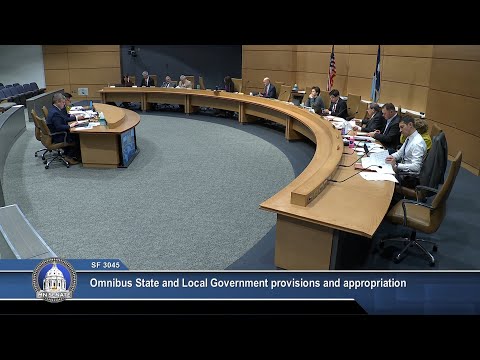
Senate committee adopts State and Local Government omnibus amendment including business‑filing fraud prevention, fee changes and agency operating requests
Summary
The State and Local Government Committee adopted a multi‑article A1 (DE) omnibus amendment covering policy and budget items for state agencies, including a Business Filing Fraud Prevention Act, fee changes and several operating adjustments.
The Minnesota Senate State and Local Government Committee on April 8 adopted the A1 (DE) omnibus amendment, which combines policy provisions, fee changes and operating adjustments for multiple state agencies.
Committee staff and bill handlers walked members through the amendment, which includes dozens of sections drawn from individual bills and agency requests. Major elements explained to the committee included:
- A Business Filing Fraud Prevention Act (article 5) that creates a process for the Secretary of State to receive complaints about allegedly fraudulent business filings, investigate and treat a found fraudulent filing as if it never existed; it also requires some solicitations to businesses to be clearly labeled as advertising. Secretary of State Steve Simon told the committee the language gives his office a statutory path to help victims clear wrongful filings.
- Article 6 contains increases to various business filing fees charged by the Secretary of State; committee counsel confirmed those fee increases were not part of a bill previously heard by the committee and were carried in the omnibus amendment.
- Policy changes in article 2 (civil‑service, grants, contracting and oversight provisions) such as expanded authority for the Office of Legislative Auditor special reviews, grants‑management clarifications, limits on contract terms, and procurement/subcontracting provisions for targeted group and veteran‑owned businesses.
- Article 7 includes local government items such as raising the audit revenue threshold for certain towns and cities and creating a Ramsey County Economic Development Authority with specific powers and appointment rules.
- Changes to the open‑meeting law (allowing remote participation from locations not publically accessible under specified conditions) and technical adjustments to state personnel statutes.
The A1 package also includes operating adjustments for multiple agencies. Agency leaders testified about the need for modest increases to sustain current services: Secretary of State Steve Simon noted the office's contribution to the general fund and asked for additional operating funding to avoid leaving key positions unfilled; State Auditor Rebecca Otto Blaha (testifying as auditor) said a partial operating increase would have consequences for staff and oversight capacity; and commissioners from Administration and Minnesota IT Services described capital and IT modernization priorities the omnibus funds.
Two oral actions were taken during debate: an oral amendment deleted one section of Article 3 (an item described in the hearing) and the committee subsequently adopted the A1 amendment as amended by voice vote. Chair Zhang (chairing the committee) said the amendment would be marked up on Thursday, and members discussed next steps including conference negotiations.
The omnibus also prompted questions and concerns from committee members and public witnesses: several senators pressed for justification of fee increases in Article 6 after staff clarified Article 6 had not been presented as a standalone bill; labor representatives asked for broader stakeholder engagement on pharmacy benefit management procurement language in the bill; and the Council on Asian Pacific Minnesotans asked why its operating increase request had not been funded at the same level as other ethnic councils.
Committee staff said the package reflected the chair's positions and multiple sponsor bills; the chair explained allocations reflected priorities and negotiation choices while noting the broader budget context. The A1 amendment as amended was adopted by the committee for further processing.