Get Full Government Meeting Transcripts, Videos, & Alerts Forever!
Get email alerts on the Work Zone Safety topic
No spam. Unsubscribe anytime.
Assembly committee approves automated speed enforcement pilot for active highway work zones
Summary
The Assembly Transportation Committee voted to advance AB 289, establishing automated speed enforcement in active highway construction zones as a safety pilot after proponents described recent worker deaths and national evidence of crash reductions.
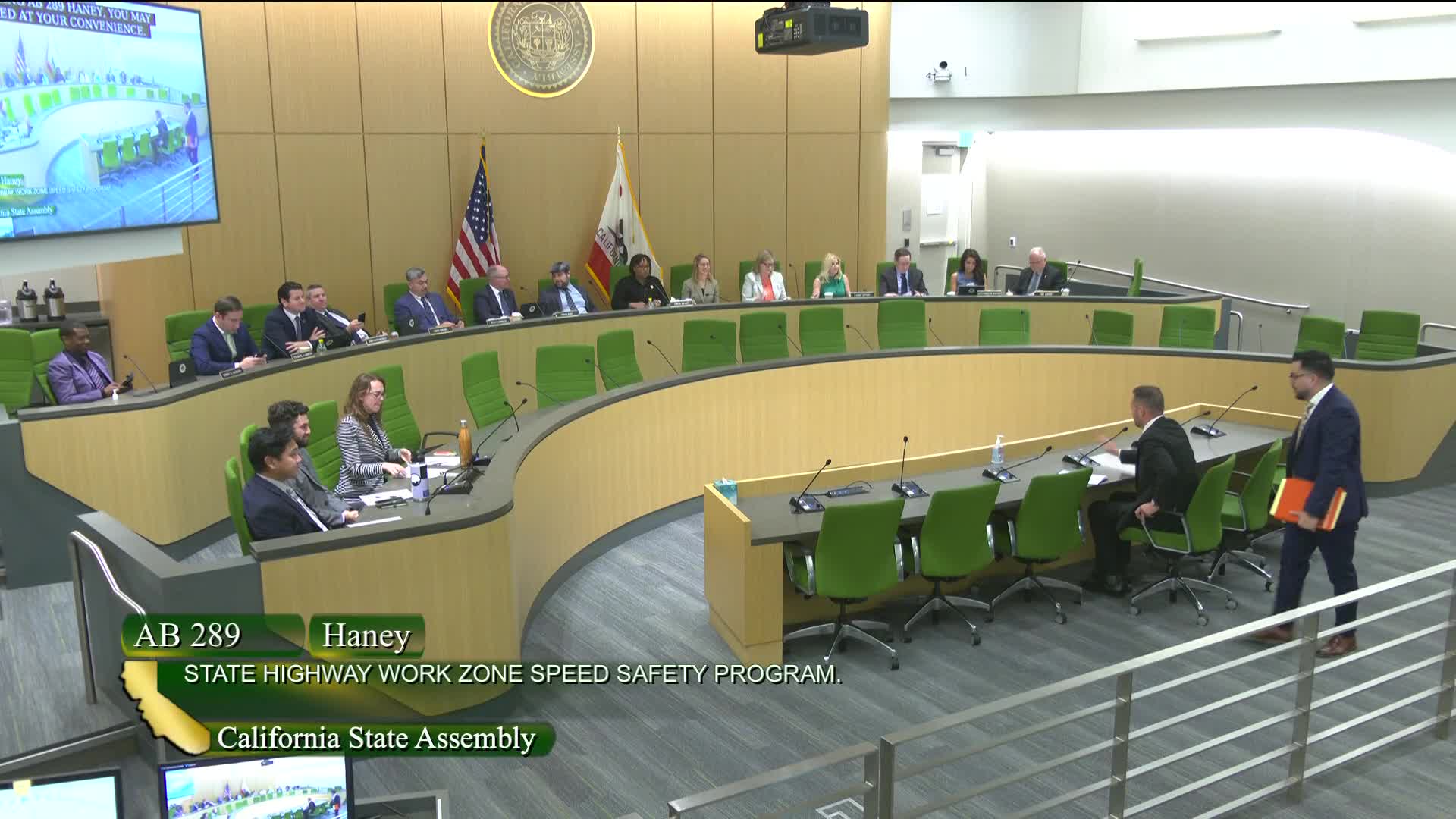
AB 289, which would authorize automated speed enforcement in active highway construction work zones, was advanced Wednesday by the California State Assembly Transportation Committee.
The bill would require use of camera-based speed enforcement in active construction work zones and direct a pilot approach proponents say can reduce crashes and protect workers. Assemblymember Haney, the bill uthor, told the committee that "1 life lost is 1 too many" and urged lawmakers to adopt a proven tool used in other states.
The bill matters because highway construction workers are repeatedly struck by speeding vehicles, advocates said. "Every day we put men, women nd mothers and fathers out to build these freeways," Mike Gelati, president and CEO of Gelati Brothers, said. "Every day we put them at extreme risk." Gelati described incidents in which cars entered lane closures and smashed into workers' vehicles. James Thurwat Walker, legislative advocate for the California State Council of Laborers, said the industry had seen hundreds of work-zone crashes and dozens of worker deaths in recent years.
Supporters cited evidence from other states and local pilot programs. The bill summary presented to the committee notes reductions in other states after automated enforcement was adopted: Pennsylvania saw a 19% reduction in work-zone crashes in one cited example, and Maryland reported an 80% decrease in speeding violations in work zones within two years. Proponents also said the bill is designed to supplement, not replace, manned enforcement by the California Highway Patrol.
Opponents did not appear to testify in person at the hearing, but committee discussion flagged concerns that camera enforcement converts criminal enforcement to civil penalties and may reduce deterrence for impaired drivers. Assemblymember Lackey said he preferred manned enforcement and argued that automated citations shift standards and might not address impaired driving.
The committee recorded a motion to pass the bill, moved by Assemblymember Harabedian and seconded by Assemblymember Rogers. The measure passed the committee by recorded tally (yes 15, no 1) and was ordered to be re-referred to the Committee on Appropriations.
If enacted as written, AB 289 would create a statewide mechanism for automated speed enforcement specific to active construction zones; the bill's proponents said the intent is to reduce vehicle speeds and crashes where workers are present.
Votes at committee: motion made by Assemblymember Harabedian; second by Assemblymember Rogers. Tally recorded in committee: yes 15, no 1.